
A Democratic bill with 7 Democratic cosponsors · See all 7 cosponsors
Last activity — Referred to the House Committee on Education and Workforce.
In committee
Introduced and handed to a committee in the chamber it started in.
The committee holds it, and most bills are never heard from again. A hearing or a committee vote would be news; silence is the usual outcome, and it kills the bill without anyone voting against it.
Its path through Congress
- Introduced
- In Committee
What this bill would do
The ACCELERATE Act creates a new grant program to support STEM micro-credentials for educators in elementary and secondary schools. The Secretary of Education will award competitive grants of up to $500,000 to applicable educational agencies over a three-year period. These funds are meant to help adopt, improve, and implement standards for recognizing STEM micro-credentials. Educational agencies that receive these grants must prioritize schools that receive specific federal funding and have gaps in STEM expertise. The bill also requires participating agencies and the Secretary to submit regular reports to Congress on the impact of the program.
Yes· 3 of 13
- Scored +4
Does this put more money into public schools?
The bill establishes a competitive grant program providing up to $500,000 per agency to support STEM micro-credentials for educators in elementary and secondary schools.
- Scored +3
Would children be better off under this?
Students benefit from enhanced STEM instructional quality and expertise among their teachers.
- Scored +3
Would students be better off under this?
Students gain access to teachers with verified, high-level STEM expertise and improved classroom instruction.
The opposite
No question was scored the opposite.
Who it would affect, and how
Potential Positive Impacts for People
-
Financial Support and Career Advancement for Teachers: Under Section 2, adding subsection (c)(5), grant funds can be used to incentivize educators to earn STEM micro-credentials by providing stipends and other benefits, including opportunities for career advancement. This is a positive outcome because it directly rewards teachers financially and helps them grow professionally.
-
Targeting Schools That Need Help Most: Under Section 2, adding subsection (d), the Secretary must give priority to educational agencies that provide strategies for addressing gaps in STEM expertise among educators teaching in schools receiving funding under title I or subpart 2 of part B of title V. This is a positive outcome because it focuses resources on disadvantaged schools that may struggle to find qualified STEM teachers.
-
Assistance for Initial and Ongoing Licensure: Under Section 2, adding subsection (c)(3), grant funds can be used to develop and communicate opportunities for educators to use STEM micro-credentials to satisfy initial and ongoing licensure requirements. This is a positive outcome because it gives teachers a flexible, competency-based way to meet state or tribal licensing rules.
Potential Negative Impacts for People
-
Administrative Burden and Reporting Requirements: Under Section 2, adding subsection (h), participating educational agencies must submit detailed annual and final reports covering lists of activities, descriptions of micro-credentials, numbers of participating educators, and evaluations of educator retention and student outcomes. This could be considered a negative burden because it creates heavy paperwork and administrative work for educational agencies that are already busy managing schools.
-
Strict Funding Caps and Time Limits: Under Section 2, adding subsections (f) and (g)(2), each educational agency can receive a maximum of $500,000 over a three-year period, and the Secretary's authority to award new grants terminates three years after the program is established. This might be seen as a negative limitation because the funds and the program window are strictly capped, which could cut off support before all interested educators have a chance to participate.
Groups and Interests Ranking
Every group the model scored this bill for, from -10 to +10. Tap or hover a score for the reason it gave.
- Demographic And Interest Groups
- Would children be better off under this? — Students benefit from enhanced STEM instructional quality and expertise among their teachers. Would students be better off under this? — Students gain access to teachers with verified, high-level STEM expertise and improved classroom instruction. Would households on low incomes be better off under this? — The bill prioritizes educational agencies serving schools receiving Title I funding, directing resources to under-resourced communities. Would people in middle age be better off under this? — Mid-career educators have opportunities for professional growth, licensure fulfillment, and career advancement through STEM micro-credentials. Would middle-income households be better off under this? — Teachers and educational professionals, largely comprising middle-class households, benefit from stipends and career advancement opportunities. Would women be better off under this? — Female educators in STEM fields benefit directly from targeted professional development, financial stipends, and career growth opportunities. Would people in their twenties and thirties be better off under this? — Young adult educators benefit from professional development stipends, micro-credentials, and career advancement opportunities.
- Education And Technology
- Does this put more money into public schools? — The bill establishes a competitive grant program providing up to $500,000 per agency to support STEM micro-credentials for educators in elementary and secondary schools. Does this put more money into scientific research? — The legislation supports STEM education initiatives and coordinates with federally-supported STEM education research and evaluation activities.
- Economy And Finance
- Is this likely to grow the economy? — Investing in high-quality STEM education helps maintain a competitive edge in the global economy and supports long-term workforce development. Is this likely to create jobs? — The bill provides grant funding to incentivize and support STEM educators, which encourages professional development and career opportunities in education fields.
- Governance And Ideology
- Does this make what the government does easier for the public to see? — The bill mandates regular reporting requirements and evaluations of the program's impact by participating educational agencies and the Secretary.
- Social Issues And Justice
- Is this likely to lift people out of poverty? — By prioritizing schools receiving Title I funding, the bill targets resources toward disadvantaged communities to help address educational gaps.
- 11/19/2026
- Referred to the House Committee on Education and Workforce.
- 7 Cosponsors added.
- Introduced in House
 Donald Davis
Democrat · North Carolina
 Sylvia Garcia
Democrat · Texas
 Adelita Grijalva
Democrat · Arizona
 Chrissy Houlahan
Democrat · Pennsylvania
 Deborah Ross
Democrat · North Carolina
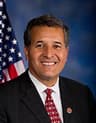 Juan Vargas
Democrat · California
 George Whitesides
Democrat · California