
A Republican bill with 1 Democratic cosponsor · See the cosponsor
Last activity — Referred to the House Committee on Education and Workforce.
In committee
Introduced and handed to a committee in the chamber it started in.
The committee holds it, and most bills are never heard from again. A hearing or a committee vote would be news; silence is the usual outcome, and it kills the bill without anyone voting against it.
Its path through Congress
- Introduced
- In Committee
What this bill would do
This bill directs the Secretary of Energy to create a five-year pilot program that strengthens the domestic science and engineering workforce. It provides competitive grants to higher education institutions to establish accelerated doctoral programs in critical and emerging technology areas. The program encourages partnerships between universities, National Laboratories, other federal agencies, and industry. It also includes provisions for pilot fellowship programs, student support, and annual reporting to Congress. Finally, the legislation authorizes $250,000,000 to be appropriated for fiscal years 2028 through 2032.
Yes· 3 of 16
- Scored +6
Does this put more money into scientific research?
The bill establishes the Department of Energy Strategic Scientific Workforce Pilot Program backed by $250,000,000 in authorized appropriations.
- Scored +6
Would students be better off under this?
Students in eligible doctoral programs receive tuition coverage, stipends, professional development, and structured career support.
- Scored +5
Does this make college cost less?
Participating students receive direct funding and fellowships covering at least three years of their doctoral program.
The opposite
- Scored -3
Would immigrants be better off under this?
Non-citizen students living in the United States are excluded from receiving direct financial assistance and fellowships under the program.
Who it would affect, and how
Potential Positive Impacts for People
- Financial support for students: Under Section 3(1)(B)(i)(III) and Section 4(g)(2)(B), participating students can receive funding covering at least three years of the doctoral portion of the program or direct financial assistance through pilot fellowship programs, which helps ease the cost of pursuing advanced education.
- Shorter time to complete degrees: Section 3(1)(A) defines accelerated doctoral programs to provide pathways for students to complete doctoral degrees at least one academic year faster than the average timeframe, allowing them to enter the workforce sooner while maintaining academic standards.
- Career development and real-world experience: Section 3(1)(C) and Section 4(e)(5) incorporate structured professional development, evidence-based research mentorship, career support, and research rotations at National Laboratories or industry facilities, preparing students for professional success.
- Targeting U.S. citizens and permanent residents: Section 4(e)(6) and Section 4(g)(3) ensure that financial assistance and direct support under the program are strictly provided to United States citizens, nationals, or lawful permanent residents, prioritizing the domestic workforce.
Potential Negative Impacts for People
- Exclusion of non-eligible individuals: Because Section 3(4) strictly defines eligible students as United States citizens, nationals, or lawful permanent residents, non-citizen students living and studying in the United States are completely excluded from receiving direct financial assistance or fellowships under the program as stated in Section 4(e)(7) and Section 4(g)(3).
- Potential for student burnout or stress: Section 3(1)(A) requires students to complete a doctoral degree in a timeframe that is at least one academic year shorter than normal, which could create heavy academic pressure and intense workloads for participating individuals.
Groups and Interests Ranking
Every group the model scored this bill for, from -10 to +10. Tap or hover a score for the reason it gave.
- Education And Technology
- Does this put more money into scientific research? — The bill establishes the Department of Energy Strategic Scientific Workforce Pilot Program backed by $250,000,000 in authorized appropriations. Does this make college cost less? — Participating students receive direct funding and fellowships covering at least three years of their doctoral program. Does this put more money into public schools? — The legislation provides competitive grants and financial assistance to institutions of higher education to support accelerated doctoral programs. Does this reduce what student borrowers owe or repay? — Direct financial assistance and fellowships reduce the need for students to take on debt to complete advanced degrees.
- Demographic And Interest Groups
- Would students be better off under this? — Students in eligible doctoral programs receive tuition coverage, stipends, professional development, and structured career support. Would people in their twenties and thirties be better off under this? — Young adults pursuing higher education in science and engineering benefit directly from financial assistance and accelerated degree pathways. Would households on low incomes be better off under this? — Financial support and fellowships make advanced doctoral education more accessible to students from lower-income backgrounds. Would middle-income households be better off under this? — Middle-income families benefit from reduced out-of-pocket costs for advanced degree programs. Would immigrants be better off under this? — Non-citizen students living in the United States are excluded from receiving direct financial assistance and fellowships under the program.
- Economy And Finance
- Is this likely to grow the economy? — Investing in critical and emerging technologies helps boost long-term national competitiveness and economic growth. Is this likely to create jobs? — The bill strengthens the domestic science and engineering workforce by supporting accelerated doctoral programs and partnerships with industry.
- Governance And Ideology
- Does this make what the government does easier for the public to see? — The legislation requires annual reports to Congress and longitudinal tracking of participating students. Does this give the federal government more power? — The bill directs the Secretary of Energy to establish and administer a new federal pilot program and reporting requirements.
- Healthcare
- Does this put more money into medical research? — The bill authorizes appropriations of $250,000,000 for fiscal years 2028 through 2032 to support doctoral programs and research in critical technology areas.
- Environment Energy And Infrastructure
- Does this put more money into wind, solar and other renewable power? — The bill promotes workforce development and research in clean energy generation, storage, and advanced energy systems.
- National Security And Foreign Policy
- Does this better protect the country from computer attacks? — The legislation explicitly supports doctoral training in critical areas including data privacy, data security, and cybersecurity technologies.
- Social Issues And Justice
- Is this likely to lift people out of poverty? — Providing financial support and fellowships to eligible doctoral students helps ease educational costs and improve career prospects.
- 11/12/2026
- Referred to the House Committee on Education and Workforce.
- 1 Cosponsor added.
- Introduced in House
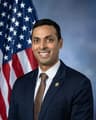 Suhas Subramanyam
Democrat · Virginia