Bill · H.R. 10759· House(119-HR-10759)
Tariff Relief for American Development and Employment Act of 2026
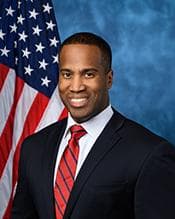
- Introduced
- 10/6/2026
- Last activity
- 10/6/2026 — Referred to the Committee on Financial Services, and in addition to the Committee on Ways and Means, for a period to be subsequently determined by the Speaker, in each case for consideration of such provisions as fall within the jurisdiction of the committee concerned.
- Sponsored by
- John James
- Cosponsors
- None
- Introduced
- In Committee
What this bill would do
The bill establishes a tariff-funded program to protect United States manufacturers, workers, farmers, and supply chains from disproportionate economic harm caused by tariffs and foreign retaliation. It creates the Tariff Impact Relief Program to provide financial assistance, loans, and investment credits to eligible businesses that demonstrate actual tariff-related economic injury. The legislation also sets up the TRADE Fund, financed by tariff revenues, to support these relief efforts without harming general revenues. Additionally, the bill includes strict anti-abuse rules, requires public transparency through a database, and mandates periodic audits and reports to Congress. The program is set to sunset five years after enactment unless reauthorized by Congress.
Yes· 3 of 12
Would business owners be better off under this?+7
Eligible businesses receive direct financial relief, working-capital loans, and investment credits to mitigate tariff-related economic injuries.
Does this make it easier to run a small business?+6
Section 104(e) sets aside at least 35 percent of assistance for small and medium-sized enterprises with streamlined application processes.
Would farmers be better off under this?+5
Agricultural producers suffering from retaliatory foreign tariffs are included as eligible beneficiaries for financial assistance.
The opposite
No question was scored the opposite.
Who it would affect, and how
Potential Positive Impacts for People
-
Financial Relief for Harmed Businesses: Under Section 103, the bill provides refundable tariff impact credits, low-interest working-capital loans, American investment credits, and emergency bridge financing. This helps businesses and workers handle short-term liquidity constraints, prevent facility closures, and avoid substantial layoffs caused by tariffs and retaliatory measures.
-
Support for Small and Medium Enterprises: Section 104(e) ensures that at least 35 percent of annual assistance goes to small and medium-sized enterprises. It also mandates an expedited application process, simplified documentation, and technical assistance to make it easier for smaller businesses to get the help they need.
-
Protection of American Workers: Section 104(f) gives priority to applicants that retain United States workers, avoid tariff-related layoffs, increase wages, establish skills-based training, or create new manufacturing jobs.
-
Strict Anti-Abuse Safeguards: Section 105 explicitly bans the use of assistance for stock buybacks, dividends, capital distributions, or executive compensation increases. It also requires companies to repay assistance if they violate domestic production requirements or relocate production overseas.
Potential Negative Impacts for People
-
Risk of Fraud and Misrepresentation: While the bill includes recapture provisions in Section 105(a), businesses could still attempt to make material misrepresentations to secure government funds. This places a heavy burden on the Department of Commerce and the Inspector General to catch misuse of taxpayer and tariff revenues through audits.
-
Administrative and Compliance Burdens: To qualify for assistance, businesses must meet rigorous eligibility and documentation requirements outlined in Section 102 and Section 104. Smaller applicants or critical employers facing acute needs might find the compliance paperwork challenging to navigate, despite intended simplifications.
-
Temporary Nature of the Program: Section 107 dictates that the program will sunset five years after enactment unless Congress acts to reauthorize it. This creates uncertainty for businesses and workers relying on this financial bridge for long-term domestic investments and supply chain reshoring.
Groups and Interests Ranking
Every group the model scored this bill for, from -10 to +10. Hover a score for the reason it gave.
- Demographic And Interest Groups
- Good For Business Owners+7Good For Farmers+5Good For Middle Aged+4Good For Middle Class Households+4Good For Union Workers+4Good For Rural Residents+3
- Economy And Finance
- Improves Small Business Support+6Increases Job Creation+5Improves Economic Growth+4Improves Fiscal Responsibility+4
- Governance And Ideology
- Improves Government Transparency+5
- Environment Energy And Infrastructure
- Improves Rural Development+3
- 10/6/2026
- Referred to the Committee on Financial Services, and in addition to the Committee on Ways and Means, for a period to be subsequently determined by the Speaker, in each case for consideration of such provisions as fall within the jurisdiction of the committee concerned.
- Introduced in House