Bill · H.R. 10640· House(119-HR-10640)
Urban Health Transformation Act of 2026
- Introduced
- 10/1/2026
- Last activity
- 10/1/2026 — Referred to the Committee on Energy and Commerce, and in addition to the Committee on Ways and Means, for a period to be subsequently determined by the Speaker, in each case for consideration of such provisions as fall within the jurisdiction of the committee concerned.
- Sponsored by
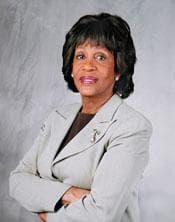
- Maxine Waters
- Cosponsors
- - 12 - 0
- Introduced
- In Committee
What this bill would do
The bill establishes the Urban Health Transformation Program under the Social Security Act to provide federal funding to states and territories for urban health improvements. It appropriates $10,000,000,000 annually for fiscal years 2027 through 2031 for allotments to eligible states and territories with approved plans. States must submit an urban health transformation plan by December 31, 2026, to be eligible for these funds. The program allows funds to be used for activities such as improving chronic disease management, recruiting health care clinicians, and supporting mental health services. Additionally, the legislation provides $200,000,000 for fiscal year 2026 to the Administrator of the Centers for Medicare & Medicaid Services for program implementation.
Yes· 3 of 37
Would people in cities be better off under this?+8
The entire bill is specifically designed to transform and improve healthcare access, facilities, and outcomes for residents of urban areas.
Does this make health care easier to get in general?+8
The bill establishes a major grant program to improve access to hospitals, providers, and care outcomes for urban residents.
Would households on low incomes be better off under this?+7
The bill prioritizes urban facilities serving large numbers of low-income, uninsured, and Medicaid-dependent residents.
The opposite
Does this reduce what the federal government spends?-4
The bill appropriates $50 billion over five years plus implementation funding for urban health programs.
Who it would affect, and how
Potential Positive Impacts for People
-
Improved Access and Care: Under section 1150D(b)(1)(A)(i) and (ii), states must create a plan to improve access to hospitals and health care providers and to improve health care outcomes for urban residents. This could directly benefit people living in cities by making it easier to see a doctor and receive better medical care.
-
Support for Mental Health and Addiction Services: Section 1150F(8) allows states to use funds to support access to opioid use disorder treatment, other substance use disorder treatment services, and mental health services. This directly benefits individuals struggling with addiction or mental health challenges by expanding the availability of these crucial services.
-
No State Matching Requirement: Section 1150D(d) explicitly states that approved states are not required to provide any matching funds to receive their allotment. This ensures that states can participate and benefit their residents without having to scrape together local matching dollars.
-
Advanced Technology and Chronic Disease Management: Section 1150F(1), (3), and (4) allow funds to be used for evidence-based interventions for chronic disease management, consumer-facing technology solutions, and technology-enabled care delivery like remote monitoring and artificial intelligence. This can help everyday people better manage chronic conditions from home.
-
Recruitment of Health Care Workers: Section 1150F(5) permits states to use funds to recruit and retain clinical workforce talent in urban areas with a commitment to serve for at least five years. This can help ensure that urban communities have enough doctors and nurses to care for patients.
Potential Negative Impacts for People
- Risk of Misuse and Withheld Funds: Section 1150D(a)(2)(D) notes that if the Administrator determines a state is not using the funds consistently with its approved application, payments can be withheld, reduced, or recovered. If a state mismanages the money, the local health programs relying on those funds could face sudden financial disruptions, negatively impacting the patients who depend on them.
Groups and Interests Ranking
Every group the model scored this bill for, from -10 to +10. Hover a score for the reason it gave.
- Demographic And Interest Groups
- Good For Urban Residents+8Good For Low Income Households+7Good For African Americans+6Good For Hispanic Americans+6Good For People With Disabilities+6Good For Retirees+6Good For Seniors+6Good For Asian Americans+5Good For Children+5Good For Immigrants+5Good For Middle Aged+5Good For Veterans+5Good For Women+5Good For Young Adults+5Good For L G B T Q Community+4Good For Men+4Good For Middle Class Households+4Good For Union Workers+4Good For White Americans+4Good For Business Owners+3Good For Native Americans+3Good For Students+3
- Healthcare
- Improves Healthcare Access+8Improves Mental Health Access+7Improves Opioid Crisis Response+7Increases Medicaid Funding+6Improves Veterans Healthcare+4Increases Research Funding+3
- Social Issues And Justice
- Improves Racial Equity+5Improves Disability Rights+4Improves Poverty Reduction+4
- Economy And Finance
- Increases Job Creation+5Improves Economic Growth+3Improves Small Business Support+3Reduces Government Spending-4
- Governance And Ideology
- Improves Government Transparency+4Increases Federal Power+3
- National Security And Foreign Policy
- Improves Cybersecurity Defense+4
- 10/1/2026
- Referred to the Committee on Energy and Commerce, and in addition to the Committee on Ways and Means, for a period to be subsequently determined by the Speaker, in each case for consideration of such provisions as fall within the jurisdiction of the committee concerned.
- 12 Cosponsors added.
- Introduced in House
 Wesley Bell
Democrat · Missouri
 Jim Costa
Democrat · California
 Yvette Clarke
Democrat · New York
 André Carson
Democrat · Indiana
 J. Correa
Democrat · California
 Danny Davis
Democrat · Illinois
 Sylvia Garcia
Democrat · Texas
 Jonathan Jackson
Democrat · Illinois
 Robin Kelly
Democrat · Illinois
 Stephen Lynch
Democrat · Massachusetts
 Eleanor Norton
Democrat · District of Columbia
 Delia Ramirez
Democrat · Illinois