Bill · H.R. 10612· House(119-HR-10612)
BASIC Act of 2026
- Introduced
- 9/24/2026
- Last activity
- 9/24/2026 — Referred to the House Committee on Education and Workforce.
- Sponsored by
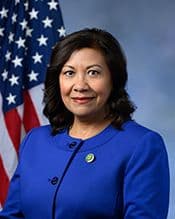
- Norma Torres
- Cosponsors
- - 22 - 0
- Introduced
- In Committee
What this bill would do
This legislation is known as the Basic Assistance for Students In College Act of 2026 or the BASIC Act of 2026. The bill provides competitive planning and implementation grants to eligible institutions of higher education to support the basic needs of students, such as food, housing, and health care. It requires the Secretary of Education to enter into data-sharing agreements with Federal and State agencies to identify and notify students who may be eligible for federally funded benefit programs. The legislation also prohibits schools from reducing a student's institutional grant because the student receives benefits from a federally funded program. Additionally, the bill mandates national reports on student food, housing, and basic needs insecurity. Finally, it authorizes appropriations of one billion dollars for each of fiscal years 2027 through 2033 to carry out these grant programs.
Yes· 3 of 22
Would students be better off under this?+8
The entire bill is structured to provide direct financial, food, housing, and healthcare assistance to college students facing basic needs insecurity.
Would people in their twenties and thirties be better off under this?+7
College-aged students and young adults predominantly populate institutions of higher education and will directly benefit from basic needs support.
Would households on low incomes be better off under this?+7
The bill prioritizes Pell Grant-eligible students and connects low-income individuals to crucial safety net programs like SNAP and Medicaid.
The opposite
Does this reduce what the federal government spends?-4
The bill authorizes appropriations of one billion dollars for each of fiscal years 2027 through 2033 to carry out grant programs.
Who it would affect, and how
Potential Positive Impacts for People
-
Support for Basic Needs: Section 2, through subsections (b) and (c), establishes planning and implementation grants for eligible institutions to address student food insecurity, housing insecurity, homelessness, and other basic needs. This could directly benefit students struggling to afford food, housing, child care, and healthcare while trying to get an education.
-
Data Sharing and Benefit Notification: Section 3 amends the Higher Education Act of 1965 to require data-sharing agreements between the Secretary of Education and appropriate Federal or State agencies. Under new section 483(c)(3), this helps identify students who are potentially eligible for benefit programs like SNAP, Medicaid, housing assistance, and tax credits, and notifies them on how to enroll or renew their benefits.
-
Protection of Institutional Aid: Section 2(f) includes a prohibition stating that an eligible institution receiving a grant under this section may not reduce a student's eligibility for, or the amount of, an institutional grant on the basis of the student receiving benefits from a federally funded benefit program. This ensures students do not lose school-provided financial aid just because they qualify for public assistance.
-
Targeted Funding and Priorities: Section 2(d) requires that the Secretary reserve at least 25 percent of grant funds for community colleges, and at least 25 percent for historically Black colleges and universities, Tribal Colleges and Universities, and other minority-serving institutions. It also gives priority to institutions where at least 25 percent of enrolled students are eligible to receive a Federal Pell Grant, helping direct resources to the schools and students who need them most.
Potential Negative Impacts for People
Based on the provided text, there are no explicit provisions that outline negative consequences or burdens for individuals or groups of people in the United States.
Groups and Interests Ranking
Every group the model scored this bill for, from -10 to +10. Hover a score for the reason it gave.
- Demographic And Interest Groups
- Good For Students+8Good For Low Income Households+7Good For Young Adults+7Good For African Americans+5Good For Native Americans+5Good For Middle Class Households+4Good For People With Disabilities+4Good For Veterans+4Good For Immigrants+3
- Social Issues And Justice
- Improves Childcare Affordability+6Improves Poverty Reduction+6Reduces Homelessness+6Improves Racial Equity+4Improves Disability Rights+3
- Education And Technology
- Increases Public School Funding+7Improves College Affordability+6Improves Internet Access+4
- Governance And Ideology
- Improves Government Transparency+4Increases Federal Power+2
- Healthcare
- Improves Healthcare Access+5
- Economy And Finance
- Increases Job Creation+3Improves Economic Growth+2Reduces Government Spending-4
- 10/9/2026
- 1 Cosponsor added.
- 10/6/2026
- 1 Cosponsor added.
- 10/5/2026
- 3 Cosponsors added.
- 9/28/2026
- 2 Cosponsors added.
- 9/24/2026
- Referred to the House Committee on Education and Workforce.
- 15 Cosponsors added.
- Introduced in House
 Wesley Bell
Democrat · Missouri
 Yvette Clarke
Democrat · New York
 J. Correa
Democrat · California
 Gilbert Cisneros
Democrat · California
 Jasmine Crockett
Democrat · Texas
 Adriano Espaillat
Democrat · New York
 John Garamendi
Democrat · California
 Daniel Goldman
Democrat · New York
 Adelita Grijalva
Democrat · Arizona
 Pablo Hernández
Democrat · Puerto Rico
 Gwen Moore
Democrat · Wisconsin
 Seth Moulton
Democrat · Massachusetts
 Lucy McBath
Democrat · Georgia
 Eleanor Norton
Democrat · District of Columbia
 Scott Peters
Democrat · California
 Linda Sánchez
Democrat · California
 Mary Gay Scanlon
Democrat · Pennsylvania
 Lateefah Simon
Democrat · California
 Rashida Tlaib
Democrat · Michigan
 Shri Thanedar
Democrat · Michigan
 Juan Vargas
Democrat · California
 George Whitesides
Democrat · California