Bill · H.R. 10436· House(119-HR-10436)
Reaching English Learners Act
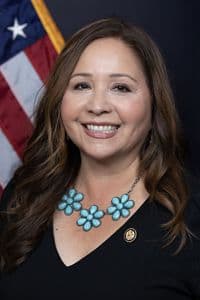
- Introduced
- 9/16/2026
- Last activity
- 9/16/2026 — Referred to the House Committee on Education and Workforce.
- Sponsored by
- Adelita Grijalva
- Cosponsors
- - 5 - 0
- Introduced
- In Committee
What this bill would do
This bill is called the Reaching English Learners Act and it amends the Higher Education Act of 1965. It directs the Secretary of Education to award competitive grants to eligible partnerships. These grants aim to improve how teacher candidates are prepared to instruct English learners. The grants last for a period of not more than five years. Partnerships must provide at least 50 percent of the cost of activities from non-Federal sources.
Yes· 3 of 15
Would children be better off under this?+5
The bill trains teachers to better support English learner students and children with disabilities in early childhood and K-12 education.
Would Hispanic Americans be better off under this?+5
Hispanic Americans make up a large portion of English learners and benefit directly from targeted educational improvements and teacher recruitment.
Would immigrants be better off under this?+5
Immigrant children who are English learners will receive significantly improved instructional support and resources from better-prepared teachers.
The opposite
No question was scored the opposite.
Who it would affect, and how
Potential Positive Impacts for People
-
Section 259(c) gives preference to eligible partnerships that recruit and enroll teacher candidates from underrepresented populations or former English learners, which could benefit these specific groups by creating more targeted educational and career opportunities.
-
Section 259(e)(1) allows funds to be used to develop or strengthen teacher preparation programs that incorporate evidence-based strategies like bilingual, immersion, and dual-language education, which may improve instruction for students learning English.
-
Section 259(e)(2)(B) helps teacher candidates gain skills in appropriately identifying and meeting the specific learning needs of children with disabilities who are English learners, potentially leading to better support for these students.
-
Section 259(e)(3) provides high-quality preservice clinical experience, including clinical learning in classrooms serving English learners and mentoring by certified teachers, which helps prepare better teachers for the classroom.
Potential Negative Impacts for People
- Section 259(d) requires an eligible partnership receiving a grant to provide not less than 50 percent of the cost of the activities from non-Federal sources, which might place a financial burden or barrier on partnerships that struggle to secure matching funds.
Groups and Interests Ranking
Every group the model scored this bill for, from -10 to +10. Hover a score for the reason it gave.
- Demographic And Interest Groups
- Good For Children+5Good For Hispanic Americans+5Good For Immigrants+5Good For Students+5Good For Asian Americans+4Good For People With Disabilities+4Good For Young Adults+4Good For Low Income Households+3
- Social Issues And Justice
- Improves Disability Rights+4Improves Racial Equity+4Improves Poverty Reduction+2
- Education And Technology
- Increases Public School Funding+5Increases Scientific Research Funding+2
- Economy And Finance
- Increases Job Creation+3
- Governance And Ideology
- Improves Government Transparency+3
- 9/24/2026
- 2 Cosponsors added.
- 9/16/2026
- Referred to the House Committee on Education and Workforce.
- 3 Cosponsors added.
- Introduced in House
4 bills Congress.gov lists as related to this one — companions in the other chamber, earlier versions, and bills this one absorbed or was folded into.
 Adriano Espaillat
Democrat · New York
 Eleanor Norton
Democrat · District of Columbia
 Melanie Stansbury
Democrat · New Mexico
 Juan Vargas
Democrat · California
 Frederica Wilson
Democrat · Florida