Bill · H.R. 1042· House(119-HR-1042)
Project Turnkey Act
- Introduced
- 2/6/2025
- Last activity
- 2/6/2025 — Referred to the House Committee on Financial Services.
- Sponsored by
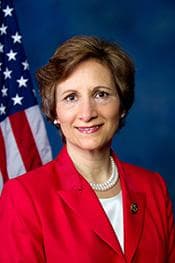
- Suzanne Bonamici
- Cosponsors
- - 16 - 0
- Introduced
- In Committee
What this bill would do
The Project Turnkey Act proposes to amend the HOME Investment Partnerships Act to create the Project Turnkey Program. This program aims to leverage vacant hotels and motels to increase national shelter capacity and housing availability. The Secretary would award funds to various eligible entities for activities such as rental assistance, supportive services, and the conversion of vacant properties. The bill authorizes $1,000,000,000 annually to carry out these goals. These funds are intended to remain available until the year 2035.
Yes· 3 of 8
Is this likely to reduce homelessness?+9
The bill specifically targets increasing shelter capacity through the conversion of vacant hotels and motels.
Does this make housing cost less?+8
The bill provides $1 billion annually to convert vacant properties and provide rental assistance to increase affordable housing supply.
Would households on low incomes be better off under this?+8
The bill directly provides rental assistance, security deposits, and utility payments for low-income and homeless individuals.
The opposite
Does this reduce what the federal government spends?-1
The bill authorizes $1,000,000,000 in annual federal spending for the Project Turnkey Program.
Does this improve buses, trains and other public transport?-1
The bill focuses on residential property conversion rather than public transportation infrastructure.
Who it would affect, and how
Potential Positive Impacts for People
-
Increased Housing and Shelter Capacity: The bill allows for the acquisition, development, and operation of non-congregate shelter units or affordable rental housing, as well as the conversion of vacant properties like motels, hotels, schools, and hospitals into affordable housing (Section 2, (b)(3)(D-E)).
-
Direct Rental Assistance: Eligible entities can use funds for rental assistance, which includes providing rent, security deposit, and utility payments (Section 2, (b)(3)(A)).
-
Expanded Support Services: The program funds supportive services, which include housing counseling and homeless prevention services (Section 2, (b)(3)(C)).
-
Capacity Building for Nonprofits: Funds can be used to cover the operating expenses of community housing development organizations and nonprofit organizations to help them carry out authorized activities (Section 2, (b)(2)(A)).
-
Technical Assistance: The Secretary can provide $25,000,000 to increase capacity building and technical assistance for grantees (Section 2, (g)(2)).
Potential Negative Impacts for People
-
Strict Funding Restrictions: To receive funds, an eligible entity must ensure the money only supplements, rather than replaces, existing State or local funds (Section 2, (d)).
-
Administrative Limits: There are strict caps on how funds can be used, such as a 15 percent limit on administrative and planning costs and a 5 percent limit on covering the operating expenses of certain nonprofit organizations (Section 2, (b)(1-2)).
-
Waiver of Requirements: The Secretary has the authority to waive or change certain requirements of the Cranston-Gonzalez National Affordable Housing Act and the McKinney-Vento Homelessness Act to speed up the process, though they cannot waive requirements related to fair housing, nondiscrimination, labor standards, or the environment (Section 2, (g)(4)).
Groups and Interests Ranking
Every group the model scored this bill for, from -10 to +10. Hover a score for the reason it gave.
- Social Issues And Justice
- Reduces Homelessness+9Improves Affordable Housing+8Improves Poverty Reduction+6
- Demographic And Interest Groups
- Good For Low Income Households+8Good For Children+5Good For Women+5Good For People With Disabilities+4
- Economy And Finance
- Reduces Government Spending-1
- Environment Energy And Infrastructure
- Improves Public Transit-1
- Governance And Ideology
- Improves Government Transparency+1
- 10/5/2026
- 1 Cosponsor added.
- 6/4/2025
- 1 Cosponsor added.
- 3/31/2025
- 1 Cosponsor added.
- 2/21/2025
- 1 Cosponsor added.
- 2/10/2025
- 1 Cosponsor added.
- 2/6/2025
- Referred to the House Committee on Financial Services.
- 11 Cosponsors added.
- Introduced in House
 Gabe Amo
Democrat · Rhode Island
 Yassamin Ansari
Democrat · Arizona
 Becca Balint
Democrat · Vermont
 Sheila Cherfilus-McCormick
Democrat · Florida
 Maxine Dexter
Democrat · Oregon
 Robert Garcia
Democrat · California
 Jahana Hayes
Democrat · Connecticut
 Val Hoyle
Democrat · Oregon
 Sara Jacobs
Democrat · California
 Eleanor Norton
Democrat · District of Columbia
 Scott Peters
Democrat · California
 Delia Ramirez
Democrat · Illinois
 Emilia Sykes
Democrat · Ohio
 Andrea Salinas
Democrat · Oregon
 Rashida Tlaib
Democrat · Michigan
 Bonnie Watson Coleman
Democrat · New Jersey