Bill · H.R. 10393· House(119-HR-10393)
WIC for Kids Act
- Introduced
- 9/15/2026
- Last activity
- 9/15/2026 — Referred to the House Committee on Education and Workforce.
- Sponsored by
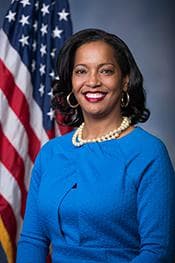
- Jahana Hayes
- Cosponsors
- - 33 - 0
- Introduced
- In Committee
What this bill would do
This bill is called the WIC for Kids Act and it changes the Child Nutrition Act of 1966. It extends certain certification periods for the special supplemental nutrition program for women, infants, and children. The legislation updates eligibility rules and makes it easier for families to stay on the program. It was introduced in the House of Representatives on September 15, 2026.
Yes· 3 of 7
Would households on low incomes be better off under this?+8
The legislation expands WIC eligibility and reduces administrative hurdles for low-income families receiving assistance.
Would children be better off under this?+7
The bill extends child certification periods to two years and provides continuous access to nutrition benefits for growing children.
Would women be better off under this?+7
The bill supports pregnant and postpartum women by streamlining WIC certification and automatically certifying infants.
The opposite
No question was scored the opposite.
Who it would affect, and how
Potential Positive Impacts for People
-
Longer certification periods for children: Under Section 2(d), the bill extends the child certification period from 1 year to 2 years. This is positive because it means families will not have to go through the renewal process as often, saving them time and keeping kids on the program longer without interruption.
-
Automatic certification for infants: Under Section 2(c), the bill adds clause (v) which states that a State shall certify for participation, without further application, an infant born to a pregnant individual who is participating in the program. This helps new parents by removing paperwork and ensuring newborns get nutrition help right away.
-
Expanded eligibility through household connections: Under Section 2(a), the bill expands eligibility so that individuals can qualify if someone in their household receives certain assistance, such as Head Start, food distribution on Indian reservations, or specific territorial nutrition assistance programs. This is positive because it helps more struggling families qualify for the WIC program through benefits they already receive.
-
Easier recertification for families: Under Section 2(c), the bill adds clause (iv) and clause (vi) to allow alignment of certification periods for family members and requires States to check for other eligibility before demanding new income paperwork. This reduces the burden on everyday people by cutting down on red tape and administrative hassle.
-
Inclusion of kinship families: Under Section 2(e), the bill updates Section 17(f)(1)(C)(ix) of the Child Nutrition Act of 1966 to explicitly insert a kinship family regarding the care of children. This is a good thing because it ensures that grandparents and other relatives raising children are clearly covered and supported by the program.
Potential Negative Impacts for People
The provided text of the bill does not contain any specific sections or provisions that outline negative consequences or burdens for individuals or groups of people in the United States.
Groups and Interests Ranking
Every group the model scored this bill for, from -10 to +10. Hover a score for the reason it gave.
- Demographic And Interest Groups
- Good For Low Income Households+8Good For Children+7Good For Women+7Good For Young Adults+6Good For Native Americans+5Good For Middle Class Households+3Good For Seniors+2
- 10/5/2026
- 1 Cosponsor added.
- 9/24/2026
- 3 Cosponsors added.
- 9/17/2026
- 4 Cosponsors added.
- 9/15/2026
- Referred to the House Committee on Education and Workforce.
- 25 Cosponsors added.
- Introduced in House
One bill Congress.gov lists as related to this one — companions in the other chamber, earlier versions, and bills this one absorbed or was folded into.
 Nanette Barragán
Democrat · California
 Shontel Brown
Democrat · Ohio
 Wesley Bell
Democrat · Missouri
 Janelle Bynum
Democrat · Oregon
 Jim Costa
Democrat · California
 Joe Courtney
Democrat · Connecticut
 Judy Chu
Democrat · California
 Salud Carbajal
Democrat · California
 Troy Carter
Democrat · Louisiana
 Mark DeSaulnier
Democrat · California
 Debbie Dingell
Democrat · Michigan
 Madeleine Dean
Democrat · Pennsylvania
 Jimmy Gomez
Democrat · California
 Daniel Goldman
Democrat · New York
 Adelita Grijalva
Democrat · Arizona
 Steven Horsford
Democrat · Nevada
 Pramila Jayapal
Democrat · Washington
 Sara Jacobs
Democrat · California
 William Keating
Democrat · Massachusetts
 Raja Krishnamoorthi
Democrat · Illinois
 Timothy Kennedy
Democrat · New York
 Gwen Moore
Democrat · Wisconsin
 Seth Moulton
Democrat · Massachusetts
 LaMonica McIver
Democrat · New Jersey
 Eleanor Norton
Democrat · District of Columbia
 Chellie Pingree
Democrat · Maine
 Mary Gay Scanlon
Democrat · Pennsylvania
 Lateefah Simon
Democrat · California
 Bennie Thompson
Democrat · Mississippi
 Shri Thanedar
Democrat · Michigan
 Nikema Williams
Democrat · Georgia
 Frederica Wilson
Democrat · Florida
 George Whitesides
Democrat · California