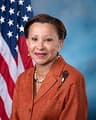
Nydia Velázquez (D-NY)
504 Modernization and Small Manufacturer Enhancement Act of 2026
A Democratic bill with 1 Republican cosponsor · See all 3 cosponsors
Last activity — Received in the Senate and Read twice and referred to the Committee on Small Business and Entrepreneurship.
In the other chamber's committee
Passed one chamber and has been handed to a committee in the other.
The committee decides whether it goes any further, and most bills that reach a committee never leave it. A committee that simply does nothing kills a bill without anyone ever voting against it, so no news from here is usually the news.
Its path through Congress
- Introduced
- Passed House voice vote
- In Senate committee
The House by voice vote (members called out yes or no together): no member's position on it was recorded.
What this bill would do
This bill makes changes to the Small Business Investment Act of 1958 to improve loan guaranty programs and help small manufacturers get affordable capital. It adds new policy goals for development companies, such as focusing on workforce training, disaster recovery areas, and tiny businesses. The legislation also streamlines the loan closing process by letting certain lenders and attorneys handle paperwork differently. Additionally, the bill updates leasing rules for new and existing buildings used in these loan projects. Finally, it exempts certain loans from specific credit availability rules and sets the implementation date for late 2027.
Yes· 3 of 7
- Scored +8
Would business owners be better off under this?
The bill provides significant benefits including streamlined loan closings, increased leasing flexibility, and expanded support for very small businesses.
- Scored +7
Does this make it easier to run a small business?
The bill enhances capital access by streamlining loan closing procedures and increasing leasing flexibility for new and existing facilities.
- Scored +5
Is this likely to create jobs?
The bill promotes workforce development through work-based training requirements for small businesses.
The opposite
No question was scored the opposite.
How the text last changed
Engrossed in House (11/11/2026), compared with Reported in House. Each change is on the Text tab.
The newer version of the bill removes a requirement for the Small Business Administration Administrator to begin implementing a marketing and outreach plan within 1 year of enactment, while keeping the requirement to develop and implement such a plan. It changes the wording of a required report to Congress from analyzing the "impact" to the "effect" of leasing rule amendments on small business access to capital. Finally, it adds a new section stating that the Act and its amendments apply to loans made or guaranteed under title V of the Small Business Investment Act of 1958 on or after October 1, 2027.
Who it would affect, and how
Potential Positive Impacts for People
-
Workforce Training Support: Section 2 adds workforce development as a policy goal, requiring small businesses to have a 12-week in-house training program or contract with an entity to provide trained applicants to qualify. This could benefit job seekers by encouraging employers to invest in job training.
-
Disaster Area Recovery: Section 2 also adds aid for revitalizing disaster-declared areas within a five-year window as a development company program goal. This could help local individuals and communities rebuild after a disaster.
-
Support for Tiny Businesses: Section 2 includes the expansion of small businesses with 10 or fewer employees as a specific policy goal. This focuses resources on helping the smallest mom-and-pop operations grow.
-
Easier Loan Closings: Section 3 allows accredited lenders and designated attorneys to handle certain loan closing actions, like making typographical corrections or reallocating project costs up to 10 percent. This could speed up the loan process for borrowers.
-
Outreach and Marketing: Section 4 requires the Small Business Administration to develop and implement a marketing and outreach plan for the loans. This helps ensure everyday people know what financial help is available to them.
-
Flexible Building Leasing: Section 5 updates leasing rules to allow assisted small businesses and small manufacturers to lease portions of their new or existing buildings to commercial or residential tenants. This provides flexibility for business owners to generate extra rental income.
Potential Negative Impacts for People
- Burdensome Compliance Checks: Section 5 requires development companies to conduct annual and biannual examinations of certain small businesses and file anti-investor certifications to ensure they are not acting as real estate development businesses. This adds bureaucratic oversight and reporting burdens on the participating companies.
Groups and Interests Ranking
Every group the model scored this bill for, from -10 to +10. Tap or hover a score for the reason it gave.
- Demographic And Interest Groups
- Would business owners be better off under this? — The bill provides significant benefits including streamlined loan closings, increased leasing flexibility, and expanded support for very small businesses. Would people in rural areas be better off under this? — Disaster revitalization goals may specifically benefit rural communities facing declared disasters. Would households on low incomes be better off under this? — Increased small business support and potential residential leasing may have minor positive impacts on local economic stability.
- Economy And Finance
- Does this make it easier to run a small business? — The bill enhances capital access by streamlining loan closing procedures and increasing leasing flexibility for new and existing facilities. Is this likely to create jobs? — The bill promotes workforce development through work-based training requirements for small businesses.
- Environment Energy And Infrastructure
- Does this improve help for people hit by a disaster? — The bill adds a goal to aid the revitalization of areas affected by declared disasters.
- Social Issues And Justice
- Does this make housing cost less? — The bill allows small businesses to lease portions of their projects to residential tenants, potentially increasing housing availability.
Handed to a committee to examine
What changed from Engrossed in House: No change to the wording. Only the printed details that record the bill’s progress, such as the heading and dates, are different.
The version one chamber actually passed
What changed from Reported in House
The newer version of the bill removes a requirement for the Small Business Administration Administrator to begin implementing a marketing and outreach plan within 1 year of enactment, while keeping the requirement to develop and implement such a plan. It changes the wording of a required report to Congress from analyzing the "impact" to the "effect" of leasing rule amendments on small business access to capital. Finally, it adds a new section stating that the Act and its amendments apply to loans made or guaranteed under title V of the Small Business Investment Act of 1958 on or after October 1, 2027.
Each change
- Section 4: Removed the subsection requiring the Administrator of the Small Business Administration to begin implementing the marketing and outreach plan not later than 1 year after the date of the enactment of this Act, and restructured the remaining text of the section.
- Section 5: Changed the required congressional report in subsection (b) from analyzing the [-impact-] to analyzing the {+effect+} of the amendments on access to capital for small business concerns.
- Section 7: Added a new section stating that the Act and its amendments shall apply with respect to a loan made or guaranteed under title V of the Small Business Investment Act of 1958 on or after October 1, 2027.
Written by an AI model from a comparison of this version’s text with the one before it, not by a person. .
A committee approved it and sent it to the floor
What changed from Introduced in House: No change to the wording. Only the printed details that record the bill’s progress, such as the heading and dates, are different.
- 11/12/2026
- Received in the Senate and Read twice and referred to the Committee on Small Business and Entrepreneurship.
- 11/11/2026
- Motion to reconsider laid on the table Agreed to without objection.
- Passed/agreed to in House: On motion to suspend the rules and pass the bill, as amended Agreed to by voice vote.
- On motion to suspend the rules and pass the bill, as amended Agreed to by voice vote.
- DEBATE - The House proceeded with forty minutes of debate on H.R. 10375.
- Considered under suspension of the rules.
- Mr. Williams (TX) moved to suspend the rules and pass the bill, as amended.
- 10/9/2026
- Reported by the Committee on Small Business. H. Rept. 119-848.
- Placed on the Union Calendar, Calendar No. 745.
- 9/16/2026
- Committee Consideration and Mark-up Session Held
- Ordered to be Reported by the Yeas and Nays: 23 - 0.
- 2 Cosponsors added.
- 9/14/2026
- Referred to the House Committee on Small Business.
- 1 Cosponsor added.
- Introduced in House
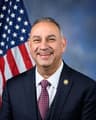 Gilbert Cisneros
Democrat · California
 Derek Tran
Democrat · California
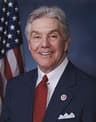 Roger Williams
Republican · Texas