Bill · H.R. 1035· House(119-HR-1035)
Job Protection Act
- Introduced
- 2/5/2025
- Last activity
- 2/5/2025 — Referred to the Committee on Education and Workforce, and in addition to the Committees on House Administration, and Oversight and Government Reform, for a period to be subsequently determined by the Speaker, in each case for consideration of such provisions as fall within the jurisdiction of the committee concerned.
- Sponsored by
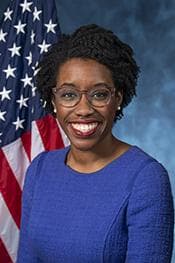
- Lauren Underwood
- Cosponsors
- - 61 - 0
- Introduced
- In Committee
What this bill would do
This bill, known as the "Job Protection Act," seeks to amend the Family and Medical Leave Act. It aims to expand the number of employees eligible for leave and the number of employers subject to leave requirements. The legislation changes the employment duration required for leave eligibility from 12 months to 90 days. It also applies these changes to Federal, Presidential, and Congressional employees. Additionally, it expands the scope of employers required to comply with leave requirements.
Yes· 3 of 5
Would households on low incomes be better off under this?+5
Lowering the employment threshold for leave provides better job protection for low-income workers.
Would middle-income households be better off under this?+5
Increased access to family and medical leave benefits middle-class workers.
Would women be better off under this?+5
Easier access to medical and family leave is often beneficial to women's workforce participation.
The opposite
Would business owners be better off under this?-5
The expanded scope of required employers creates more administrative and labor costs for small businesses.
Does this make it easier to run a small business?-3
Small businesses with 1 or more employees will now face mandatory leave requirements previously reserved for larger employers.
Who it would affect, and how
Potential Positive Impacts for People
-
Easier access to leave for employees: By changing the required length of employment from 12 months to 90 days, employees can become eligible for leave much sooner (Sec. 2(a)(1)).
-
Expanded coverage for Federal, Presidential, and Congressional employees: The bill reduces the time requirements for these specific groups from 12 months to 90 days, making leave more accessible to them (Sec. 2(b)).
-
Increased employer accountability: The bill changes the requirement for employers subject to leave requirements from having 50 or more employees to having 1 or more employees (Sec. 3).
Potential Negative Impacts for People
- Exclusion of certain Federal officers: The bill amends the Family and Medical Leave Act to include a provision that does not include any Federal officer or employee covered under subchapter V of chapter 63 of title 5, United States Code (Sec. 2(a)(2)).
Groups and Interests Ranking
Every group the model scored this bill for, from -10 to +10. Hover a score for the reason it gave.
- Demographic And Interest Groups
- Good For Low Income Households+5Good For Middle Class Households+5Good For People With Disabilities+5Good For Union Workers+5Good For Women+5Good For Business Owners-5
- Economy And Finance
- Improves Small Business Support-3
- 9/15/2026
- 1 Cosponsor added.
- 3/10/2025
- 2 Cosponsors added.
- 3/3/2025
- 1 Cosponsor added.
- 2/24/2025
- 3 Cosponsors added.
- 2/14/2025
- 1 Cosponsor added.
- 2/10/2025
- 1 Cosponsor added.
- 2/7/2025
- 2 Cosponsors added.
- 2/5/2025
- Referred to the Committee on Education and Workforce, and in addition to the Committees on House Administration, and Oversight and Government Reform, for a period to be subsequently determined by the Speaker, in each case for consideration of such provisions as fall within the jurisdiction of the committee concerned.
- 50 Cosponsors added.
- Introduced in House
One bill Congress.gov lists as related to this one — companions in the other chamber, earlier versions, and bills this one absorbed or was folded into.
 Yassamin Ansari
Democrat · Arizona
 Suzanne Bonamici
Democrat · Oregon
 Donald Beyer
Democrat · Virginia
 Nanette Barragán
Democrat · California
 Shontel Brown
Democrat · Ohio
 Emanuel Cleaver
Democrat · Missouri
 Kathy Castor
Democrat · Florida
 Yvette Clarke
Democrat · New York
 André Carson
Democrat · Indiana
 Judy Chu
Democrat · California
 Sean Casten
Democrat · Illinois
 Troy Carter
Democrat · Louisiana
 Sheila Cherfilus-McCormick
Democrat · Florida
 Greg Casar
Democrat · Texas
 Danny Davis
Democrat · Illinois
 Rosa DeLauro
Democrat · Connecticut
 Donald Davis
Democrat · North Carolina
 Christopher Deluzio
Democrat · Pennsylvania
 Mark DeSaulnier
Democrat · California
 Debbie Dingell
Democrat · Michigan
 Maxwell Frost
Democrat · Florida
 Jimmy Gomez
Democrat · California
 Jesús García
Democrat · Illinois
 Daniel Goldman
Democrat · New York
 Jahana Hayes
Democrat · Connecticut
 Val Hoyle
Democrat · Oregon
 Henry Johnson
Democrat · Georgia
 Pramila Jayapal
Democrat · Washington
 Jonathan Jackson
Democrat · Illinois
 Robin Kelly
Democrat · Illinois
 Ro Khanna
Democrat · California
 Timothy Kennedy
Democrat · New York
 Zoe Lofgren
Democrat · California
 Stephen Lynch
Democrat · Massachusetts
 Greg Landsman
Democrat · Ohio
 James McGovern
Democrat · Massachusetts
 Betty McCollum
Democrat · Minnesota
 Grace Meng
Democrat · New York
 Seth Moulton
Democrat · Massachusetts
 Lucy McBath
Democrat · Georgia
 Morgan McGarvey
Democrat · Kentucky
 Seth Magaziner
Democrat · Rhode Island
 Kevin Mullin
Democrat · California
 Robert Menendez
Democrat · New Jersey
 Sarah McBride
Democrat · Delaware
 Jerrold Nadler
Democrat · New York
 Eleanor Norton
Democrat · District of Columbia
 Alexandria Ocasio-Cortez
Democrat · New York
 Ilhan Omar
Democrat · Minnesota
 Mark Pocan
Democrat · Wisconsin
 Ayanna Pressley
Democrat · Massachusetts
 Janice Schakowsky
Democrat · Illinois
 Linda Sánchez
Democrat · California
 Marilyn Strickland
Democrat · Washington
 Melanie Stansbury
Democrat · New Mexico
 Dina Titus
Democrat · Nevada
 Mark Takano
Democrat · California
 Rashida Tlaib
Democrat · Michigan
 Jill Tokuda
Democrat · Hawaii
 Shri Thanedar
Democrat · Michigan
 Bonnie Watson Coleman
Democrat · New Jersey