Bill · H.R. 10345· House(119-HR-10345)
EBOLA Act
- Introduced
- 9/10/2026
- Last activity
- 9/10/2026 — Referred to the House Committee on Foreign Affairs.
- Sponsored by
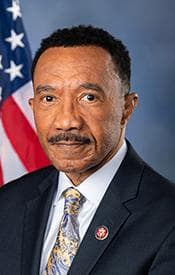
- Kweisi Mfume
- Cosponsors
- - 18 - 0
- Introduced
- In Committee
What this bill would do
This bill is known as the Epidemic Barrier and Outbreak Leadership Act, or the EBOLA Act. It requires the United States to continue participating in the World Health Organization. The text points out that infectious disease outbreaks threaten national security and public health. It notes that the 2026 Ebola Disease outbreak in Central and Eastern Africa has spread across borders with over 1,000 cases. It also mentions that the previous administration initiated a withdrawal of the United States from the organization. Finally, the bill directs the government to rejoin the organization and help respond to the Ebola outbreak.
Yes· 3 of 37
Does this strengthen ties with allied countries?+8
Restores U.S. membership in the WHO, strengthening ties with global health partners.
Does this make the country readier for the next outbreak?+8
Directly aims to rejoin the WHO for disease surveillance and outbreak coordination.
Does this send more money or help to other countries?+7
Authorizes voluntary contributions and programmatic support for Ebola efforts in Africa.
The opposite
Does this reduce what the federal government owes?-2
The bill authorizes additional spending for WHO membership dues and outbreak response efforts.
Does this reduce what the federal government spends?-2
The bill authorizes new expenditures to rejoin and fund the WHO.
Does this make the government pay for what it commits to?-1
Increases government spending without identifying specific offsets.
Who it would affect, and how
Potential Positive Impacts for People
-
Rejoining the World Health Organization: Under Section 3, the President must take all necessary steps to rejoin the organization within 30 days of the bill's enactment. This is positive because participation enhances the ability of the United States to monitor emerging infectious diseases and protect the health of the American people, as noted in Section 2.
-
Immediate Outbreak Response: Section 3 also requires the government to immediately collaborate with the World Health Organization to respond to the Ebola Disease outbreak in Central and Eastern Africa. This is beneficial for helping stop the spread of a disease that poses a threat to public health.
-
Funding for Membership and Relief: Section 4 authorizes necessary appropriations to pay assessed contributions to restore United States membership and to support the response effort of the World Health Organization and other United Nations entities. This is positive because it aims to prevent global transmission of the virus, including transmission to the people and territory of the United States.
Potential Negative Impacts for People
- Financial Costs: Under Section 4, the bill authorizes the appropriation of such sums as may be necessary to pay assessed contributions, financial obligations, and voluntary contributions. This could be viewed as a negative burden on taxpayers who will fund these costs.
Groups and Interests Ranking
Every group the model scored this bill for, from -10 to +10. Hover a score for the reason it gave.
- Demographic And Interest Groups
- Good For Immigrants+4Good For Low Income Households+4Good For Urban Residents+4Good For African Americans+3Good For Asian Americans+3Good For Billionaires+3Good For Children+3Good For High Income Households+3Good For High Net Worth Individuals+3Good For Hispanic Americans+3Good For L G B T Q Community+3Good For Men+3Good For Middle Aged+3Good For Middle Class Households+3Good For Native Americans+3Good For People With Disabilities+3Good For Retirees+3Good For Rural Residents+3Good For Seniors+3Good For Students+3Good For Ultra High Net Worth Individuals+3Good For Veterans+3Good For White Americans+3Good For Women+3Good For Young Adults+3Good For Business Owners+2
- National Security And Foreign Policy
- Improves International Alliances+8Improves Diplomatic Engagement+7Increases Foreign Aid+7Improves International Trade+1
- Healthcare
- Improves Pandemic Preparedness+8Increases Research Funding+3Improves Healthcare Access+2
- Economy And Finance
- Improves Economic Growth+1Reduces Government Spending-2Reduces National Debt-2Improves Fiscal Responsibility-1
- Education And Technology
- Increases Scientific Research Funding+3
- Social Issues And Justice
- Improves Border Security+2
- Governance And Ideology
- Increases Federal Power+1
- 10/6/2026
- 1 Cosponsor added.
- 9/16/2026
- 1 Cosponsor added.
- 9/14/2026
- 1 Cosponsor added.
- 9/10/2026
- Referred to the House Committee on Foreign Affairs.
- 15 Cosponsors added.
- Introduced in House
One bill Congress.gov lists as related to this one — companions in the other chamber, earlier versions, and bills this one absorbed or was folded into.
 Yvette Clarke
Democrat · New York
 Jasmine Crockett
Democrat · Texas
 Danny Davis
Democrat · Illinois
 Madeleine Dean
Democrat · Pennsylvania
 Henry Johnson
Democrat · Georgia
 Pramila Jayapal
Democrat · Washington
 Jonathan Jackson
Democrat · Illinois
 Sydney Kamlager-Dove
Democrat · California
 Stephen Lynch
Democrat · Massachusetts
 Seth Moulton
Democrat · Massachusetts
 Sarah McBride
Democrat · Delaware
 Eleanor Norton
Democrat · District of Columbia
 Ilhan Omar
Democrat · Minnesota
 Johnny Olszewski
Democrat · Maryland
 Deborah Ross
Democrat · North Carolina
 Rashida Tlaib
Democrat · Michigan
 Shri Thanedar
Democrat · Michigan
 Nydia Velázquez
Democrat · New York