Bill · H.R. 10330· House(119-HR-10330)
Higher Education Oversight for Nonprofits Ensuring Standards and Transparency Act
- Introduced
- 9/10/2026
- Last activity
- 9/10/2026 — Referred to the House Committee on Ways and Means.
- Sponsored by
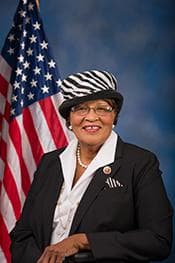
- Alma Adams
- Cosponsors
- - 20 - 0
- Introduced
- In Committee
What this bill would do
This bill is known as the Higher Education Oversight for Nonprofits Ensuring Standards and Transparency Act. It amends the Internal Revenue Code of 1986 to place specific restrictions on tax inquiries and examinations directed at universities. The legislation sets clear requirements that high-level Treasury officials must meet before starting a tax inquiry or examination into a university. It also establishes timelines for completing these inquiries and limits how far back the IRS can assess taxes. Additionally, the bill requires the Secretary of the Treasury to submit confidential reports about these university tax actions to specific congressional committees. Finally, the rules laid out in the bill do not apply to criminal investigations or situations involving tax evasion.
Yes· 3 of 7
Does this protect the right to fair treatment by the courts?+7
Establishes strict notice requirements and conference rights for universities facing tax inquiries.
Does this protect the individual right to speak freely?+5
Prevents the use of tax examinations to target the ideological positions or advocacy of universities.
Does this protect what people are allowed to say in public life?+5
Protects universities from tax-based probes into ideological positions and scholastic content.
The opposite· 3 of 4
Does this give the federal government more power?-5
Significantly restricts the federal government's power to audit and examine nonprofit universities.
Does this give the government more power to monitor people inside the country?-3
Requires the Secretary to report university inquiries to Congress, increasing legislative oversight of specific institutions.
Does this reduce what the federal government owes?-2
Limiting the statute of limitations for tax assessments may reduce total government revenue.
Who it would affect, and how
Potential Positive Impacts for People
-
Written Notice Requirements: Under Section 2 (adding Internal Revenue Code Section 7613(a)(3)), the Secretary must provide written notice to a university before starting any tax inquiry, explaining the concerns and general subject matter. This ensures transparency so that institutions and the people connected to them understand why the government is asking questions.
-
Right to a Conference: Under Section 2 (adding Internal Revenue Code Section 7613(b)(2)), universities are given a reasonable time to participate in a conference with the Secretary to discuss and attempt to resolve concerns before an examination begins. This gives folks at the university a fair chance to talk through issues directly with officials.
-
Strict Completion Deadlines: Under Section 2 (adding Internal Revenue Code Section 7613(c)(1)), the Secretary must complete any university tax inquiry or examination within two years of the examination notice date, or within 90 days for inquiries not followed by an examination. This prevents drawn-out, indefinite government investigations that could unfairly burden these institutions.
-
Protection from Repeated Investigations: Under Section 2 (adding Internal Revenue Code Section 7613(f)), if a completed inquiry or examination does not result in an adverse tax determination or a request for significant operational changes, no new inquiry or examination can begin for a 5-year period without special approval. This protects universities from being constantly harassed by repetitive government audits.
-
Potential Negative Impacts for People
-
Limits on Unrelated Business Tax Assessments: Under Section 2 (adding Internal Revenue Code Section 7613(d)(2)(B)), the IRS can only assess taxes on unrelated business income for the six most recent taxable years. If an institution engaged in improper business activities further in the past, this restriction could prevent the government from collecting taxes owed to the public.
- Restricted IRS Oversight: Under Section 2 (adding Internal Revenue Code Section 7613(a)(2)), the Secretary must meet a reasonable belief requirement recorded in writing before beginning an inquiry. Because of these extra procedural hurdles and oversight rules, it might become harder for tax authorities to quickly investigate universities that may be skirting tax laws, potentially reducing accountability for wealthy institutions.
Groups and Interests Ranking
Every group the model scored this bill for, from -10 to +10. Hover a score for the reason it gave.
- Governance And Ideology
- Improves Due Process+7Improves Freedom Of Speech+5Improves Privacy Rights+4Improves Government Transparency+3Increases Federal Power-5
- Demographic And Interest Groups
- Good For Students+3Good For Young Adults+2
- Social Issues And Justice
- Improves Freedom Of Speech+5
- Economy And Finance
- Reduces National Debt-2Improves Fiscal Responsibility-1
- National Security And Foreign Policy
- Increases Domestic Surveillance-3
- 9/24/2026
- 1 Cosponsor added.
- 9/16/2026
- 1 Cosponsor added.
- 9/15/2026
- 1 Cosponsor added.
- 9/10/2026
- Referred to the House Committee on Ways and Means.
- 17 Cosponsors added.
- Introduced in House
 Suzanne Bonamici
Democrat · Oregon
 Yvette Clarke
Democrat · New York
 André Carson
Democrat · Indiana
 Judy Chu
Democrat · California
 Troy Carter
Democrat · Louisiana
 Greg Casar
Democrat · Texas
 Danny Davis
Democrat · Illinois
 Lloyd Doggett
Democrat · Texas
 Adelita Grijalva
Democrat · Arizona
 Jahana Hayes
Democrat · Connecticut
 Pramila Jayapal
Democrat · Washington
 Sydney Kamlager-Dove
Democrat · California
 Betty McCollum
Democrat · Minnesota
 Lucy McBath
Democrat · Georgia
 John Mannion
Democrat · New York
 Eleanor Norton
Democrat · District of Columbia
 Jamie Raskin
Democrat · Maryland
 Lateefah Simon
Democrat · California
 Mark Takano
Democrat · California
 Frederica Wilson
Democrat · Florida