Bill · H.R. 10323· House(119-HR-10323)
Thirty-Two Hour Workweek Act
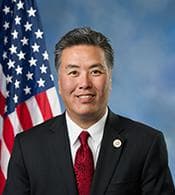
- Introduced
- 9/8/2026
- Last activity
- 9/8/2026 — Referred to the House Committee on Education and Workforce.
- Sponsored by
- Mark Takano
- Cosponsors
- - 6 - 0
- Introduced
- In Committee
What this bill would do
This bill, titled the "Thirty-Two Hour Workweek Act," seeks to amend the Fair Labor Standards Act of 1938. The primary goal is to reduce the standard workweek from 40 hours to 32 hours. It introduces new overtime pay requirements for workweeks exceeding 32 hours and specific daily overtime rates. The bill also outlines a multi-year phase-in period for these changes. Additionally, it prohibits employers from reducing compensation or benefits because of these new standards.
Yes· 3 of 15
Would households on low incomes be better off under this?+7
Significant increase in potential income for hourly workers through expanded overtime.
Would union members be better off under this?+7
Strengthens the financial position of unionized hourly workers through higher overtime pay.
Would people in their twenties and thirties be better off under this?+5
Likely to increase earnings for entry-level hourly workers.
The opposite· 3 of 4
Would business owners be better off under this?-7
Substantially increases labor costs and restricts the ability to adjust compensation.
Does this make it easier to run a small business?-5
Increases labor costs for businesses due to lower overtime thresholds and prohibitions on reducing compensation.
Would farmers be better off under this?-3
Agricultural labor often involves long hours that would become very expensive under these rules.
Who it would affect, and how
Potential Positive Impacts for People
-
Increased Overtime Pay for Workweeks: Employees will receive compensation at a rate not less than one and one-half times their regular rate for any workweek longer than thirty-two hours (Section 2, Section 7(a)(1)(A)(I)).
-
Daily Overtime Pay for Longer Days: Employees will receive extra pay for longer workdays, specifically at one and one-half times the regular rate for work between eight and 12 hours, and at double the regular rate for work exceeding 12 hours (Section 2, Section 7(a)(1)(A)(B)).
-
Protection of Current Wages and Benefits: Employers are prohibited from reducing an employee's total workweek compensation rate or any other employee benefits due to the changes made by this Act (Section 2, Section 7(a)(3)).
Potential Negative Impacts for People
- Phased Implementation of Overtime Thresholds: The full benefit of the 32-hour workweek threshold is not immediate; instead, it follows a multi-year schedule where the threshold for overtime pay decreases gradually over three years (Section 2, Section 7(a)(2)).
Groups and Interests Ranking
Every group the model scored this bill for, from -10 to +10. Hover a score for the reason it gave.
- Demographic And Interest Groups
- Good For Low Income Households+7Good For Union Workers+7Good For Middle Aged+5Good For Middle Class Households+5Good For Students+5Good For Young Adults+5Good For African Americans+4Good For Hispanic Americans+4Good For Men+3Good For Rural Residents+3Good For Urban Residents+3Good For Women+3Good For Business Owners-7Good For Farmers-3
- Social Issues And Justice
- Improves Poverty Reduction+4
- Economy And Finance
- Improves Union Protections+5Improves Small Business Support-5
- Governance And Ideology
- Increases Federal Power+2Increase States Rights-2
- 9/8/2026
- Referred to the House Committee on Education and Workforce.
- 6 Cosponsors added.
- Introduced in House
2 bills Congress.gov lists as related to this one — companions in the other chamber, earlier versions, and bills this one absorbed or was folded into.
 J. Correa
Democrat · California
 Pramila Jayapal
Democrat · Washington
 Eleanor Norton
Democrat · District of Columbia
 Ilhan Omar
Democrat · Minnesota
 Delia Ramirez
Democrat · Illinois
 Rashida Tlaib
Democrat · Michigan