Bill · H.R. 10322· House(119-HR-10322)
Data Center Fair Share Act
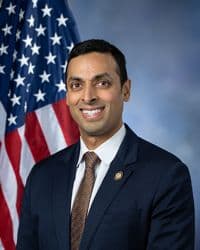
- Introduced
- 9/8/2026
- Last activity
- 9/8/2026 — Referred to the Committee on Energy and Commerce, and in addition to the Committee on Transportation and Infrastructure, for a period to be subsequently determined by the Speaker, in each case for consideration of such provisions as fall within the jurisdiction of the committee concerned.
- Sponsored by
- Suhas Subramanyam
- Cosponsors
- None
- Introduced
- In Committee
What this bill would do
The bill, known as the Data Center Fair Share Act, sets new Federal standards for electric utilities serving large-load customers. It requires that large-load customers, defined as non-residential consumers with a peak electric demand of 100 megawatts or more, pay the full costs of any upgrades needed to serve them. Utilities must have these large-load customers cover the full costs through a contribution or assign the costs directly to that class of customers. States must consider and make a determination regarding these standards within specific timeframes. If a State fails to implement these standards, the federal government will withhold 100 percent of its apportioned highway funds.
Yes· 3 of 6
Does this give the federal government more power?+6
Establishes federal standards for utility cost recovery and uses highway funding as leverage to compel state compliance.
Does this put more rules on large technology companies?+4
Imposes stricter cost-recovery standards on large-load customers, which primarily impacts large data centers.
Would households on low incomes be better off under this?+3
May lower electricity rates by shifting infrastructure costs away from residential ratepayers to large corporations.
The opposite
Does this repair or build roads and bridges?-7
States that do not comply with the standards face a 100 percent withholding of apportioned highway funds.
Does this leave more decisions to the states?-6
Reduces state autonomy over utility ratemaking through the threat of losing federal highway funds.
Would business owners be better off under this?-4
Increases costs for owners of large-load facilities (100MW+).
Who it would affect, and how
Potential Positive Impacts for People
- Protection from Utility Cost Shifts: Under section 2(a), adding section 111(d)(22)(A) and (B) to the Public Utility Regulatory Policies Act of 1978, electric utilities must ensure that large-load customers pay the full, incremental costs of any generation, transmission, or distribution upgrades needed to serve them. This prevents everyday people from having to foot the bill for expensive grid upgrades triggered by massive new facilities.
Potential Negative Impacts for People
- Loss of State Highway Funding: Under section 3(a), adding section 180 to title 23, United States Code, the Secretary is required to withhold 100 percent of a State's apportioned highway funds if the State fails to implement the federal standards for large-load customers. This heavy-handed penalty could severely burden everyday citizens by stripping away critical money needed for local roads and transportation projects just because a State did not adopt the federal utility standard.
Groups and Interests Ranking
Every group the model scored this bill for, from -10 to +10. Hover a score for the reason it gave.
- Environment Energy And Infrastructure
- Improves Roads And Bridges-7
- Demographic And Interest Groups
- Good For High Income Households+3Good For Low Income Households+3Good For Middle Class Households+3Good For Business Owners-4
- Education And Technology
- Increases Big Tech Regulation+4
- Economy And Finance
- Improves Consumer Protection+2
- Governance And Ideology
- Increases Federal Power+6Increase States Rights-6
- 9/8/2026
- Referred to the Committee on Energy and Commerce, and in addition to the Committee on Transportation and Infrastructure, for a period to be subsequently determined by the Speaker, in each case for consideration of such provisions as fall within the jurisdiction of the committee concerned.
- Introduced in House
One bill Congress.gov lists as related to this one — companions in the other chamber, earlier versions, and bills this one absorbed or was folded into.