Bill · H.R. 10298· House(119-HR-10298)
Public Service Loan Forgiveness Inclusion Act of 2026
- Introduced
- 9/4/2026
- Last activity
- 9/4/2026 — Referred to the House Committee on Education and Workforce.
- Sponsored by
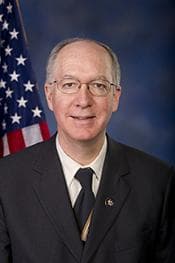
- Bill Foster
- Cosponsors
- - 8 - 1
- Introduced
- In Committee
What this bill would do
This bill, known as the "Public Service Loan Forgiveness Inclusion Act of 2026," seeks to amend the Higher Education Act of 1965. The primary goal is to allow certain payments made by public service employees to qualify for public service repayment. It expands the types of monthly payments that can count toward forgiveness, including those under the standard repayment plan. Additionally, it addresses payments made during periods when repayment is suspended due to administrative forbearance. The Act also requires the Secretary of Education to notify eligible borrowers about these changes.
Yes
Does this reduce what student borrowers owe or repay?+6
It specifically expands the criteria for qualifying payments toward loan forgiveness, including during administrative forbearance.
Does this make college cost less?+5
The bill makes student loan forgiveness more attainable for public service employees by expanding qualifying payment types.
Would students be better off under this?+5
The bill provides significant relief and clearer paths to loan forgiveness for students and public service professionals.
The opposite
No question was scored the opposite.
Who it would affect, and how
Potential Positive Impacts for People
-
Expanded Payment Options: By amending section 455(m)(1)(A), the bill allows monthly payments under the standard repayment plan under subsection (d)(7)(A)(i) to qualify for forgiveness (Section 2(a)).
-
Credit for Suspended Payments: The bill amends section 455(m)(3) to include monthly payments that would have been made during a period where repayment is suspended due to administrative forbearance, provided the borrower is employed in a public service job (Section 2(b)).
-
Borrower Notification: The Secretary of Education is required to inform borrowers of these new provisions and provide information on how to change repayment plans (Section 2(c)(1)).
Potential Negative Impacts for People
- No specific negative impacts or burdens are explicitly detailed within the provided text.
Groups and Interests Ranking
Every group the model scored this bill for, from -10 to +10. Hover a score for the reason it gave.
- Education And Technology
- Improves Student Loan Relief+6Improves College Affordability+5
- Demographic And Interest Groups
- Good For Students+5
- 9/4/2026
- Referred to the House Committee on Education and Workforce.
- 9 Cosponsors added.
- Introduced in House
 Alma Adams
Democrat · North Carolina
 Sanford Bishop
Democrat · Georgia
 Yvette Clarke
Democrat · New York
 André Carson
Democrat · Indiana
 Angie Craig
Democrat · Minnesota
 Brian Fitzpatrick
Republican · Pennsylvania
 Shomari Figures
Democrat · Alabama
 Jesús García
Democrat · Illinois
 Eleanor Norton
Democrat · District of Columbia