Bill · H.R. 10277· House(119-HR-10277)
Access to School Supplies Act of 2026
- Introduced
- 9/3/2026
- Last activity
- 9/3/2026 — Referred to the House Committee on Education and Workforce.
- Sponsored by
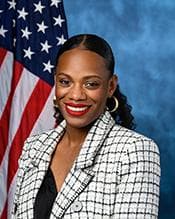
- Summer Lee
- Cosponsors
- - 15 - 0
- Introduced
- In Committee
What this bill would do
The Access to School Supplies Act of 2026 directs the Secretary of Education to run a pilot program that provides grants to local educational agencies. These grants are intended to help agencies acquire school supplies for students and instructional staff at no cost. The program aims to increase student access to necessary supplies to create a stable learning environment and improve academic achievement, especially for low-income students. Grants will be awarded competitively to up to 10 qualified local educational agencies per year. The bill includes specific funds reserved for outlying areas and Bureau of Indian Education schools. The program is scheduled to end after September 30, 2031.
Yes· 3 of 17
Would households on low incomes be better off under this?+9
Directly removes the cost of school supplies for families in high-poverty schools.
Would children be better off under this?+8
Provides free school supplies to students in high-poverty schools.
Would students be better off under this?+8
Provides essential tools for learning at no cost to the student.
The opposite
Does this reduce what the federal government owes?-2
The bill authorizes $100 million in annual spending, which increases government expenditures.
Does this reduce what the federal government spends?-2
The bill increases government spending by authorizing $100 million annually for grants.
Who it would affect, and how
Potential Positive Impacts for People
-
Increased access to learning materials: The bill aims to provide school supplies at no cost to students and instructional staff, which can help maintain a stable learning environment (Section 2(a)).
-
Academic support for low-income students: A stated purpose of the act is to improve student academic achievement, specifically focusing on help for low-income students (Section 2(a)(3)).
-
Support for teachers and staff: The funds can be used to provide supplies for instructional staff, which includes teachers, paraprofessionals, and librarians (Section 2(b)(1) and Section 4(c)).
-
Geographic diversity in assistance: The Secretary is instructed to ensure that grants reach a diverse range of areas, including urban, suburban, and rural locations (Section 4(f)).
-
Dedicated resources for specific regions: The bill reserves funds specifically for outlying areas and schools operated or funded by the Bureau of Indian Education (Section 3(a)).
Potential Negative Impacts for People
-
Administrative limitations: Local educational agencies are restricted in how they use the grant money, as they can reserve no more than 2 percent of the grant for administrative costs (Section 4(e)).
-
Limited number of recipients: The pilot program is limited to awarding grants to no more than 10 qualified local educational agencies per year (Section 4(a)).
-
Strict fund usage requirements: Agencies must ensure that the grant funds are used to supplement, rather than replace, existing non-Federal funds (Section 5).
Groups and Interests Ranking
Every group the model scored this bill for, from -10 to +10. Hover a score for the reason it gave.
- Demographic And Interest Groups
- Good For Low Income Households+9Good For Children+8Good For Students+8Good For Native Americans+7Good For African Americans+5Good For Hispanic Americans+5Good For Rural Residents+4Good For Urban Residents+4Good For Business Owners+1
- Social Issues And Justice
- Improves Poverty Reduction+5Improves Racial Equity+4
- Education And Technology
- Increases Public School Funding+6
- Environment Energy And Infrastructure
- Improves Rural Development+3
- Governance And Ideology
- Increases Federal Power+2Improves Government Transparency+1
- Economy And Finance
- Improves Economic Growth+1Improves Small Business Support+1Reduces Government Spending-2Reduces National Debt-2
- 9/3/2026
- Referred to the House Committee on Education and Workforce.
- 15 Cosponsors added.
- Introduced in House
One bill Congress.gov lists as related to this one — companions in the other chamber, earlier versions, and bills this one absorbed or was folded into.
 Alma Adams
Democrat · North Carolina
 Suzanne Bonamici
Democrat · Oregon
 Shontel Brown
Democrat · Ohio
 Wesley Bell
Democrat · Missouri
 Yvette Clarke
Democrat · New York
 Troy Carter
Democrat · Louisiana
 Greg Casar
Democrat · Texas
 Jesús García
Democrat · Illinois
 Jahana Hayes
Democrat · Connecticut
 Pramila Jayapal
Democrat · Washington
 Jonathan Jackson
Democrat · Illinois
 Eleanor Norton
Democrat · District of Columbia
 Ayanna Pressley
Democrat · Massachusetts
 Rashida Tlaib
Democrat · Michigan
 Frederica Wilson
Democrat · Florida