Bill · H.R. 10251· House(119-HR-10251)
Back-to-School Supplies Affordability Act
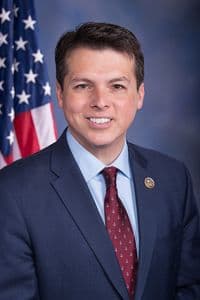
- Introduced
- 9/3/2026
- Last activity
- 9/3/2026 — Referred to the Committee on Ways and Means, and in addition to the Committee on Rules, for a period to be subsequently determined by the Speaker, in each case for consideration of such provisions as fall within the jurisdiction of the committee concerned.
- Sponsored by
- Brendan Boyle
- Cosponsors
- - 10 - 0
- Introduced
- In Committee
What this bill would do
The Back-to-School Supplies Affordability Act aims to limit duties on school supplies and educational materials. It prevents duties from exceeding the rates that were in effect on January 19, 2025, for specific items. These items include those designated by the Secretary of Commerce and Secretary of Education, as well as listed goods like backpacks, notebooks, and pens. The Secretary of Commerce must report the list of exempt items to Congress every 180 days. Congress also retains the ability to pass a joint resolution of disapproval to remove specific items from the exemption.
Yes· 3 of 11
Would students be better off under this?+8
Directly reduces the cost of essential materials needed for their education.
Would households on low incomes be better off under this?+7
Significantly helps low-income families who struggle with the cost of mandatory school supplies.
Would children be better off under this?+5
Directly benefits children by making their required school supplies more affordable.
The opposite
No question was scored the opposite.
Who it would affect, and how
Potential Positive Impacts for People
-
Lower costs for education materials: By limiting duties to the rates in effect on January 19, 2025, the bill aims to reduce the cost of school supplies for students, families, teachers, schools, and local governments (Section 2).
-
Broad protection for common supplies: Specific items such as keyboards, backpacks, lunchboxes, pencils, crayons, and markers are explicitly listed for duty limitations, which may make these essential goods more affordable (Section 3(c)(2)).
-
Flexibility to include new items: The Secretary of Commerce and Secretary of Education can designate other items used in elementary or secondary school classrooms for duty limitations (Section 3(c)(1)).
Potential Negative Impacts for People
- Limited scope of protection: The limitation on duties does not apply if the duty was proclaimed under section 201 of the Trade Act of 1974 or imposed pursuant to title VII of the Tariff Act of 1930 (Section 3(b)).
Groups and Interests Ranking
Every group the model scored this bill for, from -10 to +10. Hover a score for the reason it gave.
- Demographic And Interest Groups
- Good For Students+8Good For Low Income Households+7Good For Children+5Good For Middle Class Households+5Good For Middle Aged+3Good For High Income Households+2Good For Young Adults+2
- Economy And Finance
- Improves Consumer Protection+3Reduces Inflation+2
- Social Issues And Justice
- Improves Childcare Affordability+3Improves Poverty Reduction+2
- 10/5/2026
- 2 Cosponsors added.
- 9/4/2026
- 2 Cosponsors added.
- 9/3/2026
- Referred to the Committee on Ways and Means, and in addition to the Committee on Rules, for a period to be subsequently determined by the Speaker, in each case for consideration of such provisions as fall within the jurisdiction of the committee concerned.
- 6 Cosponsors added.
- Introduced in House
One bill Congress.gov lists as related to this one — companions in the other chamber, earlier versions, and bills this one absorbed or was folded into.
 Janelle Bynum
Democrat · Oregon
 Angie Craig
Democrat · Minnesota
 Gilbert Cisneros
Democrat · California
 Jasmine Crockett
Democrat · Texas
 Sylvia Garcia
Democrat · Texas
 Raja Krishnamoorthi
Democrat · Illinois
 Sarah McBride
Democrat · Delaware
 Eleanor Norton
Democrat · District of Columbia
 Juan Vargas
Democrat · California
 George Whitesides
Democrat · California