
A Democratic bill with 7 Democratic cosponsors · See all 7 cosponsors
Last activity — Referred to the Subcommittee on Border Security and Enforcement.
In committee
Introduced and handed to a committee in the chamber it started in.
The committee holds it, and most bills are never heard from again. A hearing or a committee vote would be news; silence is the usual outcome, and it kills the bill without anyone voting against it.
Its path through Congress
- Introduced
- In Committee
What this bill would do
This bill is known as the No Shock Act of 2026. It stops Federal law enforcement officers from using shock gloves when they enforce immigration laws. The rule also applies to State and local law enforcement officers who enforce immigration laws under specific sections of the Immigration and Nationality Act. A shock glove is defined as a glove that can deliver an electric shock directly to a person's body. The bill specifically includes the CTG-5 G.L.O.V.E conductive distraction and de-escalation device in this definition.
Yes· 3 of 9
- Scored +6
Would immigrants be better off under this?
Immigrants are directly protected from being subjected to electric shocks from shock gloves by federal, state, and local law enforcement officers enforcing immigration laws.
- Scored +5
Does this change how police departments operate?
The legislation directly reforms law enforcement practices by prohibiting federal, state, and local officers from using shock gloves during immigration enforcement.
- Scored +4
Does this protect the right to fair treatment by the courts?
Prohibiting the use of painful electric shock devices during immigration enforcement protects individuals from excessive force and upholds standards of humane treatment.
The opposite
No question was scored the opposite.
Who it would affect, and how
Potential Positive Impacts for People
-
Section 2(a): This section directs the Secretary of Homeland Security to prohibit the use of shock gloves by Federal law enforcement officers enforcing immigration laws, which prevents individuals from being subjected to electric shocks from these devices.
-
Section 2(b): This section applies the prohibition to State and local law enforcement officers who enforce immigration laws under section 287(g) of the Immigration and Nationality Act, ensuring that individuals are also protected from these devices at the local and state levels.
Potential Negative Impacts for People
- The provided text does not contain any sections or provisions that identify potential negative consequences or burdens for individuals or groups of people in the United States.
Groups and Interests Ranking
Every group the model scored this bill for, from -10 to +10. Tap or hover a score for the reason it gave.
- Demographic And Interest Groups
- Would immigrants be better off under this? — Immigrants are directly protected from being subjected to electric shocks from shock gloves by federal, state, and local law enforcement officers enforcing immigration laws. Would Hispanic Americans be better off under this? — Hispanic Americans, who frequently interact with or are targeted by immigration enforcement, benefit from the prohibition of painful restraint devices like shock gloves. Would households on low incomes be better off under this? — Low-income households, which often overlap with vulnerable immigrant populations, benefit from increased protections against harsh enforcement tactics.
- Social Issues And Justice
- Does this change how police departments operate? — The legislation directly reforms law enforcement practices by prohibiting federal, state, and local officers from using shock gloves during immigration enforcement. Does this narrow racial gaps in how people are treated? — By banning the use of shock gloves in immigration enforcement, the bill protects minority populations often disproportionately affected by harsh enforcement methods. Does this make it easier for immigrants already here to become citizens? — By improving conditions and safety during immigration enforcement, the bill provides a slightly more humane process for immigrants.
- Governance And Ideology
- Does this protect the right to fair treatment by the courts? — Prohibiting the use of painful electric shock devices during immigration enforcement protects individuals from excessive force and upholds standards of humane treatment. Does this give the federal government more power? — The bill increases federal oversight by mandating that the Secretary of Homeland Security prohibit state and local officers acting under federal immigration agreements from using shock gloves. Does this make what the government does easier for the public to see? — The legislation sets clear statutory boundaries on enforcement equipment, increasing transparency in immigration operations.
- 10/29/2026
- 1 Cosponsor added.
- 10/5/2026
- 1 Cosponsor added.
- 9/16/2026
- 1 Cosponsor added.
- 9/15/2026
- 1 Cosponsor added.
- 9/10/2026
- 2 Cosponsors added.
- 9/3/2026
- Referred to the Subcommittee on Border Security and Enforcement.
- 9/2/2026
- Referred to the Committee on the Judiciary, and in addition to the Committee on Homeland Security, for a period to be subsequently determined by the Speaker, in each case for consideration of such provisions as fall within the jurisdiction of the committee concerned.
- 1 Cosponsor added.
- Introduced in House
 Jasmine Crockett
Democrat · Texas
 Val Hoyle
Democrat · Oregon
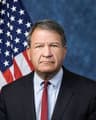 George Latimer
Democrat · New York
 Scott Peters
Democrat · California
 Mike Quigley
Democrat · Illinois
 Delia Ramirez
Democrat · Illinois
 Lateefah Simon
Democrat · California