Bill · H.R. 10094· House(119-HR-10094)
Affordable Pricing for Taxpayer-Funded Prescription Drugs Act of 2026
- Introduced
- 8/13/2026
- Last activity
- 8/13/2026 — Referred to the House Committee on Energy and Commerce.
- Sponsored by
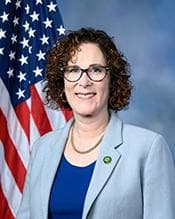
- Val Hoyle
- Cosponsors
- - 15 - 0
- Introduced
- In Committee
What this bill would do
The Affordable Pricing for Taxpayer-Funded Prescription Drugs Act of 2026 requires entities performing federally funded biomedical research to enter into reasonable pricing agreements with the Secretary of Health and Human Services. Under this bill, any biomedical product or service developed with federal research benefits must have a reasonable price as determined by the Secretary (Section 2(a)). Pricing formulas must ensure United States residents are not charged more than the median price in Canada and six other high-income, large-economy countries (Section 2(b)). The Secretary has the authority to create additional requirements to ensure reasonable pricing, including mechanisms to lower prices or shorten exclusivity periods (Section 2(c)). Additionally, the Secretary may waive these obligations if it is in the public interest, following a public notice and economic analysis (Section 2(d)). Finally, companies must report clinical trial costs, government subsidies, and annual revenues by county of sale to the Secretary (Section 2(e)).
Yes· 3 of 10
Does this lower the price of prescription medicines?+8
The act mandates reasonable pricing for federally funded biomedical products to reduce costs for residents.
Would households on low incomes be better off under this?+7
Lowering prices for healthcare products reduces financial barriers for low-income families.
Does this make what the government does easier for the public to see?+7
The bill requires manufacturers to report and make public data regarding costs and revenues.
The opposite
Would business owners be better off under this?-4
Pharmaceutical companies and biotech owners may face reduced profit margins under these regulations.
Does this put more money into medical research?-3
Mandated pricing agreements could potentially reduce the incentive for private investment in biomedical R&D.
Does this make patent and copyright rules fairer?-2
The bill may impact the ease of commercializing intellectual property through mandated pricing and reporting.
Who it would affect, and how
Potential Positive Impacts for People
-
Price Protections for Residents: The bill ensures that United States residents are not charged more for biomedical products or services than the reference price in Canada and six other high-income, large economies (Section 2(b)(1)).
-
Lower Costs and Access: The Secretary can implement requirements designed to lower prices or shorten exclusivity periods when revenues exceed certain targets (Section 2(c)(3)(A)(i)).
-
Reduction of Financial Burdens: The bill allows for mechanisms to lower prices that may otherwise constitute significant barriers to access or fiscal burdens on patients (Section 2(c)(3)(A)(iii)).
-
Increased Transparency: Manufacturers would be required to report the costs of clinical trials, federal subsidies, and annual revenues by county of sale, with these reports being made available to the public (Section 2(e)).
Potential Negative Impacts for People
-
Impact on Research Investment: The Secretary must consider the importance of providing robust incentives to invest in biomedical research and development when creating new pricing requirements (Section 2(c)(2)(B)(i)).
-
Administrative Challenges: The bill notes there may be challenges in administering these agreements, particularly in instances where third parties control necessary intellectual property, know-how, or other assets (Section 2(c)(2)(B)(ii)).
Groups and Interests Ranking
Every group the model scored this bill for, from -10 to +10. Hover a score for the reason it gave.
- Demographic And Interest Groups
- Good For Low Income Households+7Good For Retirees+6Good For Middle Class Households+5Good For People With Disabilities+5Good For Seniors+5Good For Business Owners-4
- Governance And Ideology
- Improves Government Transparency+7Increases Federal Power+5
- Healthcare
- Reduces Prescription Drug Costs+8Improves Healthcare Access+6Increases Research Funding-3
- Economy And Finance
- Improves Consumer Protection+7
- Education And Technology
- Improves Intellectual Property Fairness-2
- 10/9/2026
- 1 Cosponsor added.
- 9/1/2026
- 1 Cosponsor added.
- 8/31/2026
- 1 Cosponsor added.
- 8/27/2026
- 1 Cosponsor added.
- 8/20/2026
- 4 Cosponsors added.
- 8/13/2026
- Referred to the House Committee on Energy and Commerce.
- 7 Cosponsors added.
- Introduced in House
 Steve Cohen
Democrat · Tennessee
 Greg Casar
Democrat · Texas
 Rosa DeLauro
Democrat · Connecticut
 Lloyd Doggett
Democrat · Texas
 Jesús García
Democrat · Illinois
 Pramila Jayapal
Democrat · Washington
 Ro Khanna
Democrat · California
 Seth Magaziner
Democrat · Rhode Island
 Eleanor Norton
Democrat · District of Columbia
 Chellie Pingree
Democrat · Maine
 Janice Schakowsky
Democrat · Illinois
 Melanie Stansbury
Democrat · New Mexico
 Mark Takano
Democrat · California
 Rashida Tlaib
Democrat · Michigan
 Jill Tokuda
Democrat · Hawaii