Bill · H.R. 10061· House(119-HR-10061)
Wildfire Response and Readiness Act
- Introduced
- 8/6/2026
- Last activity
- 8/6/2026 — Referred to the Committee on Natural Resources, and in addition to the Committees on Agriculture, Transportation and Infrastructure, Small Business, Science, Space, and Technology, Energy and Commerce, Education and Workforce, Veterans' Affairs, and Oversight and Government Reform, for a period to be subsequently determined by the Speaker, in each case for consideration of such provisions as fall within the jurisdiction of the committee concerned.
- Sponsored by
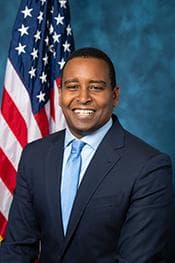
- Joe Neguse
- Cosponsors
- - 12 - 0
- Introduced
- In Committee
What this bill would do
The Wildfire Response and Readiness Act aims to improve wildfire readiness, recovery, and wildland firefighter safety. It establishes a National Prescribed Fire Program and a 10-year National Wildfire Plan focused on landscape-scale forest restoration. The bill creates an Individual Household Disaster Mitigation Program to provide grants for residential property improvements in high-risk areas. It also implements significant support systems for the firefighting workforce, including mental health services, rest and recuperation leave, and improved retirement benefits. Additionally, the Act seeks to modernize agency efforts through satellite monitoring, technology development, and improved data sharing.
Yes· 3 of 25
Would Native Americans be better off under this?+7
The bill provides significant support, consultation requirements, and job-sharing for Tribal governments.
Would veterans be better off under this, taking everything together?+7
The bill creates specific career pathways, pilot programs, and improved benefits for veterans in wildland firefighting.
Does this better protect air, water and wildlife?+7
The bill significantly increases funding and programs for wildfire resilience and biodiversity while mitigating exposure to hazards.
The opposite
No question was scored the opposite.
Who it would affect, and how
Potential Positive Impacts for People
-
Increased Wildfire Readiness through Prescribed Fire: The bill mandates that the total acreage of Federal land subjected to prescribed fires increases by 10 percent each year (Sec. 11103(a)). This is intended to address the fire deficit and manage hazardous fuels.
-
Support for Local Economies and Employment: The Collaborative Prescribed Fire Program is designed to benefit local economies by providing employment or training opportunities through various contracts and agreements (Sec. 11404(b)(7)).
-
Enhanced Community Protection and Home Hardening: The bill amends grant programs to allow for structure hardening, which includes constructing, modifying, or maintaining structures to make them resistant to flames or embers (Sec. 21102).
-
Homeowner Protection: The Individual Household Disaster Mitigation Program provides grants to States and Tribal governments to fund pre-disaster mitigation activities for individual residential households at risk of damage from major disasters (Section 207(a)).
-
Financial Assistance for Home Improvements: Households can receive up to $10,000 for qualifying mitigation activities, such as improving roof durability or installing fire-resistant wall components (Section 207(h), (i)).
-
Enhanced Wildfire Monitoring: The establishment of a competitive grant program for satellite monitoring will allow entities to better detect, assess, and respond to wildfires (Section 22001(b)(2)).
-
Wildfire Smoke Safety: A new national smoke monitoring and alert system will provide real-time information and forecasts on air quality to protect public health (Section 23001(a)).
-
Workforce Development and Pay Improvements: Federal employees engaged in the ignition, management, and control of prescribed fires are entitled to hazard pay (Sec. 11202(a)(1)(A)). The bill also seeks to provide career pathways and training for veterans and formerly incarcerated individuals (Sec. 11202(a)(4) and (6)).
-
Workforce Development for Youth: The Civilian Conservation Centers provide specialized training programs in forestry, rangeland management, and wildland firefighting for underserved youth (Section 302).
-
Veteran Employment Opportunities: A pilot program is established to employ veterans in wildland firefighting activities (Section 31004).
-
Firefighter Mental Health Support: The bill establishes a mental health program that includes awareness campaigns, peer-to-peer support networks, and specialized mental health professionals for wildland firefighters (Section 32103(b)(1)).
-
Firefighter Leave and Benefits: Wildland firefighters are granted paid rest and recuperation leave following qualifying incidents (Section 32102(b)) and increased retirement benefits through the inclusion of overtime pay in basic pay calculations (Section 32104(c)).
-
Retirement Security for Wildland Firefighters: Federal wildland firefighters who retain their coverage and rights will retain their enhanced retirement benefits even during periods of non-Federal service (Section (c)).
-
Employment Flexibility through Job-Sharing: Wildland firefighters or support personnel are permitted to hold a position with a Tribal Government alongside their Federal position through a job-share agreement, even if the Tribal position is at a higher classification level (Section (d)).
-
Support and Notification for Benefits: The Office of Personnel Management is required to inform individuals about their entitlements to service credits or annuity computations and assist them in obtaining necessary information from the Secretary of Agriculture or the Secretary of the Interior (Section (4)(A) and (B)).
-
Job Stability for Interior Employees: The bill prohibits the Department of the Interior and the United States Forest Service from initiating reductions in force or carrying out involuntary separations, except for cause such as misconduct or performance, through September 30, 2030 (Section 32201(a)).
-
Preservation of Research Facilities: The Secretary of Agriculture is prohibited from closing Forest Service research and development facilities without prior notification and approval from the chairs and ranking members of the House and Senate Committees on Appropriations (Section 32202).
-
Improved Post-Fire Recovery for Landowners: The bill requires that payments for emergency measures to restore land after wildfire damage be provided to owners within 90 days of an approved application (Sec. 12107(a)).
-
Increased Accessibility to Grant Programs: Provisions are included to increase the accessibility of community wildfire risk reduction and post-fire recovery grant programs by reducing application complexity and administrative burden (Sec. 21104).
Potential Negative Impacts for People
-
Environmental and Health Risks from Smoke: While the bill includes smoke management and research, the expansion of prescribed fires and the management of wildfires inherently involve smoke impacts on nearby communities (Sec. 11204(a)).
-
Potential for Landscape Alterations: The 10-year National Wildfire Plan involves significant landscape-scale restoration projects that can change ecosystems through the reintroduction of characteristic fire (Sec. 12202 and Sec. 12203).
-
Restrictions on Land Use: The bill maintains prohibitions on road construction, reconstruction, or logging in certain inventoried roadless areas (Sec. 12112).
-
Income Restrictions for Grants: Individuals with an adjusted gross income exceeding $250,000 (or $500,000 for joint returns) are ineligible to receive grants under the Individual Household Disaster Mitigation Program (Section 207(e)(2)).
-
Funding Caps for Households: The amount provided to an individual household for qualifying mitigation activities is capped at $10,000 (Section 207(h)).
-
Limitations on Firefighter Pay: There are special limitations on premium pay for covered employees to ensure their aggregate pay does not exceed certain federal pay levels (Section 32101(d)).
-
Unused Leave Forfeiture: Rest and recuperation leave for wildland firefighters must be used immediately after a qualifying incident and cannot be set aside for later use or compensated if unused (Section 32102(c)).
-
Financial Obligations for Service Credits: Individuals seeking to have service credited may be required to remit the total additional amount of Federal contributions that would have been paid under specific statutes, plus applicable interest, to the Office of Personnel Management (Section (3)).
Groups and Interests Ranking
Every group the model scored this bill for, from -10 to +10. Hover a score for the reason it gave.
- Demographic And Interest Groups
- Good For Native Americans+7Good For Veterans+7Good For Rural Residents+6Good For Low Income Households+5Good For Union Workers+5Good For Young Adults+5Good For Business Owners+4Good For Students+4Good For Middle Class Households+3
- Environment Energy And Infrastructure
- Improves Environmental Protections+7Improves Disaster Relief And F E M A+6Reduces Carbon Emissions+6Improves Public Land Management+5Improves Rural Development+5
- Healthcare
- Improves Mental Health Access+6Improves Healthcare Access+4Increases Research Funding+3
- Economy And Finance
- Increases Job Creation+5Improves Small Business Support+4Improves Economic Growth+3
- Governance And Ideology
- Improves Government Transparency+4Increases Federal Power+3
- National Security And Foreign Policy
- Improves Veterans Benefits+5
- Social Issues And Justice
- Improves Racial Equity+5
- Education And Technology
- Increases Scientific Research Funding+4
- 8/31/2026
- 4 Cosponsors added.
- 8/20/2026
- 3 Cosponsors added.
- 8/6/2026
- Referred to the Committee on Natural Resources, and in addition to the Committees on Agriculture, Transportation and Infrastructure, Small Business, Science, Space, and Technology, Energy and Commerce, Education and Workforce, Veterans' Affairs, and Oversight and Government Reform, for a period to be subsequently determined by the Speaker, in each case for consideration of such provisions as fall within the jurisdiction of the committee concerned.
- 5 Cosponsors added.
- Introduced in House
7 bills Congress.gov lists as related to this one — companions in the other chamber, earlier versions, and bills this one absorbed or was folded into.
- 119-HR-3465: Civilian Conservation Center Enhancement Act of 2025
- 119-HR-3553: BRUSH Fires Act
- 119-HR-3923: Wildfire Coordination Act
- 119-HR-4671: Ensuring Casualty Assistance for our Firefighters Act
- 119-HR-4672: To extend the break-in-service consideration for firefighter retirements, and other purposes.
- 119-HR-5823: Watershed Protection and Forest Recovery Act of 2025
- 119-HR-7712: RNGR Support Act of 2026
 Ami Bera
Democrat · California
 Ed Case
Democrat · Hawaii
 Salud Carbajal
Democrat · California
 Angie Craig
Democrat · Minnesota
 Jared Huffman
Democrat · California
 Kevin Mullin
Democrat · California
 Brittany Pettersen
Democrat · Colorado
 Emily Randall
Democrat · Washington
 Andrea Salinas
Democrat · Oregon
 Norma Torres
Democrat · California
 Gabe Vasquez
Democrat · New Mexico
 George Whitesides
Democrat · California