Bill · H.R. 10052· House(119-HR-10052)
Right to Worship Act
- Introduced
- 8/6/2026
- Last activity
- 8/6/2026 — Referred to the House Committee on the Judiciary.
- Sponsored by
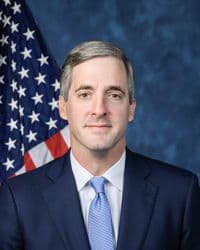
- Brad Knott
- Cosponsors
- - 15 - 10
- Introduced
- In Committee
What this bill would do
H.R. 10052, known as the Right to Worship Act, is a bill introduced in the House of Representatives to protect the free exercise of religion. The legislation makes it unlawful to knowingly disrupt scheduled religious services or impede people from participating in them near houses of worship. This restriction applies to conduct affecting interstate commerce that occurs within 100 feet of an entryway, starting one hour before a service and ending one hour after it concludes. The bill establishes civil fines for violations enforced by the Attorney General, starting at $2,500 for a first offense and scaling up for subsequent offenses. Additionally, the legislation provides a right of action allowing aggrieved individuals, the United States Attorney General, and State Attorneys General to file civil lawsuits in United States district courts for remedies such as damages and injunctive relief.
Yes
Does this protect the freedom to practise a religion?+8
The bill explicitly protects the free exercise of religion by prohibiting the disruption of religious services.
Does this give the federal government more power?+4
The bill expands federal jurisdiction by making certain disruptions unlawful if they affect interstate commerce.
The opposite
Does this protect what people are allowed to say in public life?-2
While allowing speech, it imposes specific time, place, and manner restrictions around houses of worship.
Does this protect the individual right to speak freely?-2
It restricts conduct and speech within 100 feet of houses of worship during specific times.
Who it would affect, and how
Potential Positive Impacts for People
-
Protection from Disruption: Section 2(b)(1) makes it unlawful for anyone to knowingly disrupt scheduled religious services or impede people from participating in them within 100 feet of a house of worship's entryway. This provision ensures that individuals can attend and participate in religious services without facing intentional interference or intimidation.
-
Accountability for Violators: Section 2(d) and Section 2(e) establish civil fines and legal remedies, including lawsuits brought by aggrieved persons, the United States Attorney General, or State Attorneys General. These provisions hold wrongdoers financially and legally accountable through civil penalties, statutory damages, and court-ordered relief for victims.
-
Clear Rules for Speech and Permits: Section 2(c) clarifies that the bill does not prevent people from freely speaking on any subject, provided they follow the set time, place, and manner restrictions, nor does it preclude participation in activities authorized by a government-issued permit. This balances the protection of religious services with clear guidelines for lawful public expression.
Potential Negative Impacts for People
-
Financial Penalties for Violations: Section 2(d) imposes civil fines on individuals who violate the law, starting at $2,500 for a first offense, $5,000 for a second offense, and $10,000 per occurrence for a third or subsequent offense. These fines could present a heavy financial burden for individuals found to have committed a violation.
-
Civil Liability and Legal Costs: Section 2(e)(1) allows aggrieved persons to commence a civil action where the court may award compensatory and punitive damages, along with the costs of the suit and reasonable fees for attorneys and expert witnesses. Facing private lawsuits and associated legal fees could result in significant economic consequences for defendants.
Groups and Interests Ranking
Every group the model scored this bill for, from -10 to +10. Hover a score for the reason it gave.
- Social Issues And Justice
- Improves Religious Freedom+8Improves Freedom Of Speech-2
- Governance And Ideology
- Increases Federal Power+4Improves Freedom Of Speech-2
- 10/6/2026
- 1 Cosponsor added.
- 10/1/2026
- 1 Cosponsor added.
- 9/21/2026
- 2 Cosponsors added.
- 9/16/2026
- 3 Cosponsors added.
- 9/14/2026
- 2 Cosponsors added.
- 9/10/2026
- 3 Cosponsors added.
- 9/3/2026
- 1 Cosponsor added.
- 9/2/2026
- 3 Cosponsors added.
- 9/1/2026
- 1 Cosponsor added.
- 8/31/2026
- 1 Cosponsor added.
- 8/27/2026
- 3 Cosponsors added.
- 8/24/2026
- 1 Cosponsor added.
- 8/6/2026
- Referred to the House Committee on the Judiciary.
- 3 Cosponsors added.
- Introduced in House
One bill Congress.gov lists as related to this one — companions in the other chamber, earlier versions, and bills this one absorbed or was folded into.
 Andy Barr
Republican · Kentucky
 James Baird
Republican · Indiana
 Tom Cole
Republican · Oklahoma
 Steve Cohen
Democrat · Tennessee
 Brian Fitzpatrick
Republican · Pennsylvania
 Josh Gottheimer
Democrat · New Jersey
 Lance Gooden
Republican · Texas
 Laura Gillen
Democrat · New York
 Pat Harrigan
Republican · North Carolina
 Sydney Kamlager-Dove
Democrat · California
 Laurel Lee
Republican · Florida
 Michael Lawler
Republican · New York
 Jared Moskowitz
Democrat · Florida
 Celeste Maloy
Republican · Utah
 Scott Peters
Democrat · California
 Jimmy Panetta
Democrat · California
 Guy Reschenthaler
Republican · Pennsylvania
 Bradley Schneider
Democrat · Illinois
 Thomas Suozzi
Democrat · New York
 Pete Stauber
Republican · Minnesota
 Glenn Thompson
Republican · Pennsylvania
 Claudia Tenney
Republican · New York
 Derrick Van Orden
Republican · Wisconsin
 Debbie Wasserman Schultz
Democrat · Florida
 Randy Weber
Republican · Texas