Bill · H.R. 10032· House(119-HR-10032)
No Payoffs for Pardons Act
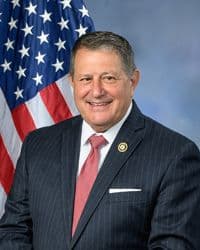
- Introduced
- 8/3/2026
- Last activity
- 8/3/2026 — Referred to the House Committee on the Judiciary.
- Sponsored by
- Joseph Morelle
- Cosponsors
- - 12 - 0
- Introduced
- In Committee
What this bill would do
The "No Payoffs for Pardons Act" aims to reform executive clemency by introducing strict disclosure requirements. It mandates that individuals receiving pardons or commutations report any "covered benefits" provided to the President, their family, or related entities. The bill also updates federal bribery statutes to include the President, Vice President, and political candidates regarding official acts like granting clemency. Additionally, it extends the statute of limitations for bribery offenses related to executive clemency to ten years. This legislation is intended to address concerns regarding the potential misuse of the pardon power for political or financial gain.
Yes· 3 of 5
Does this make what the government does easier for the public to see?+8
The bill mandates public financial disclosures for clemency recipients and creates a searchable database to increase transparency.
Does this give the federal government more power?+5
The bill expands federal oversight and criminal statute applications regarding the executive clemency process.
Does this limit the influence of paid lobbyists?+5
The bill increases transparency and potential legal risks for those providing benefits to secure clemency, acting as a check on political lobbying for pardons.
The opposite· 3 of 5
Does this protect people from being watched or searched?-5
The bill imposes new financial disclosure requirements on individuals receiving clemency, reducing their financial privacy.
Would high-income households be better off under this?-4
The bill increases scrutiny and legal obligations for high-income individuals seeking clemency.
Would people with substantial wealth be better off under this?-4
The bill imposes strict disclosure and potential criminal penalties on high-net-worth individuals providing benefits for clemency.
Who it would affect, and how
Potential Positive Impacts for People
-
Increased Transparency for Clemency Recipients: Individuals who receive a pardon or commutation must file disclosure reports with the Attorney General, providing details on any benefits given to covered recipients. This could help the public understand potential connections between clemency and political or financial contributions (Section 3(b)).
-
Public Access to Information: The Attorney General is required to make all disclosure reports publicly available on a searchable, machine-readable website. This allows citizens to monitor potential influences on the clemency process (Section 3(d)).
-
Strengthened Anti-Corruption Measures: By updating the federal bribery statute, the bill includes the President, Vice President, and political candidates under the scope of bribery laws regarding official acts like granting clemency. This is intended to address the "weaponization" of the pardon power (Section 4(a)).
-
Extended Time for Prosecution: The bill extends the statute of limitations for bribery offenses related to executive clemency to 10 years. This provides a longer window to investigate and prosecute corrupt arrangements involving the granting or promising of pardons (Section 4(b)).
Potential Negative Impacts for People
-
Financial Burdens on Clemency Recipients: Individuals receiving clemency face significant civil penalties of up to $50,000 per violation if they fail to file reports or file inaccurate ones. Additionally, those who willfully fail to report or file false reports can face fines and up to 5 years in prison (Section 3(e)).
-
Administrative Burden for Legal Representation: While bona fide legal services are excepted, any payments that include elements of lobbying or advice related to seeking clemency must be specifically allocated and documented, which may create extra work for recipients and their counsel (Section 3(c)).
Groups and Interests Ranking
Every group the model scored this bill for, from -10 to +10. Hover a score for the reason it gave.
- Governance And Ideology
- Improves Government Transparency+8Increases Federal Power+5Reduces Lobbying+5Improves Due Process+3Improves Privacy Rights-5
- Demographic And Interest Groups
- Good For Low Income Households+2Good For Billionaires-4Good For High Income Households-4Good For High Net Worth Individuals-4Good For Ultra High Net Worth Individuals-4
- 10/1/2026
- 3 Cosponsors added.
- 9/16/2026
- 1 Cosponsor added.
- 9/15/2026
- 8 Cosponsors added.
- 8/3/2026
- Referred to the House Committee on the Judiciary.
- Introduced in House
One bill Congress.gov lists as related to this one — companions in the other chamber, earlier versions, and bills this one absorbed or was folded into.
 Yassamin Ansari
Democrat · Arizona
 Lois Frankel
Democrat · Florida
 Lizzie Fletcher
Democrat · Texas
 Val Hoyle
Democrat · Oregon
 Glenn Ivey
Democrat · Maryland
 Timothy Kennedy
Democrat · New York
 Susie Lee
Democrat · Nevada
 Mike Levin
Democrat · California
 Dave Min
Democrat · California
 Eleanor Norton
Democrat · District of Columbia
 Melanie Stansbury
Democrat · New Mexico
 Andrea Salinas
Democrat · Oregon