Bill · H.R. 1002· House(119-HR-1002)
Caring for All Families Act
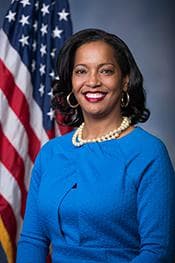
- Introduced
- 2/5/2025
- Last activity
- 2/5/2025 — Referred to the Committee on Education and Workforce, and in addition to the Committees on Oversight and Government Reform, and House Administration, for a period to be subsequently determined by the Speaker, in each case for consideration of such provisions as fall within the jurisdiction of the committee concerned.
- Sponsored by
- Jahana Hayes
- Cosponsors
- - 47 - 0
- Introduced
- In Committee
What this bill would do
The Caring for All Families Act seeks to amend the Family and Medical Leave Act of 1993 and Title 5 of the United States Code. It expands the definition of family to include domestic partners, in-laws, grandparents, grandchildren, siblings, aunts, uncles, nephews, and nieces. The bill also allows leave to care for individuals with a significant personal bond equivalent to a family relationship. Additionally, it creates a new category of leave for parental involvement and family wellness. This includes attending school or community activities for children or grandchildren and meeting routine medical needs.
Yes
Would LGBTQ people be better off under this?+7
The bill includes domestic partners in the scope of protected family leave.
Does this expand the rights of LGBTQ people?+6
The bill expands leave to include domestic partners, providing better recognition for LGBTQ+ relationships.
Would children be better off under this?+5
The bill allows parents to attend school-related activities for their children.
The opposite
No question was scored the opposite.
Who it would affect, and how
Potential Positive Impacts for People
-
Expanded Family Care Coverage: Employees can take leave to care for a wider range of relatives, including domestic partners, in-saws, grandparents, grandchildren, siblings, and other extended family members (Section 2).
-
Support for Non-Traditional Relationships: The bill allows leave for individuals whose "close association is the equivalent of a family relationship," providing support for those without biological or legal ties (Section 2).
-
Increased Parental Involvement: Employees are entitled to leave to participate in or attend activities sponsored by schools or community organizations for their children or grandchildren (Section 4).
-
Improved Family Wellness: The bill provides leave for meeting routine family medical care needs, such as attending medical or dental appointments (Section 4).
-
Flexible Leave Options: Leave for parental involvement and family wellness can be taken intermittently or on a reduced schedule (Section 4).
Potential Negative Impacts for People
-
Notice Requirements: Employees requesting parental involvement or family wellness leave must provide at least 7 days' notice to their employer (Section 4).
-
Scheduling Restrictions: For medical or care needs, employees must make a reasonable effort to schedule activities so they do not unduly disrupt their employer's operations (Section 4).
-
Leave Limitations: Parental involvement and family wellness leave is capped at 4 hours during any 30-day period and 24 hours during a 12-month period (Section 4).
-
Employer Certification Powers: Employers have the authority to require that a request for parental involvement and family wellness leave be supported by a certification (Section 4).
Groups and Interests Ranking
Every group the model scored this bill for, from -10 to +10. Hover a score for the reason it gave.
- Demographic And Interest Groups
- Good For L G B T Q Community+7Good For Children+5
- Social Issues And Justice
- Improves L G B T Q Rights+6
- 6/17/2025
- 1 Cosponsor added.
- 4/17/2025
- 1 Cosponsor added.
- 4/1/2025
- 1 Cosponsor added.
- 3/31/2025
- 1 Cosponsor added.
- 3/24/2025
- 1 Cosponsor added.
- 3/21/2025
- 4 Cosponsors added.
- 3/14/2025
- 1 Cosponsor added.
- 2/25/2025
- 2 Cosponsors added.
- 2/10/2025
- 1 Cosponsor added.
- 2/5/2025
- Referred to the Committee on Education and Workforce, and in addition to the Committees on Oversight and Government Reform, and House Administration, for a period to be subsequently determined by the Speaker, in each case for consideration of such provisions as fall within the jurisdiction of the committee concerned.
- 34 Cosponsors added.
- Introduced in House
One bill Congress.gov lists as related to this one — companions in the other chamber, earlier versions, and bills this one absorbed or was folded into.
 Alma Adams
Democrat · North Carolina
 Suzanne Bonamici
Democrat · Oregon
 Donald Beyer
Democrat · Virginia
 Nikki Budzinski
Democrat · Illinois
 Emanuel Cleaver
Democrat · Missouri
 Yvette Clarke
Democrat · New York
 Steve Cohen
Democrat · Tennessee
 André Carson
Democrat · Indiana
 Sean Casten
Democrat · Illinois
 Sheila Cherfilus-McCormick
Democrat · Florida
 Danny Davis
Democrat · Illinois
 Rosa DeLauro
Democrat · Connecticut
 Lloyd Doggett
Democrat · Texas
 Christopher Deluzio
Democrat · Pennsylvania
 Mark DeSaulnier
Democrat · California
 Dwight Evans
Democrat · Pennsylvania
 Bill Foster
Democrat · Illinois
 Lois Frankel
Democrat · Florida
 Maxwell Frost
Democrat · Florida
 Shomari Figures
Democrat · Alabama
 Jimmy Gomez
Democrat · California
 Jesús García
Democrat · Illinois
 Daniel Goldman
Democrat · New York
 Pramila Jayapal
Democrat · Washington
 Greg Landsman
Democrat · Ohio
 James McGovern
Democrat · Massachusetts
 Morgan McGarvey
Democrat · Kentucky
 Seth Magaziner
Democrat · Rhode Island
 LaMonica McIver
Democrat · New Jersey
 Sarah McBride
Democrat · Delaware
 Eleanor Norton
Democrat · District of Columbia
 Joe Neguse
Democrat · Colorado
 Ilhan Omar
Democrat · Minnesota
 Johnny Olszewski
Democrat · Maryland
 Chellie Pingree
Democrat · Maine
 Mark Pocan
Democrat · Wisconsin
 Ayanna Pressley
Democrat · Massachusetts
 Delia Ramirez
Democrat · Illinois
 Adam Smith
Democrat · Washington
 Mary Gay Scanlon
Democrat · Pennsylvania
 Melanie Stansbury
Democrat · New Mexico
 Bennie Thompson
Democrat · Mississippi
 Rashida Tlaib
Democrat · Michigan
 Jill Tokuda
Democrat · Hawaii
 Shri Thanedar
Democrat · Michigan
 Lauren Underwood
Democrat · Illinois
 Bonnie Watson Coleman
Democrat · New Jersey