Bill · H.Con.Res. 61· House(119-HCONRES-61)
Directing the President, pursuant to section 5(c) of the War Powers Resolution, to remove United States Armed Forces from hostilities with presidentially designated terrorist organizations in the Western Hemisphere.
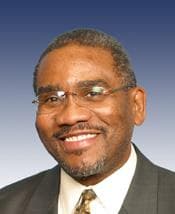
- Introduced
- 11/17/2025
- Last activity
- 12/17/2025 — Motion to reconsider laid on the table Agreed to without objection.
- Sponsored by
- Gregory Meeks
- Cosponsors
- - 41 - 0
- Introduced
- Failed
A concurrent resolution is how the House and the Senate settle something they do together, such as a budget plan or a joint session. It is adopted once both chambers agree to it, and that puts it into effect; it is not a law, so it does not go to the President.
What this bill would do
This resolution directs the President to remove United States Armed Forces from hostilities with any presidentially designated terrorist organization in the Western Hemisphere. The action is taken pursuant to section 5(c) of the War Powers Resolution. The requirement to remove troops applies unless the hostilities are authorized by a declaration of war. Troops may also remain if there is a specific congressional authorization for the use of military force against the designated terrorist organization. The resolution was submitted in the House of Representatives by Mr. Meeks and several other members. It was subsequently referred to the Committee on Foreign Affairs.
Yes· 3 of 7
Does this make what the government does easier for the public to see?+3
Requires specific congressional authorization, increasing transparency in war-making.
Does this reduce what is spent on the military?+3
Ending hostilities typically reduces the cost of military engagement.
Does this reduce what the federal government spends?+2
The removal of forces from hostilities typically reduces immediate military spending.
The opposite
Does this give the federal government more power?-5
The bill explicitly restricts the President's unilateral power to conduct hostilities.
Does this put more money into stopping terrorism?-5
The bill directs the removal of forces from counter-terrorism hostilities.
Does this tighten control of the border?-2
Removing forces from hostilities with terrorist organizations may be perceived as reducing regional security.
What Congress actually voted on
One recorded vote has been taken on this bill.
- The House: the vote on whether to adopt the resolutionFailed 210–216
A resolution is one chamber speaking for itself — setting its own rules, taking a position, honouring someone — and it never goes to the President. Agreeing to it is the whole decision.
12/17/2025 · Roll call 345 · recorded as “On Agreeing to the Resolution”
Who it would affect, and how
Potential Positive Impacts for People
- Restores Congressional Oversight: The resolution directs the President to remove United States Armed Forces from hostilities unless authorized by a declaration of war or specific congressional authorization, which ensures that our elected officials in Congress hold the executive branch accountable on matters of war and peace.
Potential Negative Impacts for People
- No Negative Impacts Identified: Based strictly on the provided text, there are no specific sections or provisions mentioned that outline negative consequences or burdens for individuals or groups of people in the United States.
Groups and Interests Ranking
Every group the model scored this bill for, from -10 to +10. Hover a score for the reason it gave.
- Economy And Finance
- Reduces Government Spending+2Improves Fiscal Responsibility+1Reduces National Debt+1
- Governance And Ideology
- Improves Government Transparency+3Increases Federal Power-5
- Social Issues And Justice
- Improves Border Security-2
- Demographic And Interest Groups
- Good For Veterans+1
- National Security And Foreign Policy
- Reduces Military Spending+3Improves Diplomatic Engagement+2Increases Counter Terrorism Funding-5
- 12/17/2025
- Motion to reconsider laid on the table Agreed to without objection.
- Failed of passage/not agreed to in House On agreeing to the resolution Failed by the Yeas and Nays: 210 - 216 (Roll no. 345).
- On agreeing to the resolution Failed by the Yeas and Nays: 210 - 216 (Roll no. 345).
- Considered as unfinished business. (consideration: CR H6004-6005)
- POSTPONED PROCEEDINGS - At the conclusion of debate on H. Con. Res. 61, the Chair put the question on agreeing to the resolution and by voice vote, announced the noes had prevailed. Mr. Meeks demanded the yeas and nays and the Chair postponed further proceedings until a time to be announced.
- The previous question was ordered pursuant to a previous order of the House.
- DEBATE - Pursuant to a previous order, the House proceeded with one hour of debate on H. Con. Res. 61.
- Considered pursuant to a previous order. (consideration: CR H5978-5984; text: CR H5978)
- Consideration initiated pursuant to a previous order.
- 1 Cosponsor added.
- 12/16/2025
- ORDER OF PROCEDURE - Mr. Mast asked unanimous consent that it be in order at any time to consider H. Con. Res. 61 and H. Con. Res. 64 in the House if called up by the Chair of the Committee on Foreign Affairs or his designee; that each such concurrent resolution be considered as read; and that the previous question be considered as ordered on each such concurrent resolution to adoption without intervening motion except for: 1) with respect to H. Con. Res. 61, one hour of debate equally divided and controlled by the Chair and ranking minority member of the Committee on Foreign Affairs or their respective designees; and 2) with respect to H. Con. Res. 64, one hour of debate equally divided among and controlled by Representative Mast of Florida, Representative Meeks of New York, and Representative McGovern of Massachusetts or their respective designees.
- 12/15/2025
- 9 Cosponsors added.
- 12/10/2025
- 3 Cosponsors added.
- 12/9/2025
- 3 Cosponsors added.
- 12/3/2025
- 3 Cosponsors added.
- 11/25/2025
- 2 Cosponsors added.
- 11/21/2025
- 1 Cosponsor added.
- 11/20/2025
- 3 Cosponsors added.
- 11/19/2025
- 2 Cosponsors added.
- 11/18/2025
- 9 Cosponsors added.
- 11/17/2025
- Submitted in House
- Referred to the House Committee on Foreign Affairs.
- 5 Cosponsors added.
One bill Congress.gov lists as related to this one — companions in the other chamber, earlier versions, and bills this one absorbed or was folded into.
 Gabe Amo
Democrat · Rhode Island
 Yassamin Ansari
Democrat · Arizona
 Donald Beyer
Democrat · Virginia
 Joe Courtney
Democrat · Connecticut
 Salud Carbajal
Democrat · California
 Jason Crow
Democrat · Colorado
 Christopher Deluzio
Democrat · Pennsylvania
 Suzan DelBene
Democrat · Washington
 Madeleine Dean
Democrat · Pennsylvania
 Maxine Dexter
Democrat · Oregon
 Sarah Elfreth
Democrat · Maryland
 Lizzie Fletcher
Democrat · Texas
 Al Green
Democrat · Texas
 John Garamendi
Democrat · California
 Maggie Goodlander
Democrat · New Hampshire
 James Himes
Democrat · Connecticut
 Val Hoyle
Democrat · Oregon
 Sara Jacobs
Democrat · California
 William Keating
Democrat · Massachusetts
 Sydney Kamlager-Dove
Democrat · California
 John Larson
Democrat · Connecticut
 Stephen Lynch
Democrat · Massachusetts
 Sam Liccardo
Democrat · California
 James McGovern
Democrat · Massachusetts
 Kweisi Mfume
Democrat · Maryland
 Betty McCollum
Democrat · Minnesota
 Seth Moulton
Democrat · Massachusetts
 Kelly Morrison
Democrat · Minnesota
 Donald Norcross
Democrat · New Jersey
 Alexandria Ocasio-Cortez
Democrat · New York
 Ilhan Omar
Democrat · Minnesota
 Johnny Olszewski
Democrat · Maryland
 Mark Pocan
Democrat · Wisconsin
 Patrick Ryan
Democrat · New York
 Emily Randall
Democrat · Washington
 Robert Scott
Democrat · Virginia
 Adam Smith
Democrat · Washington
 Greg Stanton
Democrat · Arizona
 Bennie Thompson
Democrat · Mississippi
 Dina Titus
Democrat · Nevada
 Rashida Tlaib
Democrat · Michigan