Bill · H.Con.Res. 115· House(119-HCONRES-115)
Directing the President, pursuant to section 5(c) of the War Powers Resolution, to remove United States Armed Forces from hostilities with presidentially designated terrorist organizations in the Western Hemisphere.
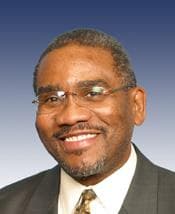
- Introduced
- 9/2/2026
- Last activity
- 9/14/2026 — Sponsor introductory remarks on measure. (CR H5610)
- Sponsored by
- Gregory Meeks
- Cosponsors
- - 4 - 0
- Introduced
A concurrent resolution is how the House and the Senate settle something they do together, such as a budget plan or a joint session. It is adopted once both chambers agree to it, and that puts it into effect; it is not a law, so it does not go to the President.
What this bill would do
This resolution directs the President to remove United States Armed Forces from hostilities with presidentially designated terrorist organizations in the Western Hemisphere. The action is taken pursuant to section 5(c) of the War Powers Resolution. The requirement applies unless the hostilities are authorized by a declaration of war or a specific congressional authorization for use of military force against the designated organization. The text was introduced in the House of Representatives by Mr. Meeks, along with co-sponsors Mr. Smith of Washington, Mr. Himes, and Mr. Thompson of Mississippi, on September 2, 2026. Following its introduction, the resolution was referred to the Committee on Foreign Affairs.
Yes· 3 of 8
Does this reduce what is spent on the military?+2
The resolution aims to end military hostilities, which would reduce overall military spending.
Does this reduce what the federal government owes?+1
Reducing military hostilities may lead to long-term reductions in defense spending.
Does this reduce what the federal government spends?+1
Decreasing military engagement can reduce the fiscal burden of active hostilities.
The opposite
Does this put more money into stopping terrorism?-2
Reducing active hostilities might decrease immediate counter-terrorism engagement capabilities.
Does this give the federal government more power?-1
The resolution acts as a check on executive power by directing the President through Congress.
Who it would affect, and how
Potential Positive Impacts for People
- Congressional Oversight: The resolution uses section 5(c) of the War Powers Resolution to direct the President to remove United States Armed Forces from hostilities with certain terrorist organizations, ensuring that the elected representatives in Congress maintain a check on military conflicts.
Potential Negative Impacts for People
- Restricted Military Action: The resolution directs the removal of United States Armed Forces from hostilities with presidentially designated terrorist organizations in the Western Hemisphere unless specifically authorized by Congress or a declaration of war, which could limit immediate military responses against these groups.
Groups and Interests Ranking
Every group the model scored this bill for, from -10 to +10. Hover a score for the reason it gave.
- Economy And Finance
- Improves Fiscal Responsibility+1Reduces Government Spending+1Reduces National Debt+1
- National Security And Foreign Policy
- Reduces Military Spending+2Improves Diplomatic Engagement+1Improves Veterans Benefits+1Increases Counter Terrorism Funding-2
- Demographic And Interest Groups
- Good For Veterans+1
- Governance And Ideology
- Improves Government Transparency+1Increases Federal Power-1
- 9/14/2026
- Sponsor introductory remarks on measure. (CR H5610)
- 9/3/2026
- 1 Cosponsor added.
- 9/2/2026
- Submitted in House
- Referred to the House Committee on Foreign Affairs.
- 3 Cosponsors added.
One bill Congress.gov lists as related to this one — companions in the other chamber, earlier versions, and bills this one absorbed or was folded into.
 James Himes
Democrat · Connecticut
 William Keating
Democrat · Massachusetts
 Adam Smith
Democrat · Washington
 Bennie Thompson
Democrat · Mississippi