Bill · H.Con.Res. 51· House(119-HCONRES-51)
To direct the removal of United States Armed Forces from hostilities that have not been authorized by Congress.
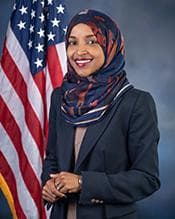
- Introduced
- 9/23/2025
- Last activity
- 9/23/2025 — Referred to the House Committee on Foreign Affairs.
- Sponsored by
- Ilhan Omar
- Cosponsors
- - 23 - 0
- Introduced
- In Committee
A concurrent resolution is how the House and the Senate settle something they do together, such as a budget plan or a joint session. It is adopted once both chambers agree to it, and that puts it into effect; it is not a law, so it does not go to the President.
What this bill would do
This concurrent resolution directs the removal of United States Armed Forces from hostilities that have not been authorized by Congress. It specifically targets hostilities against the Bolivarian Republic of Venezuela or any part of its government or military. It also targets hostilities against transnational criminal organizations designated as Foreign Terrorist Organizations or Specially Designated Global Terrorists since February 20, 2025. The resolution asserts that Congress has not declared war or provided specific statutory authorization for these actions. It calls for the termination of these military uses unless a declaration of war or specific authorization is granted after the resolution is adopted.
Yes· 3 of 4
Does this make what the government does easier for the public to see?+6
The resolution calls for full briefings to Congress and the American public regarding military actions.
Does this favour talking over confrontation abroad?+5
By halting unauthorized hostilities, the resolution favors diplomatic processes and congressional debate over military action.
Does this reduce what is spent on the military?+3
The resolution directs the termination of military hostilities against Venezuela and certain criminal organizations, which reduces active military expenditures.
The opposite
Does this give the federal government more power?-5
The resolution seeks to limit the unilateral power of the President to initiate hostilities without congressional authorization.
Does this tighten control of the border?-2
The bill limits the use of military force against transnational criminal organizations, which are often involved in border security issues.
Does this leave more decisions to the states?-1
The bill focuses on federal-level war powers rather than shifting power specifically to the states.
Who it would affect, and how
Potential Positive Impacts for People
-
Restoration of Constitutional Authority: The resolution cites that Congress has the sole power to declare war under Article I, Section 8, Clause 11 of the Constitution, seeking to ensure military actions follow this legal standard (Section 1, Finding 1).
-
Termination of Unauthorized Hostilities: The resolution directs the President to terminate the use of United States Armed Forces against the government or military of Venezuela, as well as certain designated transnational criminal organizations, unless specifically authorized by Congress (Section 2, Subsection a).
Potential Negative Impacts for People
- Removal of Self-Defense Capabilities: The resolution notes that nothing in the text prevents the United States from repelling sudden attacks or engaging in self-defense, but it specifies that illegal drug trafficking does not constitute an armed attack or threat of imminent attack (Section 2, Subsection b).
Groups and Interests Ranking
Every group the model scored this bill for, from -10 to +10. Hover a score for the reason it gave.
- National Security And Foreign Policy
- Improves Diplomatic Engagement+5Reduces Military Spending+3
- Demographic And Interest Groups
- Good For Veterans+2
- Social Issues And Justice
- Improves Border Security-2
- Governance And Ideology
- Improves Government Transparency+6Increases Federal Power-5Increase States Rights-1
- 1/7/2026
- 1 Cosponsor added.
- 12/10/2025
- 1 Cosponsor added.
- 12/3/2025
- 1 Cosponsor added.
- 11/7/2025
- 4 Cosponsors added.
- 10/24/2025
- 2 Cosponsors added.
- 10/21/2025
- 3 Cosponsors added.
- 10/8/2025
- 2 Cosponsors added.
- 10/3/2025
- 1 Cosponsor added.
- 9/30/2025
- 3 Cosponsors added.
- 9/26/2025
- 3 Cosponsors added.
- 9/23/2025
- Submitted in House
- Referred to the House Committee on Foreign Affairs.
- 2 Cosponsors added.
 Yassamin Ansari
Democrat · Arizona
 Donald Beyer
Democrat · Virginia
 Joaquin Castro
Democrat · Texas
 Greg Casar
Democrat · Texas
 Maxine Dexter
Democrat · Oregon
 Maxwell Frost
Democrat · Florida
 Valerie Foushee
Democrat · North Carolina
 John Garamendi
Democrat · California
 Jesús García
Democrat · Illinois
 Val Hoyle
Democrat · Oregon
 Pramila Jayapal
Democrat · Washington
 Ro Khanna
Democrat · California
 John Larson
Democrat · Connecticut
 James McGovern
Democrat · Massachusetts
 Eleanor Norton
Democrat · District of Columbia
 Alexandria Ocasio-Cortez
Democrat · New York
 Frank Pallone
Democrat · New Jersey
 Chellie Pingree
Democrat · Maine
 Mark Pocan
Democrat · Wisconsin
 Delia Ramirez
Democrat · Illinois
 Lateefah Simon
Democrat · California
 Rashida Tlaib
Democrat · Michigan
 Nydia Velázquez
Democrat · New York