Bill · H.Con.Res. 14· House(119-HCONRES-14)
Establishing the congressional budget for the United States Government for fiscal year 2025 and setting forth the appropriate budgetary levels for fiscal years 2026 through 2034.
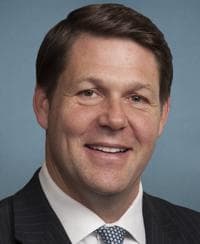
- Introduced
- 2/18/2025
- Last activity
- 5/20/2025 — Star Print ordered on the reported concurrent resolution.
- Sponsored by
- Jodey Arrington
- Cosponsors
- None
- Introduced
- Agreed to by the House
- Agreed to by the Senate
- Resolving Differences
A concurrent resolution is how the House and the Senate settle something they do together, such as a budget plan or a joint session. It is adopted once both chambers agree to it, and that puts it into effect; it is not a law, so it does not go to the President.
What this bill would do
This concurrent resolution establishes the budget framework for fiscal years 2025 through 2034. It sets specific budgetary levels for Federal revenues, new budget authority, outlays, deficits, and public debt. The resolution includes detailed instructions for various House and Senate committees to achieve specific deficit reduction or increase targets through reconciliation. It also establishes reserve funds for actions such as government deregulation, spending reductions, and protecting Medicare and Medicaid. Additionally, it includes policy statements regarding economic growth, mandatory spending, and government deregulation.
Yes· 3 of 15
Does this reduce what the federal government spends?+6
The bill directs various committees to submit changes in law to reduce the deficit.
Does this cut taxes for middle-income families?+5
The bill includes a reserve fund to use realistic tax assumptions to prevent massive tax increases on working families.
Does this cut taxes for small businesses?+5
The bill aims to prevent tax increases on small businesses through spending-neutral reserve funds.
The opposite
Would households on low incomes be better off under this?-2
The bill's mandate to reduce mandatory spending by $2 trillion could impact social service programs.
Would veterans be better off under this, taking everything together?-2
The broad mandate for spending reductions could impact veterans' benefits.
Does this put more money into wind, solar and other renewable power?-2
The bill emphasizes expanding American energy production, which may shift focus away from purely renewable sources.
What Congress actually voted on
4 recorded votes have been taken on this bill. 3 of them decided something; the rest moved it along.
- The House: the vote on whether to adopt the resolutionPassed 217–215
A resolution is one chamber speaking for itself — setting its own rules, taking a position, honouring someone — and it never goes to the President. Agreeing to it is the whole decision.
02/25/2025 · Roll call 50 · recorded as “On Agreeing to the Resolution, as Amended”
- The Senate: the vote on whether to adopt the resolutionConcurrent Resolution Agreed to 51–48
A resolution is one chamber speaking for itself — setting its own rules, taking a position, honouring someone — and it never goes to the President. Agreeing to it is the whole decision.
04/05/2025 · Roll call 191 · recorded as “On the Concurrent Resolution H.Con.Res. 14”
- The House: a vote to accept the other chamber's changesPassed 216–214
The House and Senate passed different versions. This votes on accepting the other chamber's wording, which is the last step before the bill goes to the President.
04/10/2025 · Roll call 100 · recorded as “On Motion to Concur in the Senate Amendment”
Who it would affect, and how
Potential Positive Impacts for People
-
Protecting Medicare and Medicaid: The resolution establishes a reserve fund aimed at protecting the Medicaid program, which may include strengthening and improving the program for vulnerable populations and extending the life of the Federal Hospital Insurance Trust Fund (Section 3005).
-
Economic Growth Policies: The resolution outlines a policy to promote economic growth by lowering taxes that discourage work, savings, and investment (Section 5001).
-
Government Deregulation: The bill includes provisions for reducing burdensome and costly Federal Government regulations to decrease new spending and increase economic prosperity (Section s 3002, 5003).
-
Tax Policy Assumptions: There is a reserve fund intended to use realistic assumptions regarding current tax policy to prevent massive tax increases on working families and small businesses (Section 3004).
Potential Negative Impacts for People
-
Spending Reductions: The resolution includes instructions for committees to submit changes in laws intended to reduce the deficit, which could involve scrutiny of expenditures (Section 2001(b), 3003).
-
Mandatory Spending Reductions: The House has a stated goal to reduce mandatory spending by $2 trillion over the budget window (Section 5002).
Groups and Interests Ranking
Every group the model scored this bill for, from -10 to +10. Hover a score for the reason it gave.
- Economy And Finance
- Reduces Government Spending+6Improves Economic Growth+5Reduces Middle Class Taxes+5Reduces Small Business Taxes+5Improves Small Business Support+4Increases Job Creation+4Reduces National Debt+3
- Demographic And Interest Groups
- Good For Business Owners+5Good For Middle Class Households+3Good For Seniors+2Good For Low Income Households-2Good For Veterans-2
- Healthcare
- Increases Medicaid Funding+3Increases Medicare Funding+3
- Governance And Ideology
- Increase States Rights+5
- Social Issues And Justice
- Improves Social Security+3
- Environment Energy And Infrastructure
- Increases Renewable Energy Investment-2
- National Security And Foreign Policy
- Improves Veterans Benefits+1
- Enrolled Bill
The final version, on its way to the President
The changes one chamber made to the other chamber’s version, as it passed them
| Updated | Bill | Title | Policy Area |
|---|---|---|---|
| 1 year ago | On agreeing to the Rules amendment (A001) Agreed to without objection. | ||
| 7 months ago | To establish a deficit-neutral reserve fund relating to strengthening protections for members of the Armed Forces by prohibiting the use of any commercial messaging application to transmit information revealing the timing, sequencing, or weapons to be used during impending United States military operations in foreign countries that may endanger the lives of members of the Armed Forces. | ||
| 1 year ago | To establish a deficit-neutral reserve fund relating to stopping the Department of Agriculture from not honoring contracts made with farmers and farm-serving organizations. | ||
| 7 months ago | To establish a deficit-neutral reserve fund relating to prohibiting attacks on Federal employees by protecting legally binding collective bargaining agreements and the right to organize. | ||
| 1 year ago | To preserve access to Social Security's phone service. | ||
| 1 year ago | To establish a deficit-neutral reserve fund relating to extending vital enhanced advance premium tax credits. | ||
| 1 year ago | To establish a deficit-neutral reserve fund to prevent increased barriers to American caregivers, including individuals caring for seniors, children, home care workers, and individuals engaged in the care economy. | ||
| 7 months ago | To establish a deficit-neutral reserve fund relating to preventing reduction in enrollment or benefits for individuals enrolled in Medicaid, including seniors, children, families, individuals with disabilities, veterans, and military families. | ||
| 7 months ago | To prevent any disruption in security assistance to Ukraine. | ||
| 7 months ago | To establish a deficit-neutral reserve fund relating to legislation that does not increase tax breaks for wealthy corporations. |


- 5/20/2025
- Star Print ordered on the reported concurrent resolution.
- 4/10/2025
- Resolving differences -- House actions: On motion that the House agree to the Senate amendment Agreed to by the Yeas and Nays: 216 - 214 (Roll no. 100).
- Motion to reconsider laid on the table Agreed to without objection.
- On motion that the House agree to the Senate amendment Agreed to by the Yeas and Nays: 216 - 214 (Roll no. 100). (text: 4/9/2025 CR H1533-1540)
- Pursuant to clause 1(c) of rule XIX, the House resumed consideration of H. Con. Res. 14. (consideration: CR H1579-1580)
- 4/9/2025
- POSTPONED PROCEEDINGS - Pursuant to clause 1(c) of rule XIX, the Chair announced further proceedings on H. Con. Res. 14 would be postponed.
- The previous question was ordered pursuant to the rule.
- DEBATE - Pursuant to the provisions of H. Res. 313, the House proceeded with one hour of debate on the motion to agree to the Senate amendment to H. Con. Res. 14.
- Mr. Arrington moved that the House agree to the Senate amendment to H. Con. Res. 14.
- Mr. Arrington moved that the House agree to the Senate amendment. (consideration: CR H1533-1550)
- Pursuant to the provisions of H. Res. 313, Mr. Arrington called up the Senate amendment to H. Con. Res. 14.
- 4/7/2025
- Message on Senate action sent to the House.
- 4/5/2025
- Passed/agreed to in Senate: Resolution agreed to in Senate with an amendment by Yea-Nay Vote. 51 - 48. Record Vote Number: 191.
- Resolution agreed to in Senate with an amendment by Yea-Nay Vote. 51 - 48. Record Vote Number: 191.
- 4/4/2025
- Considered by Senate. (consideration: CR S2275-2360)
- 4/3/2025
- Motion to proceed to consideration of measure made in Senate. (CR S2159)
- Motion to proceed to consideration of measure agreed to in Senate by Yea-Nay Vote. 52 - 48. Record Vote Number: 169.
- Measure laid before Senate by motion. (consideration: CR S2159-2168)
- 4/2/2025
- Received in the Senate. Placed on Senate Legislative Calendar under General Orders. Calendar No. 38.
- 2/25/2025
- Passed/agreed to in House: On agreeing to the resolution, as amended Agreed to by the Yeas and Nays: 217 - 215 (Roll no. 50). (text: CR H818-823)
- On agreeing to the resolution, as amended Agreed to by the Yeas and Nays: 217 - 215 (Roll no. 50). (text: CR H818-823)
- Considered as unfinished business. (consideration: CR H824-825)
- Pursuant to clause 1(c) of rule XIX, the House resumed consideration of H. Con. Res. 14.
- POSTPONED PROCEEDINGS - The Chair announced pursuant to clause 1(c) of rule XIX, further consideration on H. Con. Res. 14 is postponed.
- The previous question was ordered pursuant to the rule.
- The House rose from the Committee of the Whole House on the state of the Union to report H. Con. Res. 14.
- GENERAL DEBATE - The Committee of the Whole proceeded with three hours of general debate on H. Con. Res. 14.
- The Speaker designated the Honorable Steve Womack to act as Chairman of the Committee.
- House resolved itself into the Committee of the Whole House on the state of the Union pursuant to H. Res. 161 and Rule XVIII.
- Rule provides for consideration of H.J. Res. 20, H.J. Res. 35 and H. Con. Res. 14. The resolution provides for consideration of two joint resolutions, H.J.Res.20, under a closed rule and H.J.Res. 35, under a closed rule. Also, the resolution provides for consideration of H. Con. Res. 14, under a closed rule. The joint resolutions are debated for one hour each and the concurrent resolution is debated for 3 hours.
- Considered under the provisions of rule H. Res. 161. (consideration: CR H791-823)
- Rule H. Res. 161 passed House.
- 2/18/2025
- The House Committee on the Budget reported an original measure, H. Rept. 119-4, by Mr. Arrington.
- Placed on the Union Calendar, Calendar No. 1.
- Bill introduced.
3 bills Congress.gov lists as related to this one — companions in the other chamber, earlier versions, and bills this one absorbed or was folded into.
- 119-HR-1: An act to provide for reconciliation pursuant to title II of H. Con. Res. 14.
- 119-SCONRES-7: An original concurrent resolution setting forth the congressional budget for the United States Government for fiscal year 2025 and setting forth the appropriate budgetary levels for fiscal years 2026 through 2034.
- 119-HRES-161: Providing for consideration of the joint resolution (H.J. Res. 20) providing for congressional disapproval under chapter 8 of title 5, United States Code, of the rule submitted by the Department of Energy relating to ‘‘Energy Conservation Program: Energy Conservation Standards for Consumer Gas-fired Instantaneous Water Heaters’’; providing for consideration of the joint resolution (H.J. Res. 35) providing for congressional disapproval under chapter 8 of title 5, United States Code, of the rule submitted by the Environmental Protection Agency relating to ‘‘Waste Emissions Charge for Petroleum and Natural Gas Systems: Procedures for Facilitating Compliance, Including Netting and Exemptions’’; and providing for consideration of the concurrent resolution (H. Con. Res. 14) establishing the congressional budget for the United States Government for fiscal year 2025 and setting forth the appropriate budgetary levels for fiscal years 2026 through 2034.