Bill · S.J.Res. 31· Senate(119-SJRES-31)
A joint resolution providing for congressional disapproval under chapter 8 of title 5, United States Code, of the rule submitted by the Environmental Protection Agency relating to "Review of Final Rule Reclassification of Major Sources as Area Sources Under Section 112 of the Clean Air Act".
- Introduced
- 3/6/2025
- Last activity
- 6/20/2025 — Became Public Law No: 119-20.
- Sponsored by
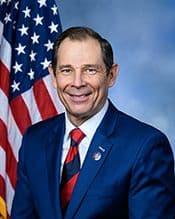
- John Curtis
- Cosponsors
- - 5 - 0
- Introduced
- Passed Senate
- Passed House
- To President
- Became Law
What this bill would do
This joint resolution seeks to provide congressional disapproval of a specific rule submitted by the Environmental Protection Agency. The rule in question involves the "Review of Final Rule Reclassification of Major Sources as Area Sources Under Section 112 of the Clean Air Act." By passing this resolution, Congress intends to ensure that the rule has no force or effect.
Yes
Is this likely to create jobs?+1
By preventing the EPA rule from taking effect, the resolution may reduce regulatory burdens that could otherwise impact industrial hiring and expansion.
Does this make it easier to run a small business?+1
The resolution reduces the regulatory burden on businesses by ensuring the EPA's reclassification rule has no force or effect.
Would business owners be better off under this?+1
Business owners benefit from the prevention of the EPA rule's enforcement and its associated compliance costs.
The opposite
Does this better protect air, water and wildlife?-3
The resolution undermines environmental protections by nullifying an EPA rule regarding the classification of major pollution sources under the Clean Air Act.
Does this give the federal government more power?-2
The resolution uses congressional authority to strip the EPA of the power to implement the specific rule in question.
Would people in cities be better off under this?-1
Residents in areas near major pollution sources may face less regulatory oversight of air quality due to the nullification of this EPA rule.
What Congress actually voted on
3 recorded votes have been taken on this bill. 2 of them decided something; the rest moved it along.
- The Senate: the vote on whether to pass the joint resolutionJoint Resolution Passed 52–46
A joint resolution is a bill by another name: it goes to the other chamber and then to the President. Most of them are used to overturn a rule an agency has made.
05/01/2025 · Roll call 229 · recorded as “On the Joint Resolution S.J.Res. 31”
- The House: the vote on whether to pass the billPassed 216–212
This is the real decision in this chamber. Passing here sends the bill to the other chamber, which must pass it too before it can go to the President.
05/22/2025 · Roll call 143 · recorded as “On Passage”
Who it would affect, and how
Potential Positive Impacts for People
- Prevention of Rule Enforcement: By stating that the EPA rule "shall have no force or effect," this resolution prevents the implementation of the rule regarding the reclassification of major sources as area sources under the Clean Air Act.
Potential Negative Impacts for People
- No specific negative impacts are listed in the text provided: The text focuses solely on the disapproval of the EPA rule and does not detail any negative consequences that would result from this action.
Groups and Interests Ranking
Every group the model scored this bill for, from -10 to +10. Hover a score for the reason it gave.
- Environment Energy And Infrastructure
- Improves Environmental Protections-3
- Economy And Finance
- Improves Small Business Support+1Increases Job Creation+1
- Governance And Ideology
- Increases Federal Power-2
- Demographic And Interest Groups
- Good For Business Owners+1Good For Urban Residents-1
- Public Law(6/21/2025)
The text as it became law
- Enrolled Bill
The final version, on its way to the President
- 6/20/2025
- Signed by President.
- Became Public Law No: 119-20.
- 6/10/2025
- Presented to President.
- 5/22/2025
- Motion to reconsider laid on the table Agreed to without objection.
- Passed/agreed to in House: On passage Passed by the Yeas and Nays: 216 - 212 (Roll no. 143).
- On passage Passed by the Yeas and Nays: 216 - 212 (Roll no. 143).
- Considered as unfinished business. (consideration: CR H2232-2233)
- 5/21/2025
- POSTPONED PROCEEDINGS - At the conclusion of debate on S.J. Res. 31, the Chair put the question on passage of the joint resolution and by voice vote, announced that the ayes had prevailed. Mr. Pallone demanded the yeas and nays and the Chair postponed further proceedings until a time to be announced.
- The previous question was ordered pursuant to the rule.
- DEBATE - The House proceeded with one hour of debate on S.J. Res. 31.
- Rule provides for consideration of S.J. Res. 13 and S.J. Res. 31. The resolution provides for consideration of S.J. Res. 13 and S.J. Res. 31 under a closed rule with one hour of general debate on each joint resolution. The resolution also provides for a motion to commit on both joint resolutions.
- Considered under the provisions of rule H. Res. 426. (consideration: CR H2212-2217)
- 5/20/2025
- Rule H. Res. 426 passed House.
- 5/19/2025
- Rules Committee Resolution H. Res. 426 Reported to House. Rule provides for consideration of S.J. Res. 13 and S.J. Res. 31. The resolution provides for consideration of S.J. Res. 13 and S.J. Res. 31 under a closed rule with one hour of general debate on each joint resolution. The resolution also provides for a motion to commit on both joint resolutions.
- 5/5/2025
- Held at the desk.
- Received in the House.
- 5/1/2025
- Considered by Senate. (consideration: CR S2723, S2727)
- Passed/agreed to in Senate: Passed Senate without amendment by Yea-Nay Vote. 52 - 46. Record Vote Number: 229.
- Passed Senate without amendment by Yea-Nay Vote. 52 - 46. Record Vote Number: 229.
- Message on Senate action sent to the House.
- 4/30/2025
- Motion to proceed to consideration of measure agreed to in Senate by Yea-Nay Vote. 52 - 40. Record Vote Number: 227.
- Measure laid before Senate by motion. (consideration: CR S2707-2709)
- 4/2/2025
- 1 Cosponsor added.
- 3/24/2025
- 1 Cosponsor added.
- 3/14/2025
- Senate Committee on Environment and Public Works discharged, by petition, pursuant to 5 U.S.C. 802(c).
- Placed on Senate Legislative Calendar under General Orders. Calendar No. 31.
- 3/6/2025
- Read twice and referred to the Committee on Environment and Public Works.
- 3 Cosponsors added.
- Introduced in Senate
2 bills Congress.gov lists as related to this one — companions in the other chamber, earlier versions, and bills this one absorbed or was folded into.
- 119-HJRES-79: Providing for congressional disapproval under chapter 8 of title 5, United States Code, of the rule submitted by the Environmental Protection Agency relating to "Review of Final Rule Reclassification of Major Sources as Area Sources Under Section 112 of the Clean Air Act".
- 119-HRES-426: Providing for consideration of the joint resolution (S.J. Res. 13) providing for congressional disapproval under chapter 8 of title 5, United States Code, of the rule submitted by the Office of the Comptroller of the Currency of the Department of the Treasury relating to the review of applications under the Bank Merger Act; providing for consideration of the joint resolution (S.J. Res. 31) providing for congressional disapproval under chapter 8 of title 5, United States Code, of the rule submitted by the Environmental Protection Agency relating to "Review of Final Rule Reclassification of Major Sources as Area Sources Under Section 112 of the Clean Air Act"; and waiving a requirement of clause 6(a) of rule XIII with respect to consideration of certain resolutions reported from the Committee on Rules.
 Shelley Capito
Republican · West Virginia
 Kevin Cramer
Republican · North Dakota
 John Hoeven
Republican · North Dakota
 Cynthia Lummis
Republican · Wyoming
 Dan Sullivan
Republican · Alaska