Bill · S. 680· Senate(119-S-680)
Ending China's Unfair Advantage Act of 2025
- Introduced
- 2/20/2025
- Last activity
- 2/20/2025 — Read twice and referred to the Committee on Foreign Relations. (text: CR S1130-1131)
- Sponsored by
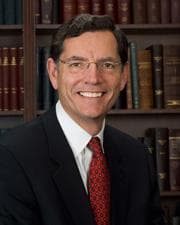
- John Barrasso
- Cosponsors
- - 12 - 0
- Introduced
- In Committee
What this bill would do
This bill, titled the "Ending China's Unfair Advantage Act of 2025," aims to stop federal funding for two major international environmental agreements. It prohibits funds for the Montreal Protocol on Substances that Deplete the Ozone Layer until China is no longer defined as a developing country. Additionally, it prohibits funding for the operations, meetings, and agreements of the United Nations Framework Convention on Climate Change. For the climate change funding to resume, the President must certify that China is included in Annex I of the Convention. These actions are tied to specific changes in how China is classified within these international bodies.
Yes
No question was scored yes.
The opposite· 3 of 5
Does this cut the pollution that drives climate change?-6
The bill halts funding for the UNFCCC, which is a primary global mechanism for addressing climate change and carbon emissions.
Does this better protect air, water and wildlife?-5
The bill cuts funding for the implementation of the Montreal Protocol aimed at protecting the ozone layer.
Does this send more money or help to other countries?-5
The bill stops the flow of federal funds to international environmental organizations and their associated funds.
Who it would affect, and how
Potential Positive Impacts for People
-
Ending China's status as a developing country under the Montreal Protocol: This may be viewed as positive if the goal is to remove what the bill implies is an unfair advantage (Section 3).
-
Including China in Annex I of the United Nations Framework Convention on Climate Change: This could be considered a positive outcome by shifting the classification of the People's Republic of China within the framework of the convention (Section 4).
Potential Negative Impacts for People
-
Prohibition of funds for the Montreal Protocol: This stops federal funds from being used to implement the protocol, its amendments, or any established funds until China's developing country status is changed (Section 3).
-
Prohibition of funds for the United Nations Framework Convention on Climate Change: This prevents federal funds from being used for the operations, meetings, protocols, agreements, or funds of the convention until China is included in Annex I (Section 4).
Groups and Interests Ranking
Every group the model scored this bill for, from -10 to +10. Hover a score for the reason it gave.
- Environment Energy And Infrastructure
- Reduces Carbon Emissions-6Improves Environmental Protections-5
- National Security And Foreign Policy
- Increases Foreign Aid-5Improves International Alliances-3
- Economy And Finance
- Reduces Government Spending-5
- 5/18/2026
- 1 Cosponsor added.
- 3/10/2025
- 1 Cosponsor added.
- 2/27/2025
- 1 Cosponsor added.
- 2/25/2025
- 1 Cosponsor added.
- 2/24/2025
- 1 Cosponsor added.
- 2/20/2025
- Read twice and referred to the Committee on Foreign Relations. (text: CR S1130-1131)
- 7 Cosponsors added.
- Introduced in Senate
One bill Congress.gov lists as related to this one — companions in the other chamber, earlier versions, and bills this one absorbed or was folded into.
 Marsha Blackburn
Republican · Tennessee
 Ted Budd
Republican · North Carolina
 Shelley Capito
Republican · West Virginia
 John Cornyn
Republican · Texas
 Bill Hagerty
Republican · Tennessee
 John Hoeven
Republican · North Dakota
 James Justice
Republican · West Virginia
 Cynthia Lummis
Republican · Wyoming
 Mike Lee
Republican · Utah
 David McCormick
Republican · Pennsylvania
 Rick Scott
Republican · Florida
 Roger Wicker
Republican · Mississippi