Bill · S. 648· Senate(119-S-648)
SCRUB Act of 2025
- Introduced
- 2/20/2025
- Last activity
- 2/20/2025 — Read twice and referred to the Committee on Homeland Security and Governmental Affairs.
- Sponsored by
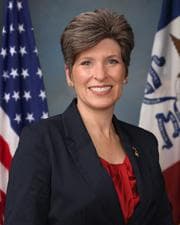
- Joni Ernst
- Cosponsors
- None
- Introduced
- In Committee
What this bill would do
The SCRUB Act of 2025 establishes a process for reviewing and repealing federal rules to reduce regulatory costs. Under this Act, agencies making new rules must repeal existing rules to offset the annual costs of the new regulation. The U.S. DOGE Service is tasked with conducting a review of the Code of Federal Regulations to identify rules for repeal. The goal is to achieve a reduction of at least 33 percent in the cumulative costs of Federal regulation by July 4, 2026. Additionally, agencies must include a plan for reviewing any new rule within 10 years of its issuance.
Yes· 3 of 9
Would business owners be better off under this?+7
The bill specifically targets the reduction of regulatory costs and paperwork burdens for businesses.
Does this make it easier to run a small business?+6
The bill prioritizes the repeal of rules that impose disproportionately high costs on small entities.
Is this likely to grow the economy?+5
Reducing the regulatory burden is intended to foster innovation and economic growth.
The opposite
Would union members be better off under this?-3
The repeal of existing regulations could potentially weaken workplace protections or standards.
Who it would affect, and how
Potential Positive Impacts for People
-
Reduction of Regulatory Costs: The bill aims to achieve a reduction of at least 33 percent in the cumulative costs of Federal regulation (Section 201(c)).
-
Lowering Paperwork Burdens: The review process prioritizes rules that impose paperwork burdens which could be reduced without significantly diminishing regulatory effectiveness (Section 201(b)(3)).
-
Relief for Small Entities: Priority is given to reviewing rules that impose disproportionately high costs on entities qualifying as small entities (Section 201(b)(4)).
-
Encouraging Innovation and Competition: The review process looks for rules that may inhibit innovation, growth, or competition within the United States economy (Section 201(d)(7) and Section 201(d)(8)).
-
Cost Offsetting: Agencies can offset the costs of a new rule by repealing rules that implement the same statutory authority (Section 101(c)(1)).
Potential Negative Impacts for People
-
Limits on Regulatory Analysis: When calculating the cost of a new or existing rule, agencies are prohibited from considering any non-monetized or unquantified factor (Section 101(d)).
-
Restrictions on Reissuing Rules: A rule that is repealed cannot be reissued in substantially the same form, and a new rule cannot be issued that is substantially the same, unless specifically authorized by a new law (Section 201(e)).
Groups and Interests Ranking
Every group the model scored this bill for, from -10 to +10. Hover a score for the reason it gave.
- Economy And Finance
- Improves Small Business Support+6Improves Economic Growth+5Reduces Government Spending+4Increases Job Creation+3
- Demographic And Interest Groups
- Good For Business Owners+7Good For Low Income Households+2Good For Middle Class Households+2Good For Union Workers-3
- Governance And Ideology
- Improves Government Transparency+3Increase States Rights+2
- 2/20/2025
- Read twice and referred to the Committee on Homeland Security and Governmental Affairs.
- Introduced in Senate