Bill · S. 5534· Senate(119-S-5534)
Building and Maintaining Homeless Shelters Act
- Introduced
- 9/24/2026
- Last activity
- 9/24/2026 — Read twice and referred to the Committee on Banking, Housing, and Urban Affairs.
- Sponsored by
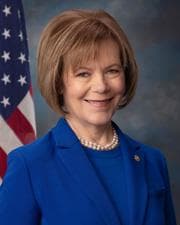
- Tina Smith
- Cosponsors
- None
- Introduced
- In Committee
What this bill would do
This bill is known as the Building and Maintaining Homeless Shelters Act. It amends the McKinney-Vento Homeless Assistance Act to set up a competitive grant program. The Secretary of Housing and Urban Development will award these grants to help shelters and permanent supportive housing. The funds are meant for physical infrastructure needs and increasing shelter and housing capacity nationwide. The bill authorizes $500,000,000 to be appropriated for each of the fiscal years 2027 through 2031.
Yes· 3 of 19
Is this likely to reduce homelessness?+9
The primary purpose of the grant program is to fund the construction and rehabilitation of shelters and permanent supportive housing to combat homelessness.
Would households on low incomes be better off under this?+8
The bill targets individuals and families experiencing homelessness and severe poverty by expanding shelter and permanent supportive housing.
Does this make housing cost less?+8
The legislation directly funds the construction and expansion of permanent supportive housing and emergency shelters nationwide.
The opposite
Does this reduce what the federal government spends?-4
The bill authorizes $500,000,000 in appropriations annually for fiscal years 2027 through 2031, which increases federal expenditures.
Who it would affect, and how
Potential Positive Impacts for People
-
State governments, local governments, Indian tribal governments, tribally designated housing entities, public housing agencies, and tax-exempt 501(c)(3) organizations can receive grants to build, rehabilitate, or acquire shelters and permanent supportive housing as outlined in Section 496(c)(1)(A). This is a positive step because it provides funding to organizations working directly on the ground to expand housing options.
-
Funds can be used for specific physical infrastructure improvements like energy efficiency updates, mobile health clinics, day centers, safe parking programs, and non-congregate shelters under Section 496(c)(1)(C). This benefits individuals experiencing homelessness by offering diverse, practical resources tailored to different safety, health, and shelter needs.
-
The program includes specific funding set-asides, requiring at least 5 percent to go to Indian tribal governments or tribally designated housing entities and at least 40 percent to go to eligible entities located in rural areas under Section 496(f) and Section 496(g). This ensures that tribal communities and rural areas are not left behind and receive guaranteed shares of the funding.
-
The Secretary is prohibited from discriminating against faith-based groups, but is also explicitly banned from making awards to eligible entities that discriminate based on sexual orientation, gender identity, or sex stereotype under Section 496(e). This protects vulnerable individuals from being denied help based on who they are.
Potential Negative Impacts for People
-
Individuals, foreign entities, and sole proprietorship organizations are explicitly excluded from being an eligible entity that can receive these grants under Section 495(1)(B). While this keeps funds focused on structured agencies and organizations, it means independent people or sole proprietors cannot directly access these grants for private shelter solutions.
-
The bill mandates that any construction project using grant money must use materials that comply with domestic content procurement preferences and pay laborers and mechanics a prevailing rate of wage under Section 496(h). While this supports domestic manufacturing and fair worker pay, these strict rules might increase overall project costs or slow down how quickly shelters can be built.
Groups and Interests Ranking
Every group the model scored this bill for, from -10 to +10. Hover a score for the reason it gave.
- Demographic And Interest Groups
- Good For Low Income Households+8Good For Children+6Good For Native Americans+6Good For Rural Residents+6Good For L G B T Q Community+5Good For Young Adults+5Good For Union Workers+4
- Social Issues And Justice
- Reduces Homelessness+9Improves Affordable Housing+8Improves Poverty Reduction+6Improves L G B T Q Rights+4Improves Racial Equity+4
- Environment Energy And Infrastructure
- Improves Rural Development+5Increases Renewable Energy Investment+4
- Economy And Finance
- Increases Job Creation+5Improves Small Business Support+3Improves Economic Growth+2Reduces Government Spending-4
- Healthcare
- Improves Healthcare Access+4
- Governance And Ideology
- Increases Federal Power+3
- 9/24/2026
- Read twice and referred to the Committee on Banking, Housing, and Urban Affairs.
- Introduced in Senate