Bill · S. 5492· Senate(119-S-5492)
Safe Transit Act
- Introduced
- 9/23/2026
- Last activity
- 9/23/2026 — Read twice and referred to the Committee on Banking, Housing, and Urban Affairs.
- Sponsored by
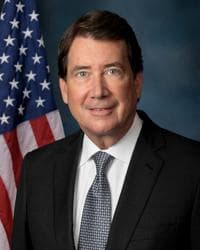
- Bill Hagerty
- Cosponsors
- None
- Introduced
- In Committee
What this bill would do
This bill is called the Safe Transit Act and aims to reduce crime on public transportation systems in the United States. It sets new rules that tie federal transit funding to improvements in local crime rates and safety measures. Transit agencies in larger urban areas must follow specific rules regarding fare collection, safety programs, and crime reporting. The legislation also creates mandatory penalties, including the withholding of federal funds, for state or local governments that fail to meet certain crime-related requirements. Additionally, the bill requires transit systems to set up programs focused on crime prevention, safety risk reduction, and family-friendliness.
Yes· 3 of 11
Does this improve buses, trains and other public transport?+6
The legislation mandates investments in security, lighting, and assault mitigation infrastructure to improve safety on public transit systems.
Does this give the federal government more power?+6
The legislation increases federal oversight by conditioning transit funds on local compliance with specific criminal laws and safety performance targets.
Does this change how police departments operate?+5
The bill mandates crime prevention programs and increased policing presence on public transportation systems.
The opposite
Does this leave more decisions to the states?-5
The bill preempts local and state discretion by conditioning federal transit funding on the adoption of specific criminal penalties for fare evasion and bail restrictions.
Does this protect the right to fair treatment by the courts?-5
Requiring the public display of suspects' images and identifying information prior to formal conviction undermines due process protections.
Does this give people more control over their personal data?-4
The bill mandates the public display of security camera images of individuals accused of committing crimes before formal conviction, raising privacy concerns.
Who it would affect, and how
Potential Positive Impacts for People
-
Better Security Infrastructure: Section 2 of the bill amends title 49 to allow financial assistance to be used for projects that increase lighting, camera surveillance, and emergency telephone lines in or near public transportation systems. This can help make riders and transit workers feel safer.
-
Protection for Transit Workers: Section 2 requires certain transit recipients to implement a crime prevention and personal safety risk reduction program, which includes deploying assault mitigation infrastructure and technology on buses, such as barriers to restrict unwanted entry into bus operator workstations. This provision aims to protect transit workers from assaults.
-
New Reporting Tools for Riders: Section 2 requires transit recipients serving an urbanized area with a population of 200,000 or more to develop an electronic application. This app allows passengers to report instances of assaults and other safety deficiencies directly, helping improve accountability and safety tracking.
Potential Negative Impacts for People
-
Loss of Federal Transit Funding: Section 2 establishes mandatory penalties where the Secretary of Transportation can withhold up to 100 percent of federal transit assistance from direct recipients if their state or local governments do not comply with specific laws. This includes requirements that fare evasion be a criminal offense and that laws do not permit the release of individuals charged with a transit crime on personal recognizance or unsecured bonds. If funds are withheld, it could negatively impact public transportation services and riders who rely on them.
-
Public Display of Suspect Images: Section 4 requires recipients in urbanized areas with populations of 200,000 or more to prominently display the image of any person captured by a security camera committing a crime on the system, along with identifying information, at every rail station and bus terminal for at least 45 days. This could raise privacy and due process concerns for individuals whose images are posted before a formal conviction.
Groups and Interests Ranking
Every group the model scored this bill for, from -10 to +10. Hover a score for the reason it gave.
- Demographic And Interest Groups
- Good For Urban Residents+4Good For Children+3Good For Low Income Households+3Good For Seniors+3Good For Veterans+3
- Economy And Finance
- Improves Consumer Protection+4Reduces Government Spending+3
- Environment Energy And Infrastructure
- Improves Public Transit+6
- Social Issues And Justice
- Improves Policing Reform+5
- Education And Technology
- Improves Data Privacy-4
- Governance And Ideology
- Increases Federal Power+6Improves Due Process-5Increase States Rights-5
- National Security And Foreign Policy
- Improves Cybersecurity Defense+4
- 9/23/2026
- Read twice and referred to the Committee on Banking, Housing, and Urban Affairs.
- Introduced in Senate