Bill · S. 5434· Senate(119-S-5434)
American Renewable Energy Act of 2026
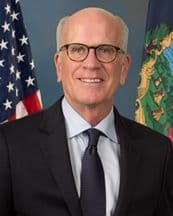
- Introduced
- 9/17/2026
- Last activity
- 9/17/2026 — Read twice and referred to the Committee on Energy and Natural Resources.
- Sponsored by
- Peter Welch
- Cosponsors
- - 1 - 0
- Introduced
- In Committee
What this bill would do
This bill creates a Federal renewable electricity standard requiring retail electricity suppliers to meet yearly targets using renewable energy sources from 2027 through 2036. Suppliers must comply by submitting Federal renewable electricity credits or making alternative compliance payments. The legislation sets specific equity requirements for distributed generation and energy generation within impacted communities. It also establishes civil penalties for suppliers that fail to meet these requirements or submit the required credits and payments. States are given authority to receive alternative compliance payments to fund renewable energy, storage, and energy efficiency programs.
Yes· 3 of 17
Does this put more money into wind, solar and other renewable power?+9
Retail electricity suppliers are required to meet escalating yearly targets through renewable credits or alternative compliance payments dedicated to clean energy.
Does this cut the pollution that drives climate change?+8
The bill establishes a strict federal renewable electricity standard scaling up to 70 percent by 2036, significantly cutting greenhouse gas emissions.
Does this better protect air, water and wildlife?+7
The legislation mandates reductions in criteria air pollutants and greenhouse gases, specifically prioritizing impacted and environmental justice communities.
The opposite
No question was scored the opposite.
Who it would affect, and how
Potential Positive Impacts for People
-
Support for Distributed Generation: Section 3(b)(2)(A) requires retail electricity suppliers to source a specific percentage of their renewable electricity credits from distributed generation (at least 15 percent for 2027 through 2030, and at least 20 percent for 2031 through 2036). This provision encourages local, noncentralized renewable energy installations near points of use.
-
Benefits for Impacted Communities: Section 3(b)(2)(B) mandates that a portion of the submitted renewable electricity credits come from generation in impacted communities (at least 15 percent for 2027 through 2030, and at least 20 percent for 2031 through 2036). This helps ensure that historically underserved populations receive direct investments and health benefits from new renewable energy projects.
-
State Funding for Renewable and Efficiency Projects: Section 3(f) allows suppliers to make alternative compliance payments instead of submitting credits, with funds directed to state treasuries. Section 3(f)(3) requires states to use these funds exclusively for deploying renewable energy, storage technologies, or energy efficiency programs, with at least 50 percent of the funds directly benefiting impacted communities.
Potential Negative Impacts for People
- Financial Penalties and Compliance Costs: Section 3(h)(1) imposes civil penalties on any person who fails to comply with the credit submission or alternative compliance payment requirements. The penalty is double the alternative compliance payment multiplied by the quantity of unsubmitted credits or payments. This could create a heavy financial burden for suppliers, which may ultimately affect consumer electricity prices.
Groups and Interests Ranking
Every group the model scored this bill for, from -10 to +10. Hover a score for the reason it gave.
- Environment Energy And Infrastructure
- Increases Renewable Energy Investment+9Reduces Carbon Emissions+8Improves Environmental Protections+7Reduces Fossil Fuel Production+5Improves Rural Development+4
- Demographic And Interest Groups
- Good For African Americans+4Good For Children+4Good For Hispanic Americans+4Good For Low Income Households+4Good For Native Americans+4Good For Farmers+3Good For Rural Residents+3
- Economy And Finance
- Increases Job Creation+5Improves Small Business Support+4Improves Economic Growth+3
- Governance And Ideology
- Increase States Rights+4
- Social Issues And Justice
- Improves Poverty Reduction+3
- 9/17/2026
- Read twice and referred to the Committee on Energy and Natural Resources.
- 1 Cosponsor added.
- Introduced in Senate
4 bills Congress.gov lists as related to this one — companions in the other chamber, earlier versions, and bills this one absorbed or was folded into.
 Chris Van Hollen
Democrat · Maryland