Bill · S. 542· Senate(119-S-542)
English Language Unity Act of 2025
- Introduced
- 2/12/2025
- Last activity
- 2/12/2025 — Read twice and referred to the Committee on Homeland Security and Governmental Affairs.
- Sponsored by
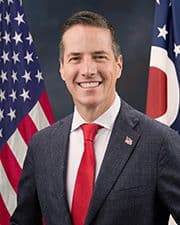
- Bernie Moreno
- Cosponsors
- - 1 - 0
- Introduced
- In Committee
What this bill would do
The English Language Unity Act of 2025 proposes to declare English as the official language of the United States. It establishes that official government functions, including laws, regulations, and programs, must be conducted in English. The bill also mandates that all naturalization ceremonies be conducted in English. Additionally, it sets a standard that citizens should be able to read and understand the English text of the Constitution and other national laws. The Secretary of Homeland Security is tasked with creating uniform English language testing for naturalization candidates.
Yes
Does this give the federal government more power?+3
The bill establishes a uniform national language standard for all official federal government functions.
Would Native Americans be better off under this?+2
The bill explicitly states it does not limit the preservation or use of Native American languages.
Does this make what the government does easier for the public to see?+2
The bill aims to avoid misconstructions of the English language texts of national laws.
The opposite· 3 of 5
Would immigrants be better off under this?-5
The bill creates more rigorous English language testing and requirements for the naturalization process.
Would Hispanic Americans be better off under this?-4
The mandate for English as the official language and in naturalization ceremonies may negatively impact large Hispanic populations.
Does this make it easier for immigrants already here to become citizens?-4
The bill implements stricter and uniform English language testing for naturalization candidates, which creates a higher barrier to citizenship.
Who it would affect, and how
Potential Positive Impacts for People
-
Increased opportunities for education: Federal representatives would have an obligation to encourage greater opportunities for individuals to learn the English language (Section 3, Sec. 162).
-
Protection for specific groups and needs: The bill includes exceptions that ensure government actions related to the teaching of languages, the Individuals with Disabilities Education Act, national security, international relations, trade, tourism, commerce, public health and safety, the Census, and the rights of crime victims or defendants are not restricted (Section 3, Sec. 163).
-
Preservation of Native languages: The act does not limit the preservation or use of Native Alaskan or Native American languages (Section 3, Sec. 165).
-
Legal recourse for injuries: A person who is injured by a violation of this chapter may seek appropriate relief through a civil action (Section 3, Sec. 166).
Potential Negative Impacts for People
-
Mandatory language requirements for government functions: All official government functions—including laws, public proceedings, regulations, publications, orders, actions, programs, and policies—must be conducted in English (Section 3, Sec. 163).
-
New standards for naturalization: All naturalization ceremonies must be conducted in English (Section 3, Sec. 164), and the Secretary of Homeland Security will implement uniform English language ability testing for candidates (Section 5).
-
Standard of understanding for citizens: The bill establishes that citizens should be able to read and understand the English language text of the Declaration of Independence, the Constitution, and the laws of the United States (Section 3, Sec. 164; Section 5).
Groups and Interests Ranking
Every group the model scored this bill for, from -10 to +10. Hover a score for the reason it gave.
- Demographic And Interest Groups
- Good For Native Americans+2Good For Immigrants-5Good For Hispanic Americans-4Good For Low Income Households-2
- Social Issues And Justice
- Improves Pathway To Citizenship-4Improves Racial Equity-3
- Governance And Ideology
- Increases Federal Power+3Improves Government Transparency+2
- 3/27/2025
- 1 Cosponsor added.
- 2/12/2025
- Read twice and referred to the Committee on Homeland Security and Governmental Affairs.
- Introduced in Senate
 Kevin Cramer
Republican · North Dakota