Bill · S. 5401· Senate(119-S-5401)
Good Energy Jobs Act of 2026
- Introduced
- 9/15/2026
- Last activity
- 9/15/2026 — Read twice and referred to the Committee on Energy and Natural Resources.
- Sponsored by
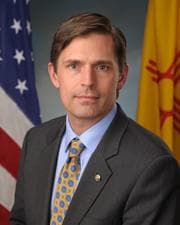
- Martin Heinrich
- Cosponsors
- None
- Introduced
- In Committee
What this bill would do
The Good Energy Jobs Act of 2026 amends the Department of Energy Organization Act to require that Department of Energy financial assistance promotes high labor standards and community benefits. The bill mandates that workers on covered projects receive prevailing wages and that specific percentages of labor hours are performed by registered apprentices. It requires entities receiving financial assistance to submit community benefits plans and remain neutral regarding labor organizing. Additionally, the legislation promotes domestic manufacturing and bans the offshoring of products developed with this financial assistance without prior approval. Finally, it sets a goal for at least 40 percent of financial assistance from specific programs to benefit small or disadvantaged communities.
Yes· 3 of 18
Would union members be better off under this?+8
The bill strongly favors organized labor through prevailing wage requirements, apprenticeship mandates, labor neutrality rules, and project labor agreements.
Does this strengthen the rights of workers to organise?+7
The bill mandates labor neutrality, project labor agreements, and protections for organizing under the National Labor Relations Act.
Would people in their twenties and thirties be better off under this?+6
Mandated registered apprenticeship programs provide young workers with valuable job skills, training, and pathways to stable careers.
The opposite
Would business owners be better off under this?-3
Strict compliance rules, offshoring bans, and potential funding recaptures place heavy regulatory burdens on business owners receiving federal assistance.
Does this make it easier to run a small business?-3
Additional compliance reporting and strict labor standards could create administrative hurdles for small businesses seeking Department of Energy funds.
Who it would affect, and how
Potential Positive Impacts for People
-
Fair Wages for Workers: Section 602(a) requires contractors and subcontractors to pay laborers and mechanics wages that are at least equal to prevailing rates in the local area, which helps ensure workers receive fair pay for construction, alteration, maintenance, or repair work assisted by the Department of Energy.
-
Apprenticeship Opportunities: Section 602(b) requires that at least 15 percent of total labor hours on a covered project be performed by individuals in a registered apprenticeship program, helping workers gain valuable job skills and training.
-
Support for Disadvantaged Communities: Section 608(a) directs the Secretary to ensure that at least 40 percent of financial assistance from covered programs goes to entities that commit to providing specific, measurable, and meaningful benefits to small or disadvantaged communities.
-
Boosting Domestic Manufacturing: Section 607(b) requires entities receiving research, development, or demonstration assistance to enter into agreements ensuring that any resulting products are manufactured substantially in the United States, supporting domestic jobs and industry.
Potential Negative Impacts for People
-
Increased Compliance Burdens: Section 609(a) requires entities receiving financial assistance to submit regular compliance reports to the Secretary, which may create extra administrative paperwork and operational burdens for businesses and organizations seeking federal funds.
-
Strict Offshoring Restrictions: Section 607(e) prohibits entities from relocating, transferring, or outsourcing the manufacturing of products developed with financial assistance to a foreign country during the term of the assistance and for five years afterward without explicit prior approval from the Secretary, which could limit business flexibility in global markets.
-
Potential Funding Loss for Noncompliance: Sections 602(c), 603(c), 605(f), and 607(d) allow the Secretary to withhold, recapture, or terminate financial assistance if an entity fails to comply with labor, neutrality, community benefits, or domestic manufacturing requirements, which could financially harm organizations that make mistakes or fail to meet strict federal rules.
Groups and Interests Ranking
Every group the model scored this bill for, from -10 to +10. Hover a score for the reason it gave.
- Demographic And Interest Groups
- Good For Union Workers+8Good For Young Adults+6Good For Low Income Households+5Good For African Americans+4Good For Hispanic Americans+4Good For Native Americans+4Good For Rural Residents+4Good For Students+4Good For Veterans+4Good For Women+4Good For Business Owners-3
- Economy And Finance
- Improves Union Protections+7Increases Job Creation+5Improves Economic Growth+3Improves Small Business Support-3
- Governance And Ideology
- Improves Government Transparency+5Increases Federal Power+4
- Social Issues And Justice
- Improves Poverty Reduction+4Improves Racial Equity+4
- Environment Energy And Infrastructure
- Improves Rural Development+4
- 9/15/2026
- Read twice and referred to the Committee on Energy and Natural Resources.
- Introduced in Senate