Bill · S. 5364· Senate(119-S-5364)
Rural Mothers and Fathers Choice Act
- Introduced
- 8/7/2026
- Last activity
- 8/7/2026 — Read twice and referred to the Committee on Health, Education, Labor, and Pensions.
- Sponsored by
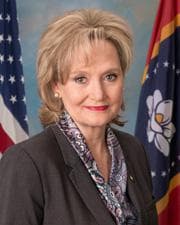
- Cindy Hyde-Smith
- Cosponsors
- None
- Introduced
- In Committee
What this bill would do
The "Rural Mothers and Fathers Choice Act" aims to support families in rural and tribal communities through a 10-year Federal program. It establishes a system of planning and implementation grants for eligible entities to strengthen educational and employment opportunities. The bill focuses on areas such as literacy, childcare, and workforce development. Services are to be delivered through "hub and spoke" sites to reach remote areas. Additionally, the Act seeks to return control of services to the States.
Yes· 3 of 24
Would people in rural areas be better off under this?+8
The entire purpose of the act is to provide targeted resources and opportunities to rural residents.
Would children be better off under this?+7
The bill prioritizes kindergarten readiness, literacy, and health outcomes for children.
Would students be better off under this?+7
The bill provides extensive support for K-12 education, literacy, and career pathways.
The opposite
Would people in cities be better off under this?-5
The bill specifically targets resources toward rural and tribal communities rather than urban areas.
Does this give the federal government more power?-2
While returning control to States, the bill creates a new federal grant-making program with specific mandates.
Who it would affect, and how
Potential Positive Impacts for People
-
Educational Advancement: The bill promotes kindergarten readiness, reading and mathematics proficiency, and on-s-time high school graduation to help students succeed (Section 2(b)(1)).
-
Workforce and Financial Stability: It aims to support household income and employment through meaningful workforce development, including apprenticeships and work-based learning (Section 2(b)(2)(A) and Section 4(c)(4)).
-
Childcare Support: The Act provides for childcare and after-school programs to assist working parents (Section 2(b)(2)(B)).
-
Healthcare Accessibility: It facilitates broadband-enabled access to telehealth and mobile health services, which can help remote communities (Section 2(b)(2)(C) and Section 4(c)(5)).
-
Community Empowerment: The establishment of a Family Advisory Council allows parents and caregivers to vote on budget and plan recommendations (Section 5(b)).
Potential Negative Impacts for People
-
Financial Burdens on Grantees: While there is no matching requirement for the first three years, eligible entities must eventually contribute 10% of the grant amount for years 4 through 6, and 20% for years 7 through 10 (Section 8(a)(1)).
-
Administrative Restrictions: The bill includes a "supplement not supplant" rule, meaning Federal funds can only be used to add to existing funds, not to replace them (Section 8(b)).
Groups and Interests Ranking
Every group the model scored this bill for, from -10 to +10. Hover a score for the reason it gave.
- Demographic And Interest Groups
- Good For Rural Residents+8Good For Children+7Good For Students+7Good For Low Income Households+6Good For Native Americans+6Good For Women+5Good For Young Adults+5Good For Business Owners+4Good For Middle Aged+4Good For Middle Class Households+4Good For Urban Residents-5
- Healthcare
- Improves Healthcare Access+7Improves Mental Health Access+6Improves Opioid Crisis Response+5
- Economy And Finance
- Improves Small Business Support+5Increases Job Creation+5Improves Economic Growth+4
- Education And Technology
- Improves Internet Access+6Increases Public School Funding+6
- Environment Energy And Infrastructure
- Improves Rural Development+7Improves Public Transit+5
- Social Issues And Justice
- Improves Childcare Affordability+7Improves Poverty Reduction+5
- Governance And Ideology
- Increase States Rights+5Improves Government Transparency+3Increases Federal Power-2
- 8/7/2026
- Read twice and referred to the Committee on Health, Education, Labor, and Pensions.
- Introduced in Senate