Bill · S. 5351· Senate(119-S-5351)
Clean Elections Act
- Introduced
- 8/6/2026
- Last activity
- 8/6/2026 — Read twice and referred to the Committee on Rules and Administration.
- Sponsored by
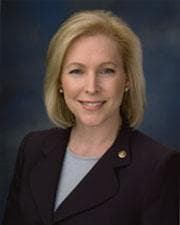
- Kirsten Gillibrand
- Cosponsors
- None
- Introduced
- In Committee
What this bill would do
The Clean Elections Act seeks to amend the Federal Election Campaign Act to create the Democracy Dollars Program. This program provides public financing for Federal elections through vouchers called democracy dollars. Eligible voters can direct these democracy dollars to the candidates of their choice for various Federal offices. The bill establishes specific amounts for Congressional, Senate, and Presidential democracy dollars. It also sets requirements for candidates who wish to participate in this public financing system. Finally, the act includes provisions for administration, audits, and funding for the program.
Yes· 3 of 10
Does this limit or expose the money behind campaigns?+8
The act significantly reforms campaign finance by establishing a public voucher system.
Does this make elections run better?+7
The bill implements public financing of elections to empower individual voters and diversify candidates.
Does this protect the right to vote?+5
The bill empowers voters by providing democracy dollar vouchers to participate in federal elections.
The opposite
Would high-income households be better off under this?-3
The bill imposes restrictions on high-wealth candidate spending and personal fund contributions.
Who it would affect, and how
Potential Positive Impacts for People
-
Empowers voters to support candidates: Eligible individuals can use democracy dollars to direct funds to the candidates they choose (Section 501(2)).
-
Provides specific support for different offices: The bill offers distinct democracy dollar amounts for Congressional, Senate, and Presidential races (Section s 502(b)).
-
Includes protections for students and citizens living abroad: Full-time students may elect to treat the State where their institution is located as their residence for qualifying purposes (Section 501(7)(B)(i)). Additionally, individuals living abroad can be treated as qualified residents of their voting State or their last State of domicile (Section 501(7)(B)(ii)).
-
Protects voter privacy: The Commission is required to treat information obtained for identifying eligible individuals as confidential to protect privacy (Section 501(c)(1)(B)). Furthermore, identity information of those making democracy dollar contributions is kept on a separate list not available to the public (Section 535(b)(1)(A)(ii)).
-
Encourages broader participation: The Commission is directed to establish an information program that targets communities and individuals who have not previously made contributions, while also encouraging voter registration (Section 505(d)).
Potential Negative Impacts for People
-
Restricts candidate spending: Participating candidates are subject to strict contribution requirements, meaning they cannot accept contributions other than qualified ones (Section 503(c)(1)).
-
Limits personal investment in campaigns: Candidates are prohibited from spending their own personal funds, or those of their immediate family, in amounts exceeding $2,500 for any election in the applicable series (Section 503(d)).
-
Mandates strict fund usage rules: Funds held in democracy dollar accounts cannot be converted to personal use, used to reimburse individuals for transfers, or used to pay any member of the candidate's family (Section 504(b)(2)).
-
Requires return of unspent funds: Participating candidates must remit any remaining unexpended amounts in their democracy dollar account to the Commission after withdrawing, losing an election, or no longer qualifying for the ballot (Section 504(c)).
Groups and Interests Ranking
Every group the model scored this bill for, from -10 to +10. Hover a score for the reason it gave.
- Governance And Ideology
- Improves Campaign Finance Reform+8Improves Electoral Process+7Improves Privacy Rights+3Increases Federal Power+3
- Social Issues And Justice
- Improves Voting Access+5Improves Voting Rights+5
- Demographic And Interest Groups
- Good For Low Income Households+5Good For Students+5Good For Middle Class Households+2Good For High Income Households-3
- Education And Technology
- Improves Data Privacy+3
- 8/6/2026
- Read twice and referred to the Committee on Rules and Administration.
- Introduced in Senate