Bill · S. 5336· Senate(119-S-5336)
Uniform Vehicle Safety Standards Act of 2026
- Introduced
- 8/6/2026
- Last activity
- 8/6/2026 — Read twice and referred to the Committee on Commerce, Science, and Transportation.
- Sponsored by
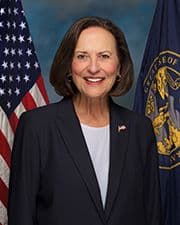
- Deb Fischer
- Cosponsors
- - 4 - 0
- Introduced
- In Committee
What this bill would do
This bill is called the Uniform Vehicle Safety Standards Act of 2026. It was introduced in the Senate by Mrs. Fischer and Ms. Lummis on August 6, 2026. The main purpose of the bill is to make sure motor vehicle safety standards set by the National Highway Traffic Safety Administration are applied uniformly. It also aims to relieve what it calls an unreasonable burden on interstate commerce. The bill does this by changing the law regarding lawsuits. Specifically, it prohibits liability at common law for failing to manufacture or equip a motor vehicle beyond the applicable safety standards.
Yes
Does this make it easier to do business across state lines?+7
The bill aims to relieve unreasonable burdens on interstate commerce by unifying safety standards.
Would business owners be better off under this?+6
The bill provides significant liability protection and cost predictability for vehicle manufacturers.
Does this give the federal government more power?+5
The bill empowers federal safety standards by limiting common law challenges.
The opposite· 3 of 4
Does this give people more protection from unfair business practices?-5
The bill limits the ability of consumers to seek legal recourse if a vehicle meets minimum standards but is otherwise unsafe.
Does this protect the right to fair treatment by the courts?-4
The bill restricts common law legal pathways for those injured by products that meet minimum safety requirements.
Does this leave more decisions to the states?-3
The bill prioritizes federal standards over common law liabilities that might exist at a state level.
Who it would affect, and how
Potential Positive Impacts for People
- Uniform Safety Standards: Under Section 2, a purpose of the Act is to ensure the uniform application of motor vehicle safety standards prescribed by the National Highway Traffic Safety Administration. This could benefit people by creating clear, consistent rules across the board.
- Relief for Interstate Commerce: Also under Section 2, the Act aims to relieve the unreasonable burden on interstate commerce caused by allowing suits at common law to supplant motor vehicle safety standards. This might help keep vehicle manufacturing and commerce running smoothly without the disruption of certain lawsuits.
Potential Negative Impacts for People
- Exemption from Common Law Liability: Under Section 3, the bill amends section 30103(e) of title 49, United States Code, so that compliance with safety standards shall exempt a party from common law liability for failure to exceed such standard. This could negatively impact individuals because it stops people from suing vehicle manufacturers at common law if a car was built to the minimum standard but still lacked safety features that could have exceeded that standard and potentially protected someone better.
Groups and Interests Ranking
Every group the model scored this bill for, from -10 to +10. Hover a score for the reason it gave.
- Economy And Finance
- Improves Consumer Protection-5
- Governance And Ideology
- Improves Interstate Commerce+7Increases Federal Power+5Improves Due Process-4Increase States Rights-3
- Demographic And Interest Groups
- Good For Business Owners+6Good For Low Income Households-3
- 9/22/2026
- 1 Cosponsor added.
- 9/17/2026
- 1 Cosponsor added.
- 9/15/2026
- 1 Cosponsor added.
- 8/6/2026
- Read twice and referred to the Committee on Commerce, Science, and Transportation.
- 1 Cosponsor added.
- Introduced in Senate
One bill Congress.gov lists as related to this one — companions in the other chamber, earlier versions, and bills this one absorbed or was folded into.
 Marsha Blackburn
Republican · Tennessee
 Cynthia Lummis
Republican · Wyoming
 Jerry Moran
Republican · Kansas
 Bernie Moreno
Republican · Ohio