Bill · S. 5272· Senate(119-S-5272)
Recover COVID Unemployment Fraud in Banks Act
- Introduced
- 8/5/2026
- Last activity
- 8/5/2026 — Read twice and referred to the Committee on Finance.
- Sponsored by
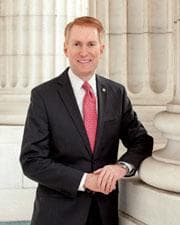
- James Lankford
- Cosponsors
- None
- Introduced
- In Committee
What this bill would do
This bill, known as the "Recover COVID Unemployment Fraud in Banks Act," aims to recover unclaimed pandemic-era unemployment funds. It establishes a National Recovery Coordinator and a Task Force to oversee the recovery of improper payments held by financial institutions or state agencies. The Task Force will develop model processes and guidance to ensure cost-effective recovery of these funds. Additionally, the bill extends the statute of limitations for criminal and civil enforcement regarding pandemic unemployment fraud. This extension allows for prosecutions or actions to be brought up to 10 years after a violation or conspiracy occurs.
Yes· 3 of 7
Does this make the government pay for what it commits to?+6
The bill targets the recovery of fraudulent or improper pandemic-era payments.
Does this reduce what the federal government owes?+5
The bill seeks to recover unspent federal funds to reduce improper payments.
Does this give people more protection from unfair business practices?+4
The bill includes provisions for notice and resources for victims of identity theft used in fraud.
The opposite
Does this shorten or soften prison sentences?-4
The bill extends the statute of limitations for criminal prosecution of fraud to 10 years.
Does this protect the right to fair treatment by the courts?-3
The extended 10-year statute of limitations increases the window for legal action against individuals.
Does this leave more decisions to the states?-2
The extension of federal statutes of limitations limits state-level finality in these matters.
Who it would affect, and how
Potential Positive Impacts for People
-
Resource Recovery: The bill creates a Task Force to coordinate with State agencies to identify and recover Federal pandemic unemployment compensation payments held by financial institutions or State agencies (Section 2, subsection b, paragraph 1).
-
Victim Support: The Task Force is tasked with developing model notice and information regarding available resources for individuals whose identity information was used fraudulently to obtain unemployment compensation (Section 2, subsection b, paragraph 2, subparagraph C).
-
Cost-Effective Processes: The Task Force is responsible for developing model processes designed to result in the cost-effective recovery of improper payments (Section 2, subsection b, paragraph 2).
-
State Reimbursement: The Secretary of Labor is required to reimburse States for all administrative costs incurred due to coordination with the Task Force under specific CARES Act agreements (Section 2, subsection d).
Potential Negative Impacts for People
-
Extended Legal Liability: The bill extends the statute of limitations for criminal prosecution or civil enforcement actions related to pandemic unemployment fraud to 10 years after the date of the violation or conspiracy (Section 3, subsections a, b, and c).
-
Increased Prosecution Window: Individuals may face legal actions for pandemic-era unemployment claims for a much longer period of time than previously established by other laws (Section 3, subsections a, b, and c).
Groups and Interests Ranking
Every group the model scored this bill for, from -10 to +10. Hover a score for the reason it gave.
- Economy And Finance
- Improves Fiscal Responsibility+6Reduces National Debt+5Improves Consumer Protection+4Reduces Government Spending+3
- Social Issues And Justice
- Improves Criminal Sentencing Reform-4
- Demographic And Interest Groups
- Good For Low Income Households+2
- Governance And Ideology
- Increases Federal Power+3Improves Government Transparency+2Improves Due Process-3Increase States Rights-2
- 8/5/2026
- Read twice and referred to the Committee on Finance.
- Introduced in Senate