Bill · S. 5265· Senate(119-S-5265)
USTRx Act
- Introduced
- 8/5/2026
- Last activity
- 8/5/2026 — Read twice and referred to the Committee on Finance.
- Sponsored by
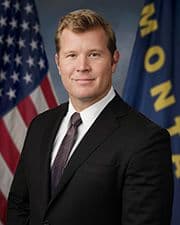
- Tim Sheehy
- Cosponsors
- - 2 - 0
- Introduced
- In Committee
What this bill would do
This bill, known as the "USTRx Act," aims to combat international trade practices where high-income countries use price controls on pharmaceuticals. It seeks to stop these countries from unfairly exploiting United States innovation by deviating from market-based policies. To achieve this, the legislation creates the position of Chief Pharmaceutical Trade Negotiator. This official will advocate for United States pharmaceutical manufacturers and consumers. Additionally, the bill requires an annual report to review the pharmaceutical trade practices of high-income countries. Finally, it establishes a process for the United States to respond to adverse trade actions taken by these countries.
Yes· 3 of 9
Does this make patent and copyright rules fairer?+5
The bill seeks to protect the value of U.S. pharmaceutical innovation against foreign exploitation.
Does this give people more protection from unfair business practices?+5
The bill seeks to protect U.S. consumers by ensuring continued access to innovative pharmaceutical treatments.
Does this make health care easier to get in general?+5
The bill aims to safeguard access to new, innovative life-saving treatments for U.S. patients.
The opposite
Does this lower the price of prescription medicines?-3
By opposing foreign price controls, the bill may indirectly support maintaining higher market-based prices for innovation.
Does this strengthen ties with allied countries?-2
The bill may create tension with high-income allies through trade disputes and retaliatory actions.
Who it would affect, and how
Potential Positive Impacts for People
-
Ensuring Access to Treatments: The bill states that combating foreign price controls is necessary to safeguard access to life-saving treatments for United States patients and consumers (Section 2(a)(2) and Section 2(b)(4)).
-
Protecting Innovation Incentives: By addressing policies that mandate artificially low drug prices, the bill seeks to prevent the reduction of global incentives to invest in the development of new medicines (Section 2(a)(2) and Section 2(b)(2)).
-
Reducing Financial Burden on Americans: The legislation aims to stop the unfair shift of development costs to the United States, where United States patients and taxpayers currently rely on financing global pharmaceutical innovation (Section 2(b)(3)).
-
Stronger Advocacy for Manufacturers and Consumers: The creation of a Chief Pharmaceutical Trade Negotiator provides a dedicated official to conduct negotiations, enforce trade agreements, and advocate for United States pharmaceutical manufacturers and consumers (Section 3).
Potential Negative Impacts for People
- Threats to Access via Price Controls: The bill's findings suggest that current foreign price controls could threaten to restrict access to new treatments and cures for United States patients and consumers (Section 2(a)(2)).
Groups and Interests Ranking
Every group the model scored this bill for, from -10 to +10. Hover a score for the reason it gave.
- Education And Technology
- Improves Intellectual Property Fairness+5Increases Scientific Research Funding+4
- Economy And Finance
- Improves Consumer Protection+5
- Governance And Ideology
- Increases Federal Power+3Improves Government Transparency+2
- Healthcare
- Improves Healthcare Access+5Increases Research Funding+3Reduces Prescription Drug Costs-3
- Demographic And Interest Groups
- Good For Business Owners+4
- National Security And Foreign Policy
- Improves International Trade+3Improves International Alliances-2
- 8/5/2026
- Read twice and referred to the Committee on Finance.
- 2 Cosponsors added.
- Introduced in Senate
 Ted Budd
Republican · North Carolina
 David McCormick
Republican · Pennsylvania