Bill · S. 5050· Senate(119-S-5050)
Expanding AI Voices Act
- Introduced
- 7/21/2026
- Last activity
- 7/21/2026 — Read twice and referred to the Committee on Commerce, Science, and Transportation.
- Sponsored by
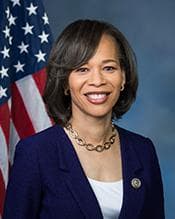
- Lisa Blunt Rochester
- Cosponsors
- - 0 - 1
- Introduced
- In Committee
What this bill would do
The Expanding AI Voices through Capacity Building Act aims to support an interdisciplinary research community for artificial intelligence. It directs the Director of the National Science Foundation to make competitive awards to eligible entities to increase capacity in AI research, education, and workforce development. These funds can be used for research programs, faculty recruitment, bridge programs for students, and access to research resources. The bill emphasizes broadening participation through outreach to various regions and institutions. It specifically targets institutions that may have limited AI research capacity.
Yes· 3 of 11
Does this put more money into scientific research?+6
The bill directs the NSF to award funds for the expansion of artificial intelligence research programs and resources.
Would Black Americans be better off under this?+5
The bill specifically includes support for Historically Black Colleges and Universities in its capacity-building efforts.
Would Native Americans be better off under this?+5
The bill specifically includes support for Tribal Colleges and Universities in its capacity-building efforts.
The opposite
No question was scored the opposite.
Who it would affect, and how
Potential Positive Impacts for People
-
Increased Research and Educational Opportunities: The bill allows funds to be used for the development of research programs, faculty recruitment, and bridge programs to prepare post-baccalaureate students for graduate studies in artificial intelligence (Section 2, subsection (g)(3)(A-C)).
-
Access to Essential Resources: Grant recipients can use funds to provide access to computing resources, networking, data facilities, and software engineering support (Section 2, subsection (g)(3)(D)).
-
Support for Diverse Student Populations: The Director may consider how institutions expand opportunities for students, specifically including first-generation undergraduate students (Section 2, subsection (g)(6)(A)).
-
Support for Underrepresented Institutions: The bill targets institutions that are not among the top 100 in Federal research and development expenditures, as well as minority-serving institutions, including historically Black colleges and universities and Tribal Colleges or Universities (Section 2, subsection (g)(7)(B)).
-
Workforce and Collaboration Development: Funds can support workshops to foster public-private collaboration and host workshops intended to broaden workforce participation in artificial intelligence (Section 2, subsection (g)(3)(E-F)).
Potential Negative Impacts for People
- No specific negative impacts or burdens are explicitly mentioned in the provided text.
Groups and Interests Ranking
Every group the model scored this bill for, from -10 to +10. Hover a score for the reason it gave.
- Demographic And Interest Groups
- Good For African Americans+5Good For Native Americans+5Good For Students+5Good For Young Adults+4Good For Low Income Households+3
- Education And Technology
- Increases Scientific Research Funding+6Improves College Affordability+2Increases Public School Funding+2
- Economy And Finance
- Improves Economic Growth+3Increases Job Creation+3
- Social Issues And Justice
- Improves Racial Equity+5
- 7/21/2026
- Read twice and referred to the Committee on Commerce, Science, and Transportation.
- 1 Cosponsor added.
- Introduced in Senate
 Tim Sheehy
Republican · Montana