Bill · S. 501· Senate(119-S-501)
Strategy for Public Health Preparedness and Response to Artificial Intelligence Threats
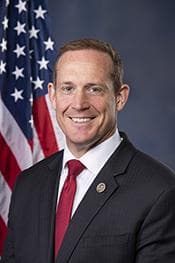
- Introduced
- 2/10/2025
- Last activity
- 2/10/2025 — Read twice and referred to the Committee on Health, Education, Labor, and Pensions.
- Sponsored by
- Ted Budd
- Cosponsors
- - 0 - 1
- Introduced
- In Committee
What this bill would do
This bill requires the Secretary of Health and Human Services to create a strategy regarding public health preparedness and response to artificial intelligence threats. The Secretary must consult with various stakeholders to prepare this strategy within 180 days of enactment. This strategy aims to address risks involving the misuse of artificial intelligence that threaten national health security. Specifically, it targets risks like the development of biological weapons and the design of treatment-resistant viruses and bacteria. The final strategy must be submitted to relevant congressional committees.
Yes· 3 of 5
Does this make the country readier for the next outbreak?+5
The bill requires a strategy to address risks from artificial intelligence that could lead to pandemics or biological threats.
Does this better protect the country from computer attacks?+4
The bill addresses the potential misuse of artificial intelligence to create biological threats, which falls under national security and defense preparedness.
Does this make health care easier to get in general?+3
The bill seeks to protect health security by creating a strategy to mitigate AI-driven threats like biological weapons and treatment-resistant pathogens.
The opposite
No question was scored the opposite.
Who it would affect, and how
Potential Positive Impacts for People
-
Mitigating AI-related health risks: The bill requires the creation of a framework to mitigate risks from the misuse of artificial intelligence, which includes threats like the development of biological weapons and the design of viruses and bacteria resistant to treatment (Section 2(b)(2)(E)).
-
Strengthening emergency response: The strategy includes identifying gaps in public health capabilities and creating strategies to strengthen public health emergency preparedness and response capabilities (Section 2(b)(2)(C) and (D)).
-
Establishing accountability through metrics: The Secretary must identify duties, functions, and preparedness goals, including metrics to measure success in meeting these goals (Section 2(b)(2)(B)).
Potential Negative Impacts for People
- No specific negative impacts are mentioned in the text: The provided text focuses on the requirements for developing a strategy to address security threats and does not list any specific negative consequences or burdens for individuals or groups.
Groups and Interests Ranking
Every group the model scored this bill for, from -10 to +10. Hover a score for the reason it gave.
- Healthcare
- Improves Pandemic Preparedness+5Improves Healthcare Access+3
- National Security And Foreign Policy
- Improves Cybersecurity Defense+4
- Education And Technology
- Increases Scientific Research Funding+2
- Demographic And Interest Groups
- Good For People With Disabilities+1
- 2/10/2025
- Read twice and referred to the Committee on Health, Education, Labor, and Pensions.
- 1 Cosponsor added.
- Introduced in Senate
 Edward Markey
Democrat · Massachusetts