Bill · S. 4778· Senate(119-S-4778)
Postsecondary Student Success Act of 2026
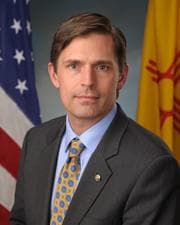
- Introduced
- 6/11/2026
- Last activity
- 6/11/2026 — Read twice and referred to the Committee on Health, Education, Labor, and Pensions.
- Sponsored by
- Martin Heinrich
- Cosponsors
- - 1 - 0
- Introduced
- In Committee
What this bill would do
The Postsecondary Student Success Act of 2026 allows the Secretary of Education to provide competitive grants to specific educational entities. These grants aim to increase the participation, retention, and completion rates of high-need students using evidence-based programs. The bill defines high-need students to include groups such as low-income, first-generation, and military-connected students. It also sets aside specific funding for eligible Indian entities.
Yes· 3 of 28
Would students be better off under this?+9
Broadly provides tutoring, financial aid, and career support for postsecondary students.
Would households on low incomes be better off under this?+8
Specifically targets low-income students for financial and academic support.
Would Native Americans be better off under this?+8
Includes a specific 2% fund reservation for Tribal Colleges and Universities.
The opposite
Does this reduce what the federal government owes?-1
The bill authorizes new government spending via competitive grants.
Does this reduce what the federal government spends?-1
The bill increases government spending through the creation of a new grant program.
Who it would affect, and how
Potential Positive Impacts for People
-
Support for High-Need Students: The bill provides services for students from low-income backgrounds, first-generation students, caregivers, students with disabilities, justice-impacted students, and military-connected students to help them succeed in school (Section 3).
-
Direct Student Assistance: Grant funds can be used for tutoring, academic supports, enrichment services, and emergency financial assistance (Section 5(e)(2)).
-
Career Preparation: Students may benefit from career coaching, networking, work-based learning, and help obtaining skills for high-skill, high-wage, or in-demand jobs (Section 5(e)(3)).
-
Increased Academic Opportunities: The bill supports accelerated learning through dual or concurrent enrollment and early college high school programs (Section 5(c)(6)(B)).
-
Dedicated Funding for Tribal Colleges: The Secretary must reserve 2 percent of total funds specifically for eligible Indian entities to help their high-need students (Section 4).
-
Comprehensive Student Services: Funding can be used for mentoring, advising, case management, and peer counseling (Section 5(c)(6)(A) and Section 5(e)(1)(A)).
Potential Negative Impacts for People
-
Limited Access for Branch Campuses: Entities with branch campuses are restricted to receiving a grant for only one campus at a time, which may limit the number of students who can benefit from the funds (Section 5(h)).
-
Competitive Nature of Grants: Because grants are awarded on a competitive basis, many eligible entities and the students they serve may not receive any funding (Section 5(a)).
Groups and Interests Ranking
Every group the model scored this bill for, from -10 to +10. Hover a score for the reason it gave.
- Demographic And Interest Groups
- Good For Students+9Good For Low Income Households+8Good For Native Americans+8Good For People With Disabilities+7Good For Veterans+7Good For Young Adults+7Good For African Americans+5Good For Hispanic Americans+5Good For Rural Residents+5Good For Middle Aged+3Good For Urban Residents+3Good For Women+3Good For Asian Americans+2Good For Immigrants+2Good For Men+2Good For White Americans+2
- Social Issues And Justice
- Improves Disability Rights+5Improves Racial Equity+5Improves Poverty Reduction+4Reduces Homelessness+2
- Education And Technology
- Improves College Affordability+4Increases Scientific Research Funding+1
- National Security And Foreign Policy
- Improves Veterans Benefits+4
- Economy And Finance
- Improves Economic Growth+3Increases Job Creation+2Reduces Government Spending-1Reduces National Debt-1
- Environment Energy And Infrastructure
- Improves Rural Development+3
- Governance And Ideology
- Increases Federal Power+2
- Healthcare
- Improves Mental Health Access+2
- 6/11/2026
- Read twice and referred to the Committee on Health, Education, Labor, and Pensions.
- 1 Cosponsor added.
- Introduced in Senate
4 bills Congress.gov lists as related to this one — companions in the other chamber, earlier versions, and bills this one absorbed or was folded into.
 Christopher Coons
Democrat · Delaware