Bill · S. 4397· Senate(119-S-4397)
Sound Science Act of 2026
- Introduced
- 4/27/2026
- Last activity
- 4/27/2026 — Read twice and referred to the Committee on Environment and Public Works.
- Sponsored by
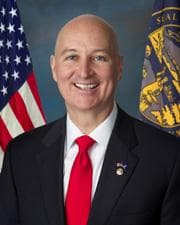
- Pete Ricketts
- Cosponsors
- None
- Introduced
- In Committee
What this bill would do
The Sound Science Act of 2026 aims to amend the Toxic Substances Control Act. The bill focuses on improving transparency in the regulatory process and enhancing the coordination of science among Federal agencies. It modifies requirements for chemical testing, risk evaluations, and the selection of regulatory requirements. Additionally, the legislation introduces new standards for scientific assessments and peer reviews. The bill seeks to integrate information from other Federal departments to ensure consistency in risk information.
Yes· 3 of 5
Does this make what the government does easier for the public to see?+5
The bill mandates in-person peer reviews and increased public notice for test method strategies.
Would business owners be better off under this?+4
The shift to minimizing risk to the extent reasonably feasible may reduce regulatory costs for business owners.
Does this make it easier to run a small business?+3
The bill promotes cost-effective regulatory requirements which can reduce the financial burden on businesses.
The opposite
Does this better protect air, water and wildlife?-4
The bill narrows the scope of risk evaluations to only include hazards more likely than not to result in unreasonable risk.
Does this give the federal government more power?-2
The bill emphasizes interagency coordination and industry feedback in the regulatory process.
Who it would affect, and how
Potential Positive Impacts for People
-
Improved Testing Standards: The bill requires the use of relevant Test Guidelines published by the Organisation for Economic Cooperation and Development, which may assist in modernizing testing (Section 2(c)).
-
Increased Regulatory Efficiency: By requiring the Administrator to select requirements that are cost-effective in relation to minimizing unreasonable risk, the bill aims for more efficient regulation (Section 3(c)).
-
Enhanced Scientific Oversight: The bill mandates that the Committee conduct a complete in-person peer review of risk evaluations to ensure the quality and scientific veracity of assessments (Section 5(2)(B)).
-
Greater Interagency Coordination: The bill establishes a process for Federal departments and agencies to submit information and feedback regarding critical uses, alternatives, and supply chain impacts (Section 3(b)(1)(I)).
Potential Negative Impacts for People
-
Changes to Risk Evaluation Scope: Risk evaluations will now consider only hazards and exposures that are more likely than not to result in an unreasonable risk, and aggregate exposures will only be considered if the Administrator issues a written determination (Section 3(b)(1)(A)).
-
Shift in Regulatory Objectives: The bill changes the goal of applying requirements from ensuring a substance no longer presents a risk to minimizing the risk of injury to health or the environment to the extent reasonably feasible (Section 3(a)).
-
Potential Impact on Safety Standards: The Administrator is directed to factor in occupational safety and health standards when selecting requirements, which may impact how regulations are applied (Section 3(c)(i)).
Groups and Interests Ranking
Every group the model scored this bill for, from -10 to +10. Hover a score for the reason it gave.
- Demographic And Interest Groups
- Good For Business Owners+4Good For Union Workers+2
- Environment Energy And Infrastructure
- Improves Environmental Protections-4
- Economy And Finance
- Improves Small Business Support+3
- Governance And Ideology
- Improves Government Transparency+5Increases Federal Power-2
- Education And Technology
- Increases Scientific Research Funding+2
- 4/27/2026
- Read twice and referred to the Committee on Environment and Public Works.
- Introduced in Senate