Bill · S. 4264· Senate(119-S-4264)
NASA UAS Detection Act
- Introduced
- 3/26/2026
- Last activity
- 3/26/2026 — Read twice and referred to the Committee on Commerce, Science, and Transportation.
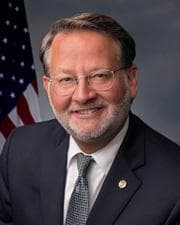
- Sponsored by
- Gary Peters
- Cosponsors
- - 0 - 1
- Introduced
- In Committee
What this bill would do
The NASA UAS Detection Act gives NASA the power to detect, identify, monitor, and track unmanned aircraft systems (drones) that pose a credible threat to NASA centers or property. This includes the ability to intercept communications used to control these drones without prior consent. The act requires NASA to coordinate closely with the Federal Aviation Administration (FAA) to ensure aviation safety. It also establishes rules for personnel training, the use of approved technologies, and privacy protections. NASA must provide semiannual briefings to Congress on these activities. The authority granted by this act expires on September 30, 2031.
Yes· 3 of 4
Does this give the federal government more power?+5
Expands the authority of NASA to intercept communications and track UAS.
Does this give the government more power to monitor people inside the country?+4
Grants authority to intercept drone communications without prior consent.
Does this better protect the country from computer attacks?+3
Enhances ability to detect and track rogue drone threats to federal assets.
The opposite
Does this protect people from being watched or searched?-5
Permits interception of electronic and oral communications without prior consent.
Does this give people more control over their personal data?-3
Allows for the interception and potential sharing of drone communication data.
Who it would affect, and how
Potential Positive Impacts for People
-
Protection of Facilities and People: The bill allows NASA to take action against drones that pose a "credible threat" to the safety or security of NASA centers and assets, which helps protect the people and facilities at those locations (Sec. 2(b)).
-
Aviation Safety Coordination: By requiring the NASA Administrator to coordinate with the FAA regarding any action that might affect "aviation safety, civilian aviation and aerospace operations, aircraft airworthiness, or the use of the airspace," the bill aims to prevent accidents in the national airspace (Sec. 2(f)).
-
Privacy Safeguards: The bill mandates that any interception of communications be consistent with the First and Fourth Amendments and limits the keeping of communication records to 180 days unless needed for legal investigations (Sec. 2(k)).
-
Congressional Oversight: The requirement for semiannual briefings to Congress ensures that officials are held accountable for how these powers are used and whether any harm or damage to private property occurred (Sec. 2(l)).
Potential Negative Impacts for People
-
Interception of Communications: The act allows NASA to intercept "wire communication, an oral communication, or an electronic communication" used to control drones without prior consent, which could be seen as an intrusion of privacy (Sec. 2(c)).
-
Risk of Collateral Damage: The bill acknowledges the potential for "interference with wireless communications or for injury or damage to persons or property" during the risk-based assessment of covered facilities (Sec. 2(g)(2)(B)(v)).
-
Data Sharing: Intercepted communications can be disclosed to people not employed by NASA if it is deemed necessary to investigate or prosecute a violation of law (Sec. 2(k)(4)).
Groups and Interests Ranking
Every group the model scored this bill for, from -10 to +10. Hover a score for the reason it gave.
- National Security And Foreign Policy
- Increases Domestic Surveillance+4Improves Cybersecurity Defense+3
- Education And Technology
- Improves Data Privacy-3
- Governance And Ideology
- Increases Federal Power+5Improves Government Transparency+2Improves Privacy Rights-5
- 3/26/2026
- Read twice and referred to the Committee on Commerce, Science, and Transportation.
- 1 Cosponsor added.
- Introduced in Senate
 Jerry Moran
Republican · Kansas