Bill · S. 3971· Senate(119-S-3971)
Small Business Innovation and Economic Security Act
- Introduced
- 3/3/2026
- Last activity
- 4/13/2026 — Became Public Law No: 119-83.
- Sponsored by
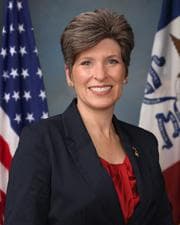
- Joni Ernst
- Cosponsors
- - 0 - 1
- Introduced
- Passed Senate
- Passed House
- To President
- Became Law
What this bill would do
This act, titled the "Small Business Innovation and Economic Security Act," extends the SBIR and STTR programs through September 30, 2031. It introduces a "strategic breakthrough allocation" allowing for larger Phase II awards up to $30,000,000 to accelerate critical technology development. The bill strengthens research security by requiring agencies to evaluate security risks, including connections to entities on several specific federal lists. It also aims to reduce administrative burdens by setting limits on the number of proposals a small business can submit. Additionally, the legislation enhances technical and business assistance, improves data collection, and provides for workforce training regarding Phase III awards.
Yes· 3 of 8
Would business owners be better off under this?+9
The bill significantly expands the scope and funding availability for small business owners via the SBIR/STTR programs.
Does this make it easier to run a small business?+8
The act provides substantial new funding opportunities, technical assistance, and reduced administrative burdens for small businesses.
Does this put more money into scientific research?+7
The bill extends and expands funding for SBIR and STTR research programs.
The opposite
No question was scored the opposite.
What Congress actually voted on
One recorded vote has been taken on this bill.
- The House: a fast-track vote, needing two-thirds to passPassed 345–41
The House sets aside its normal procedure to move quickly: no amendments, little debate, and a two-thirds bar instead of a simple majority. It is used for measures expected to be uncontroversial, so a bill that fails here failed despite broad expectations that it would not.
03/17/2026 · Roll call 89 · recorded as “On Motion to Suspend the Rules and Pass”
Who it would affect, and how
Potential Positive Impacts for People
-
Increased Funding for Critical Technologies: The creation of "strategic breakthrough allocations" allows for Phase II awards of up to $30,000,000, which can help small businesses advance national security capabilities and provide new technologies (Section 3(a)).
-
Reduced Red Tape: The bill establishes a system to reduce administrative burden by setting limits on the number of proposals a small business can submit in a single fiscal year (Section 4(a)(1)).
-
Enhanced Support Services: Small businesses can now access expanded technical and business assistance, which includes cybersecurity assistance and screening for potential foreign involvement (Section 7(1)(A)).
-
Improved Commercialization Opportunities: The act includes a mechanism to provide small business concerns with direct access to program and requirements offices that may purchase technology under Phase III of the SBIR program (Section 3(b)(1)(C)).
-
Access to Specialized Training: Small businesses can now have the option to request participation in I-Corps training programs, such as bootcamps or teams courses, using authorized funds (Section 7(2)).
Potential Negative Impacts for People
-
Increased Security Scrutiny: Small businesses may face rigorous evaluations regarding security risks, including their due diligence, disclosures, and coordination with the intelligence community (Section 2(a)(1)(A)).
-
Risk of Award Denial Based on Security Lists: A small business concern could be denied an award if it has a security risk connecting it to entities on various lists, such as the UFLPA Entity List or the Chinese Military-Industrial Complex Companies List (Section 2(a)(1)(C)(D)).
-
Stringent Requirements for High-Value Awards: To receive a strategic breakthrough award, small businesses must meet strict criteria, such as demonstrating at least 100 percent matching funds from new private capital or other government agencies (Section 3(a)(3)(A)(ii)(II)).
-
Potential Restrictions on Participation: The implementation of limits on the number of proposals a small business may submit could restrict how many different opportunities a company can pursue in a single year (Section 4(a)(1)).
Groups and Interests Ranking
Every group the model scored this bill for, from -10 to +10. Hover a score for the reason it gave.
- Economy And Finance
- Improves Small Business Support+8Improves Economic Growth+6Increases Job Creation+5
- Demographic And Interest Groups
- Good For Business Owners+9
- Education And Technology
- Increases Scientific Research Funding+7
- National Security And Foreign Policy
- Improves Cybersecurity Defense+7
- Governance And Ideology
- Improves Government Transparency+3Improves Due Process+2
- Public Law(4/14/2026)
The text as it became law
- Enrolled Bill
The final version, on its way to the President
- 4/13/2026
- Signed by President.
- Became Public Law No: 119-83.
- 4/2/2026
- Presented to President.
- 3/17/2026
- Motion to reconsider laid on the table Agreed to without objection.
- Passed/agreed to in House: On motion to suspend the rules and pass the bill Agreed to by the Yeas and Nays: (2/3 required): 345 - 41 (Roll no. 89).
- On motion to suspend the rules and pass the bill Agreed to by the Yeas and Nays: (2/3 required): 345 - 41 (Roll no. 89).
- Considered as unfinished business. (consideration: CR H2545-2546)
- 3/16/2026
- At the conclusion of debate, the Yeas and Nays were demanded and ordered. Pursuant to the provisions of clause 8, rule XX, the Chair announced that further proceedings on the motion would be postponed.
- DEBATE - The House proceeded with forty minutes of debate on S. 3971.
- Considered under suspension of the rules. (consideration: CR H2491-2497; text: CR H2491-2495)
- Ms. Van Duyne moved to suspend the rules and pass the bill.
- 3/4/2026
- Message on Senate action sent to the House.
- Held at the desk.
- Received in the House.
- 3/3/2026
- Passed/agreed to in Senate: Introduced in the Senate, read twice, considered, read the third time, and passed without amendment by Voice Vote.
- Introduced in the Senate, read twice, considered, read the third time, and passed without amendment by Voice Vote. (consideration: CR S752-756; text: CR S752-756)
- 1 Cosponsor added.
- Introduced in Senate
 Edward Markey
Democrat · Massachusetts