Bill · S. 3967· Senate(119-S-3967)
FLOWS Act of 2026
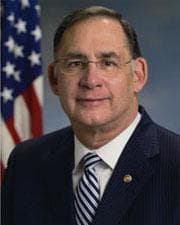
- Introduced
- 3/3/2026
- Last activity
- 3/3/2026 — Read twice and referred to the Committee on Environment and Public Works.
- Sponsored by
- John Boozman
- Cosponsors
- - 0 - 1
- Introduced
- In Committee
What this bill would do
The FLOWS Act of 2026 seeks to establish a grant program aimed at helping rural areas improve their water infrastructure through digital technology. The Administrator of the EPA will manage this program to assist with the design, construction, and maintenance of digital tools for water systems. These funds can also be used for workforce training and protecting digital systems from cyber-attacks. Priority will be given to smaller systems serving fewer than 3,300 people and community-controlled organizations. The bill authorizes $50,000,000 annually from fiscal year 2027 through 2031. Finally, a study will be conducted by the Comptroller General to evaluate the impact of these digital technologies on rural water management.
Yes· 3 of 17
Would people in rural areas be better off under this?+7
This bill specifically targets rural areas for significant infrastructure and technology improvements.
Does this invest in rural communities?+5
The bill provides essential digital infrastructure funding specifically targeted at rural water systems.
Does this better protect the country from computer attacks?+5
The bill specifically allocates funds for cybersecurity training and countermeasures for water infrastructure.
The opposite
No question was scored the opposite.
Who it would affect, and how
Potential Positive Impacts for People
-
Improved Water System Efficiency: Grants can fund technologies like remote sensing and real-time monitoring to detect water loss or identify damaged infrastructure, which helps improve the operations of public water systems (Section 2(a)(2)(A)).
-
Workforce Development: The program provides for training and workforce development activities to help managers and operators effectively use digital infrastructure technology (Section 2(b)(2)(A)(ii)).
-
Cybersecurity Protection: Funds can be used to mitigate risks and employ countermeasures to protect water infrastructure from cyber-attacks through technical assistance and training (Section 2(b)(2)(A)(iii)).
-
Support for Small and Local Communities: The program prioritizes entities that serve fewer than 3,300 people and those that are owned or controlled by community members rather than investors (Section 2(b)(3)).
-
Software Accessibility: Grant recipients are permitted to use funds for the initial purchase and ongoing maintenance of necessary software (Section 2(b)(2)(B)).
Potential Negative Impacts for People
- No specific negative impacts or burdens are explicitly identified within the provided text.
Groups and Interests Ranking
Every group the model scored this bill for, from -10 to +10. Hover a score for the reason it gave.
- Demographic And Interest Groups
- Good For Rural Residents+7Good For Low Income Households+2Good For Farmers+1Good For Middle Class Households+1Good For Native Americans+1Good For Union Workers+1
- Environment Energy And Infrastructure
- Improves Rural Development+5Improves Environmental Protections+4Improves Disaster Relief And F E M A+1
- National Security And Foreign Policy
- Improves Cybersecurity Defense+5
- Economy And Finance
- Increases Job Creation+2Improves Consumer Protection+1Improves Economic Growth+1
- Education And Technology
- Increases Scientific Research Funding+2
- Governance And Ideology
- Improves Government Transparency+1Increases Federal Power+1
- Healthcare
- Increases Research Funding+1
- 3/3/2026
- Read twice and referred to the Committee on Environment and Public Works.
- 1 Cosponsor added.
- Introduced in Senate
One bill Congress.gov lists as related to this one — companions in the other chamber, earlier versions, and bills this one absorbed or was folded into.
 Mark Kelly
Democrat · Arizona