Bill · S. 396· Senate(119-S-396)
Stop GREED Act of 2025
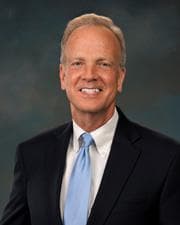
- Introduced
- 2/4/2025
- Last activity
- 2/4/2025 — Read twice and referred to the Committee on Veterans' Affairs.
- Sponsored by
- Jerry Moran
- Cosponsors
- - 2 - 0
- Introduced
- In Committee
What this bill would do
This bill, known as the "Stop GREED Act of 2025," aims to amend title 38 of the United States Code. It seeks to place limitations on the provision of critical skill incentives for employees within the Department of Veterans Affairs. Specifically, it targets employees in Senior Executive Service positions or comparable senior-level systems. The legislation establishes restrictions for those working at the Central Office of the Department. It also creates specific approval requirements for other senior-level employees. Finally, it mandates annual reporting to Congressional committees regarding these incentives.
Yes· 3 of 4
Does this make what the government does easier for the public to see?+5
The bill mandates annual reporting to Congressional committees regarding the provision of critical skill incentives to senior executives.
Does this reduce what the federal government spends?+3
The bill limits and restricts the provision of critical skill incentives to senior-level employees at the Department of Veterans Affairs.
Would veterans be better off under this, taking everything together?+1
The bill increases oversight of senior leadership within the Department of Veterans Affairs.
The opposite
No question was scored the opposite.
Who it would affect, and how
Potential Positive Impacts for People
-
Restriction of incentives for Central Office executives: The bill prevents the provision of critical skill incentives to employees in Senior Executive Service positions or comparable senior-level systems whose position is at the Central Office, including the Veterans Health Administration, the Veterans Benefits Administration, and the National Cemetery Administration (Section 2, subparagraph (A)).
-
Increased oversight for senior-level incentives: For senior-level employees not at the Central Office, incentives can only be provided on an individual basis rather than to a group, and they require approval from several specific officers, such as the Under Secretaries, the Assistant Secretary for Human Resources and Administration, and the General Counsel (Section 2, subparagraph (B)(i)).
-
Enhanced Congressional accountability: The Secretary is required to submit an annual report to the Committee on Veterans' Affairs of the Senate and the House regarding employees in Senior Executive Service positions or comparable systems who were provided a critical skill incentive (Section 2, subparagraph (C)(i)).
Potential Negative Impacts for People
- Proportionate incentive limits for hybrid employees: Employees in senior-level positions who perform some job functions at facilities other than the Central Office will have their incentives limited to be proportionate to the time spent at those non-Central Office facilities (Section 2, subparagraph (B)(ii)).
Groups and Interests Ranking
Every group the model scored this bill for, from -10 to +10. Hover a score for the reason it gave.
- Governance And Ideology
- Improves Government Transparency+5
- Economy And Finance
- Reduces Government Spending+3
- Demographic And Interest Groups
- Good For Veterans+1
- National Security And Foreign Policy
- Improves Veterans Benefits+1
- 2/5/2025
- 1 Cosponsor added.
- 2/4/2025
- Read twice and referred to the Committee on Veterans' Affairs.
- 1 Cosponsor added.
- Introduced in Senate
One bill Congress.gov lists as related to this one — companions in the other chamber, earlier versions, and bills this one absorbed or was folded into.
 Marsha Blackburn
Republican · Tennessee
 Thomas Tillis
Republican · North Carolina