Bill · S. 3825· Senate(119-S-3825)
Workforce Development Modernization Act
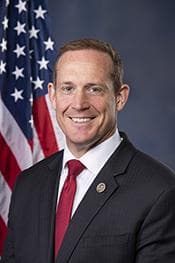
- Introduced
- 2/10/2026
- Last activity
- 2/10/2026 — Read twice and referred to the Committee on Health, Education, Labor, and Pensions.
- Sponsored by
- Ted Budd
- Cosponsors
- - 3 - 0
- Introduced
- In Committee
What this bill would do
This bill, known as the "Workforce Development Modernization Act," aims to amend the Workforce Innovation and Opportunity Act. It seeks to expand the types of one-stop centers used to provide services by allowing for virtual centers. The legislation also permits the location of physical or virtual centers at public institutions of higher education. Additionally, it allows adjacent local areas to share a physical or virtual center. Finally, it mandates that employment service offices be colocated with physical one-stop centers in states that have them.
Yes· 3 of 16
Would households on low incomes be better off under this?+3
Virtual and colocated centers can significantly improve accessibility to job training for low-income populations.
Would students be better off under this?+3
Allowing centers to be located at higher education institutions provides direct benefits to students.
Is this likely to create jobs?+3
Expanding access to workforce development centers can indirectly support job creation by better matching workers to employers.
The opposite
No question was scored the opposite.
Who it would affect, and how
Potential Positive Impacts for People
-
Increased Accessibility through Virtual Options: By allowing for "virtual" centers, which are defined as terminals or equipment providing access to programs and services, the bill expands how people can access workforce resources (Section 2, paragraph (1), subparagraph (A) and paragraph (6)).
-
Flexible Center Locations: The bill allows one-stop centers to be located at "a public institution of higher education," which could provide easier access for students or those utilizing higher education resources (Section 2, paragraph (1), subparagraph (E)).
-
Resource Sharing Between Areas: Adjacent local areas are permitted to share a physical or virtual center, which could allow for more efficient service distribution (Section 2, paragraph (1), subparagraph (A) and paragraph (5)).
-
Co-location of Services: The bill requires employment service offices to be "colocated with the physical one-stop centers" in states that have them, which may streamline access to different services in one place (Section 2, paragraph (2)).
Potential Negative Impacts for People
- No specific negative impacts or burdens are explicitly stated in the provided text.
Groups and Interests Ranking
Every group the model scored this bill for, from -10 to +10. Hover a score for the reason it gave.
- Demographic And Interest Groups
- Good For Low Income Households+3Good For Students+3Good For People With Disabilities+2Good For Rural Residents+2Good For Young Adults+2Good For Business Owners+1Good For Immigrants+1Good For Middle Aged+1Good For Middle Class Households+1Good For Urban Residents+1Good For Veterans+1
- Economy And Finance
- Increases Job Creation+3Improves Economic Growth+2
- Education And Technology
- Improves Internet Access+3
- Social Issues And Justice
- Improves Poverty Reduction+2
- Environment Energy And Infrastructure
- Improves Rural Development+1
- 2/10/2026
- Read twice and referred to the Committee on Health, Education, Labor, and Pensions.
- 3 Cosponsors added.
- Introduced in Senate
 Bill Cassidy
Republican · Louisiana
 Pete Ricketts
Republican · Nebraska
 Thomas Tillis
Republican · North Carolina