Bill · S. 3755· Senate(119-S-3755)
Digital Commodity Intermediaries Act
- Introduced
- 2/2/2026
- Last activity
- 2/2/2026 — Placed on Senate Legislative Calendar under General Orders. Calendar No. 312.
- Sponsored by
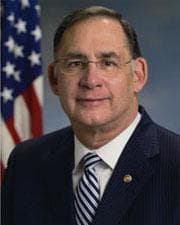
- John Boozman
- Cosponsors
- None
- Introduced
- On Calendar
What this bill would do
The Digital Commodity Intermediaries Act establishes a regulatory system for the offer and sale of digital commodities overseen by the Commodity Futures Trading Commission. The bill provides specific definitions for terms such as blockchain, digital assets, and digital commodity exchanges to clarify regulatory boundaries. It requires digital commodity exchanges, brokers, and dealers to register with the Commission to operate legally. The legislation mandates strict business conduct standards, risk management, and record-keeping, while providing specific protections for customer assets through segregation and specialized custody. Additionally, the Act mandates joint rulemaking between the CFTC and the SEC to address market intersections and establishes an Office of the Digital Commodity Retail Advocate.
Yes· 3 of 4
Does this give people more protection from unfair business practices?+6
The bill implements strict registration, capital, and segregation requirements for digital commodity brokers to protect consumers.
Does this give the federal government more power?+5
The bill grants the Commission exclusive jurisdiction over digital commodity transactions.
Does this narrow racial gaps in how people are treated?+3
The bill requires a study of the racial and ethnic demographics of digital commodity market participants.
The opposite
Would business owners be better off under this?-3
The bill imposes new regulatory, registration, and compliance costs on digital asset business owners.
Who it would affect, and how
Potential Positive Impacts for People
-
Protection of Customer Assets: Digital commodity exchanges, brokers, and dealers are required to hold customer money and property in a manner that minimizes the risk of loss or unreasonable delay in access (Section 209, Section 211, Section 5i(f), and Section k(1)(A)).
-
Prevention of Misuse: It is unlawful for brokers or dealers to use customer funds for their own business purposes or for anyone other than the customer (Section k(5)(A)).
-
Strict Asset Segregation: The law requires that customer money, assets, and property be treated as belonging to the customer and separately accounted for to prevent commingling with the broker's own funds (Section k(2)(A) and (B)).
-
Market Integrity and Transparency: Digital commodity exchanges must comply with core principles, including maintaining a competitive and efficient market, protecting the price discovery process, and providing timely publication of trading information like price and volume (Section 5i(c)(4) and Section 5i(c)(7)).
-
Enhanced Consumer Disclosures: The Act requires exchanges to provide customers with disclosures regarding the underlying technology, functionality, utility, and material risks of any listed digital commodity (Section 5i(d)(1)).
-
Prevention of Unfair Practices: Exchanges are mandated to establish and enforce rules to protect market participants from abusive practices and to promote fair and equitable trading (Section s5i(c)(4)(B)).
-
Regulatory Oversight of Custodians: The bill establishes strict standards for "qualified digital asset custodians," including requirements for supervision, financial stability, and the protection of customer assets (Section 101(a)(56) and Section 202).
-
Retail Participant Advocacy: The creation of the Office of the Digital Commodity Retail Advocate provides a specific entity to help retail participants resolve problems with the Commission or registered associations (Section 211(d)(1)).
-
Software Developer Protections: Individuals involved in certain blockchain activities, such as compiling transactions or providing user interfaces, are protected from being subject to the Act (Section 207(a)).
-
Demographic Research for Outreach: The Commission is required to examine customer demographics to propose better ways to protect and reach underserved customers (Section 212).
Potential Negative Impacts for People
-
Registration Burdens: Entities acting as digital commodity exchanges, brokers, or dealers are required to undergo a formal registration process with the Commission, which may include specific capital requirements and ongoing reporting obligations (Section 104, Section 205, and Section 4u(c)).
-
Regulatory Burden on Brokers: Digital commodity brokers and dealers must adhere to extensive requirements regarding business conduct, risk management, and the designation of a Chief Compliance Officer (Sections h, i, and j).
-
Compliance Costs: The Commission will assess and collect fees from registered entities to recover the costs of registration and oversight (Section 210(a)(1)).
-
Mandatory Disclosure Requirements: Before being registered, persons acting as digital commodity intermediaries must disclose to their customers that they are not yet regulated by the Commodity Futures Trading Commission (Section 104(d)).
-
Operational Restrictions for Exchanges: Digital commodity exchanges are prohibited from acting as a counterparty to customer transactions, which limits certain trading activities they might otherwise engage in (Section 5i(b)(2)(A)).
-
Strict Listing Standards: To list a digital commodity, an exchange must ensure the asset is not readily susceptible to manipulation and meets specific disclosure and information requirements, which could limit the variety of assets available for trading (Section 5i(c)(3)).
-
Mandatory Asset Custody Rules: Digital assets must be held in a qualified digital asset custodian, which imposes specific requirements on how these assets are managed (Section k(1)(B)).
-
Restrictions on Blockchain Services: While a customer can permit the use of their digital commodity for blockchain services, brokers cannot require this permission as a condition of doing business (Section k(6)(A) and (B)).
Groups and Interests Ranking
Every group the model scored this bill for, from -10 to +10. Hover a score for the reason it gave.
- Economy And Finance
- Improves Consumer Protection+6
- Social Issues And Justice
- Improves Gender Equality+3Improves Racial Equity+3
- Governance And Ideology
- Increases Federal Power+5
- Demographic And Interest Groups
- Good For Business Owners-3
- 2/2/2026
- Committee on Agriculture, Nutrition, and Forestry. Original measure reported to Senate by Senator Boozman. Without written report.
- Placed on Senate Legislative Calendar under General Orders. Calendar No. 312.
- Bill introduced.
2 bills Congress.gov lists as related to this one — companions in the other chamber, earlier versions, and bills this one absorbed or was folded into.